
10 ways to help people experiencing homelessness keep their Medicaid
This interactive page gives health and housing providers a quick overview of upcoming Medicaid changes and practical steps you can take today. Acting now helps ensure unhoused clients maintain their health coverage and care without interruption.
State Letter about Upcoming Medi-Cal Changes: Help People Experiencing Homelessness Keep Medi-Cal Now
In September 2026, California’s Department of Health Care Services (DHCS) started sending out a four-page letter to Medi-Cal members. The letter went to Medi-Cal members who are part of the ACA Expansion Population (adults 19-64 years old, usually without children). The letter tells members about federal changes to Medi-Cal that go into effect beginning March 1, 2027. The changes include requiring renewals every six months, and requiring members to meet new work and community engagement requirements. Luckily, some members can be excused from the new rules.
Clients who got these letters may start asking questions. The letter may be their first time hearing about the changes to Medi-Cal, and they may need help understanding the new rules. They may need help to not lose Medi-Cal coverage. This document includes useful information for providers to help these clients navigate the changes and maintain coverage.
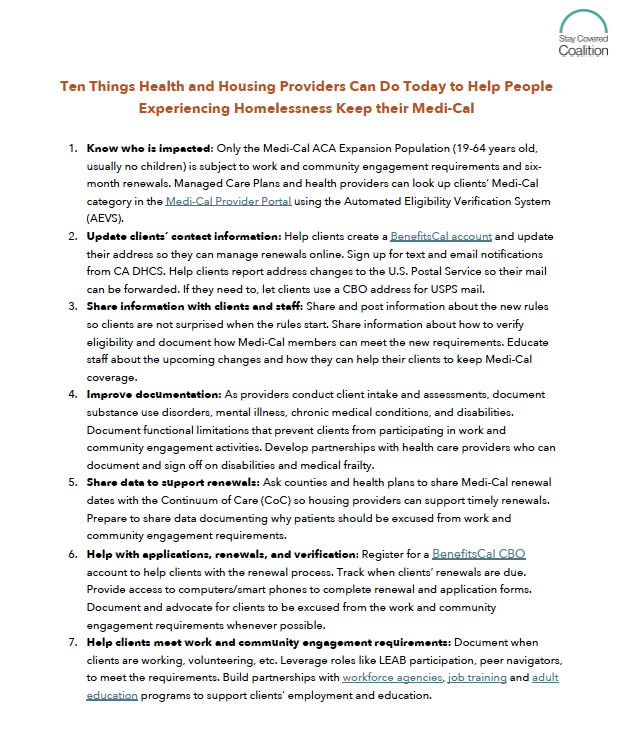
Ten Things Health and Housing Providers Can Do Today to Help People Experiencing Homelessness Keep their Medi-Cal
As 2025 H.R.1 changes put Medicaid coverage at risk, it’s important for health and housing providers to know what they can do to protect coverage for people experiencing homelessness. This document lays out the top ten things providers can do today.
Overview of Centers for Medicare & Medicaid Services (CMS) Guidance and Implications
This presentation outlines major Medicaid changes resulting from recently released CMS guidance related to H.R.1, including new work requirements and more frequent eligibility renewals. It also highlights the unique impacts these changes may have on people experiencing homelessness and the homeless response systems that support them.
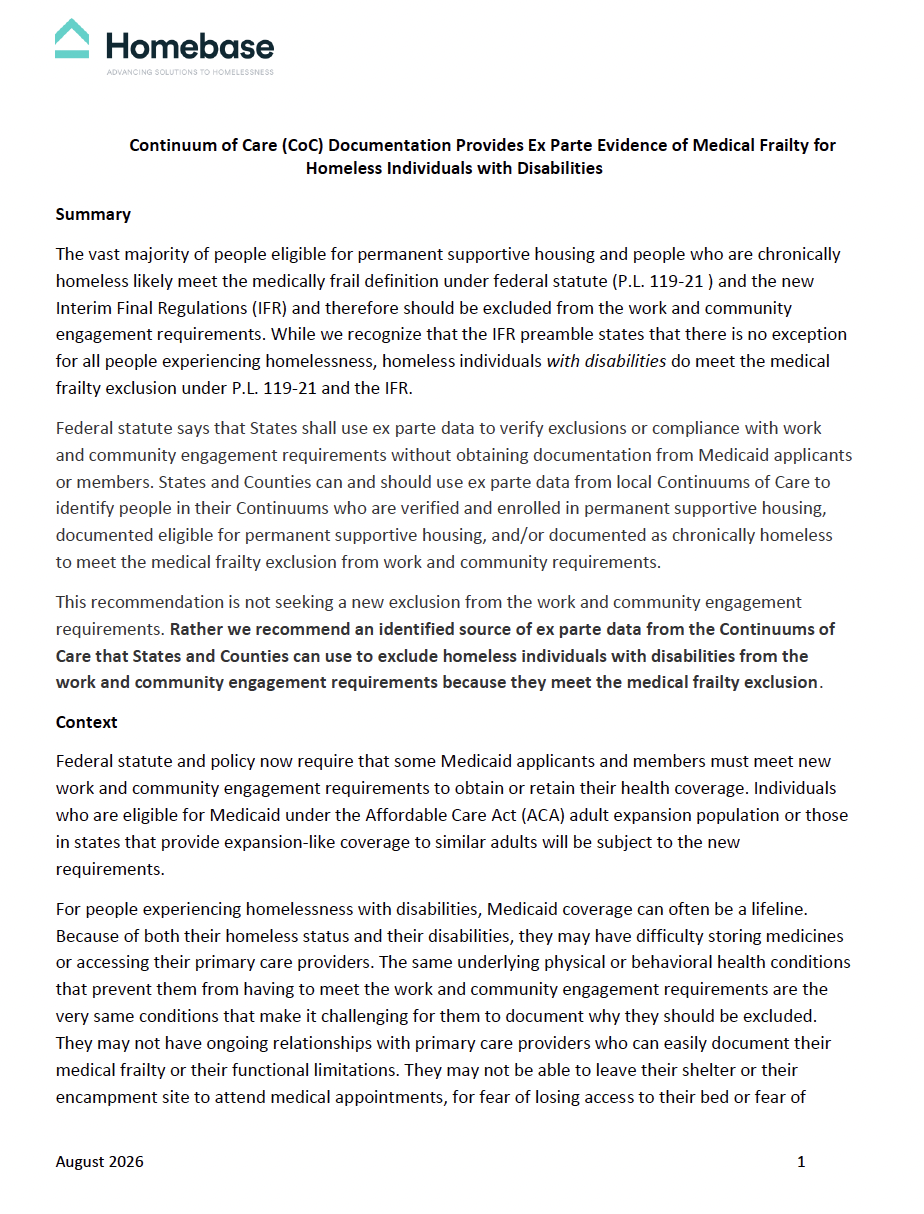
Continuum of Care (CoC) Documentation Provides Ex Parte Evidence of Medical Frailty for Homeless Individuals with Disabilities
Federal statute says that States shall use ex parte data to verify exclusions or compliance with work and community engagement requirements without obtaining documentation from Medicaid applicants or members. States and counties can and should use ex parte data from local Continuums of Care to identify people in their Continuums who are verified and enrolled in permanent supportive housing, documented eligible for permanent supportive housing, and/or documented as chronically homeless to meet the medical frailty exclusion from work and community requirements.
This recommendation is not seeking a new exclusion from the work and community engagement requirements. Rather we recommend an identified source of ex parte data from the Continuums of Care that States and Counties can use to exclude homeless individuals with disabilities from the work and community engagement requirements because they meet the medical frailty exclusion.