Resources
Tools and resources.
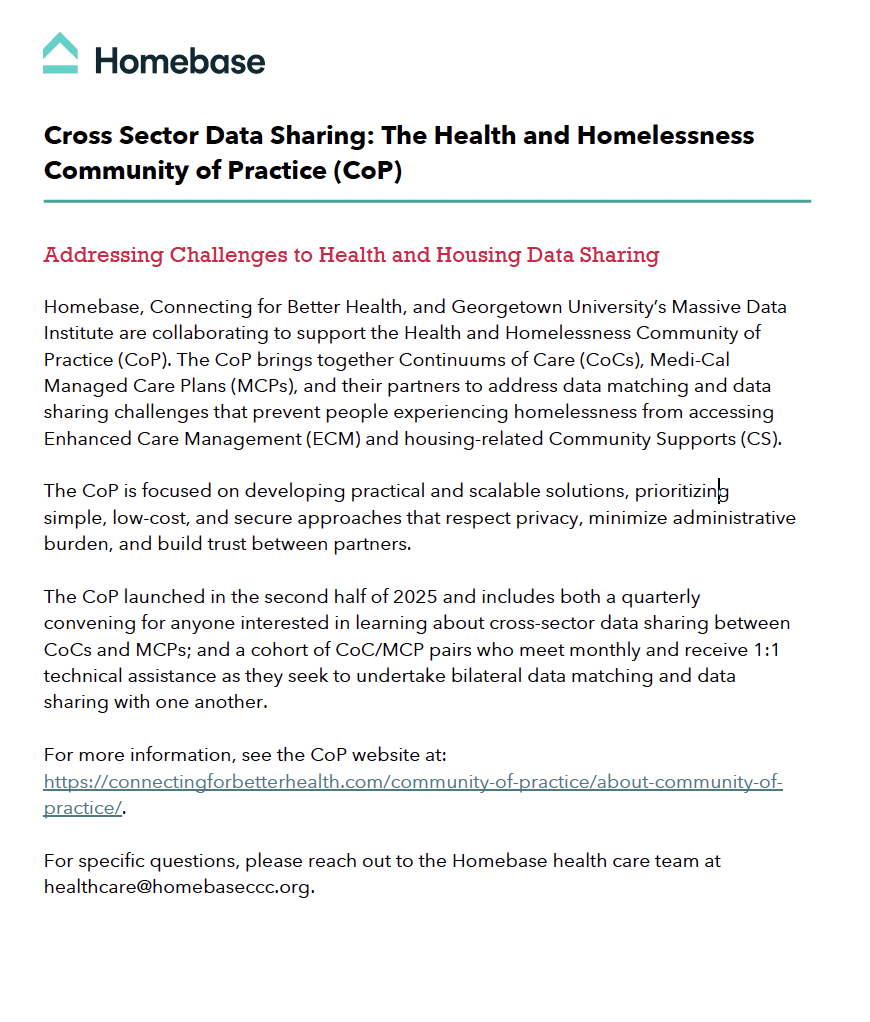
Homebase offers these useful tools and resources to help address common challenges, highlight opportunities, and scale best and emerging practices.

Access our latest resources.
Cross-sector collaboration is essential to addressing the growing crisis of older adult homelessness. The partners listed in this document represent organizations working at the intersection of homelessness, aging, and healthcare—each bringing unique capabilities that can help prevent housing loss, support older adults in crisis, and create pathways to long‑term stability. Together, these systems form the broad network needed to effectively prevent, resolve, and ultimately end homelessness for older adults.
This factsheet provides an overview of what the numbers are saying about the growing crisis of older adult homelessness in the U.S. It is intended to serve as a starting point for conversations between systems - including homelessness response, health care, and aging - and to underscore the need for alignment across systems to address the unique needs of this population.
A one-page flyer for Medi-Cal members experiencing homelessness on how to access housing assistance through Medi-Cal. Able to be distributed electronically or posted at places where Medi-Cal members experiencing homelessness may see it.
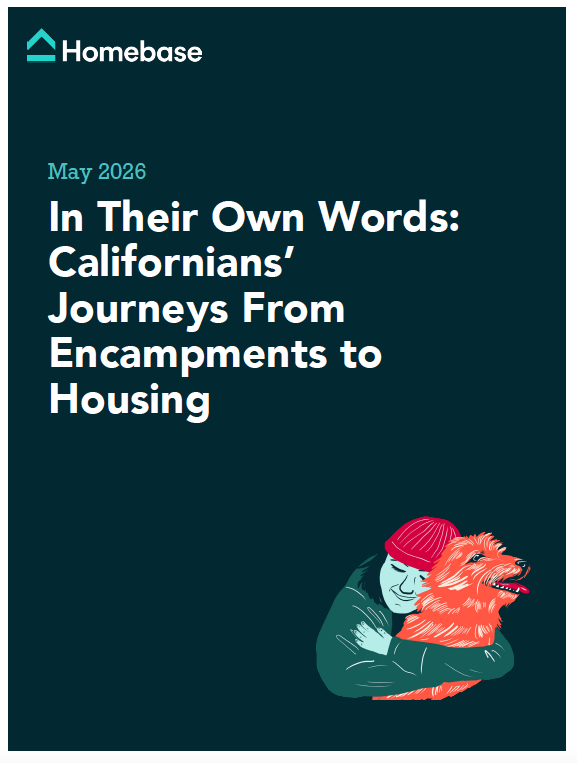
This report explores how four California communities are implementing encampment resolution efforts, and how those strategies are experienced by residents, drawing on interviews, HMIS data, and policy review. It identifies promising practices, persistent barriers, and key themes that shape pathways to permanent housing. Funded by the National Alliance to End Homelessness (NAEH), the study offers practical insights for designing more humane and effective responses to unsheltered homelessness.
Curious about co-sheltering with pets? Directing Attorney Kris Maun shares about the benefits and practical considerations in this blog post.
For the first time in California’s history, Medi-Cal (California’s Medicaid program) will provide up to 6 months rental assistance (known as “Transitional Rent”) to members experiencing or at risk of homelessness, to enable them to transition to stable, accessible, and affordable housing. This cross-county peer learning series intended for local implementers goes in-depth on Transitional Rent topics.
These vignettes illustrate different types of people who may be eligible for Transitional Rent (TR). They are intended to ground TR discussions in the realities of people who may seek this new benefit.
Effective implementation of Transitional Rent (TR) depends on clear roles and strong coordination across health, housing, and social service systems. This tool is designed to help identify and engage TR partners in implementation efforts.