
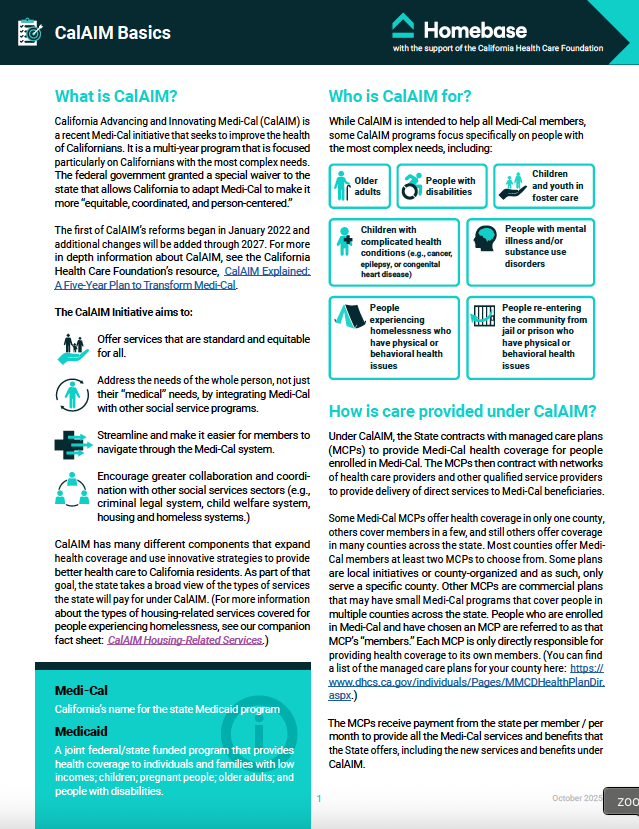
CalAIM Basics
This section of the CalAIM Toolkit for Continuums of Care (CoCs) and CoC Partners provides an overview of the California Advancing and Innovating Medi-Cal (CalAIM), a recent Medi-Cal initiative that seeks to improve the health of Californians.
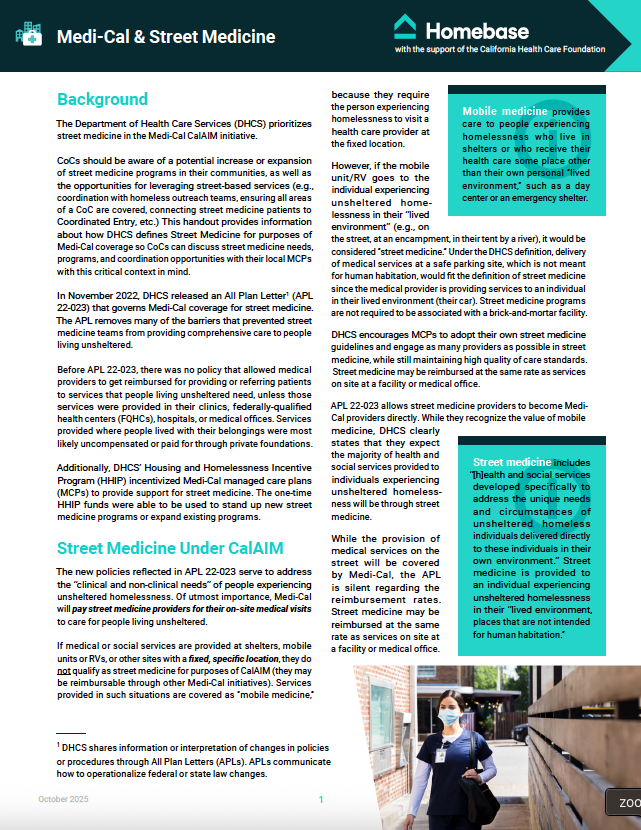
Medi-Cal and Street Medicine
This section of the CalAIM Toolkit for Continuums of Care (CoCs) and CoC Partners provides information about how DHCS defines Street Medicine for purposes of Medi-Cal coverage so CoCs can discuss street medicine needs, programs, and coordination opportunities with their local MCPs with this critical context in mind.
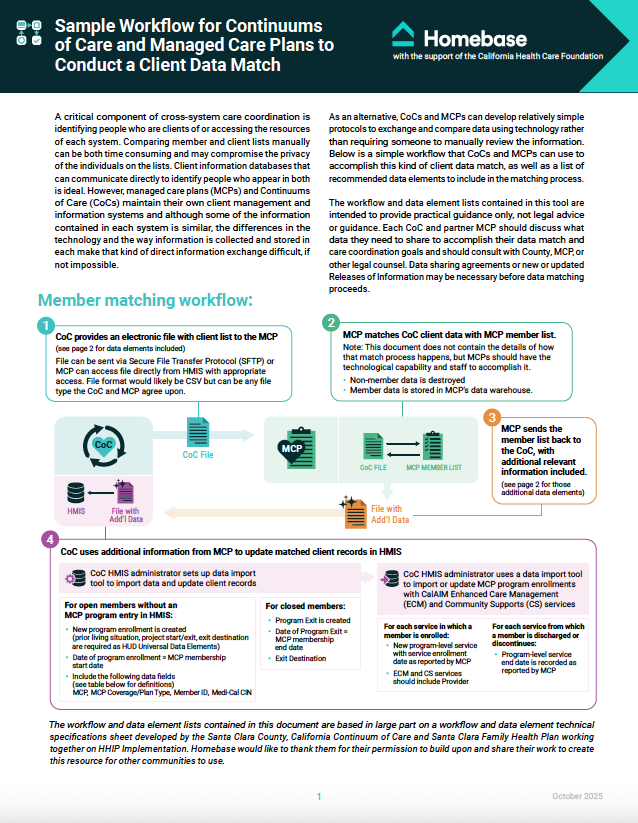
Sample Workflow for Continuums of Care and Managed Care Plans to Conduct a Client Data Match
This section of the CalAIM Toolkit for Continuums of Care (CoCs) and CoC Partners presents a simple workflow that CoCs and MCPs can use to accomplish this kind of client data match, as well as a list of recommended data elements to include in the matching process.
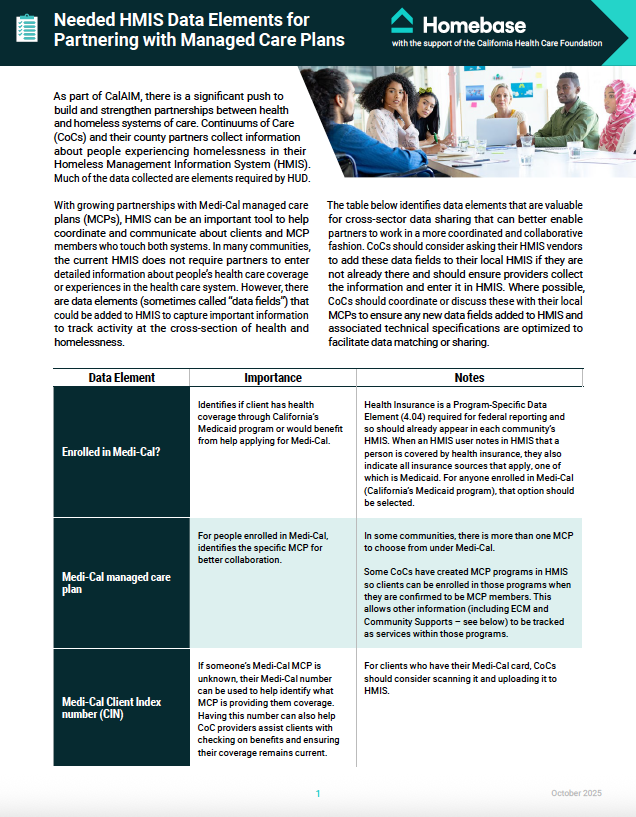
Needed HMIS Data Elements for Partnering with Managed Care Plans
This section of the CalAIM Toolkit for Continuums of Care (CoCs) and CoC Partners identifies data elements that are valuable for cross-sector data sharing that can better enable partners to work in a more coordinated and collaborative fashion.
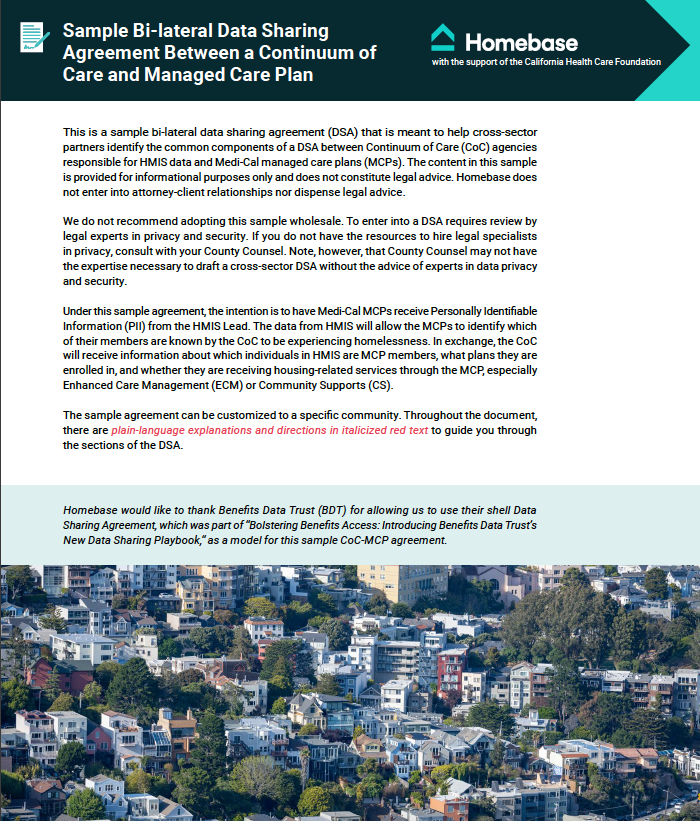
Bi-lateral Data Sharing Agreement Between a Continuum of Care and Managed Care Plan
This section of the CalAIM Toolkit for Continuums of Care (CoCs) and CoC Partners is a sample bi-lateral data sharing agreement (DSA) that is meant to help cross-sector partners identify the common components of a DSA between Continuum of Care (CoC) agencies responsible for HMIS data and Medi-Cal managed care plans (MCPs).
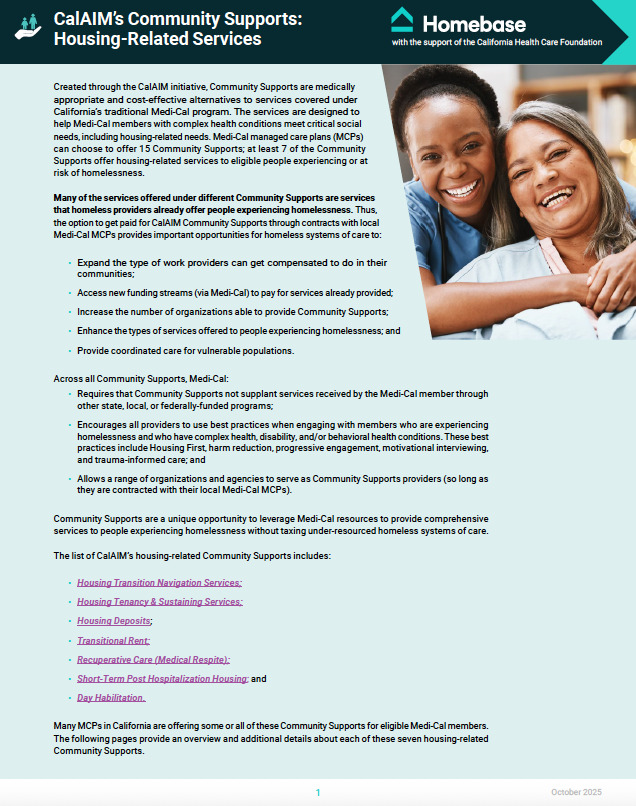
CalAIM’s Community Supports: Housing Related Services
This section of the CalAIM Toolkit for Continuums of Care (CoCs) and CoC Partners provides an overview of CalAIM’s Community Supports housing related services.
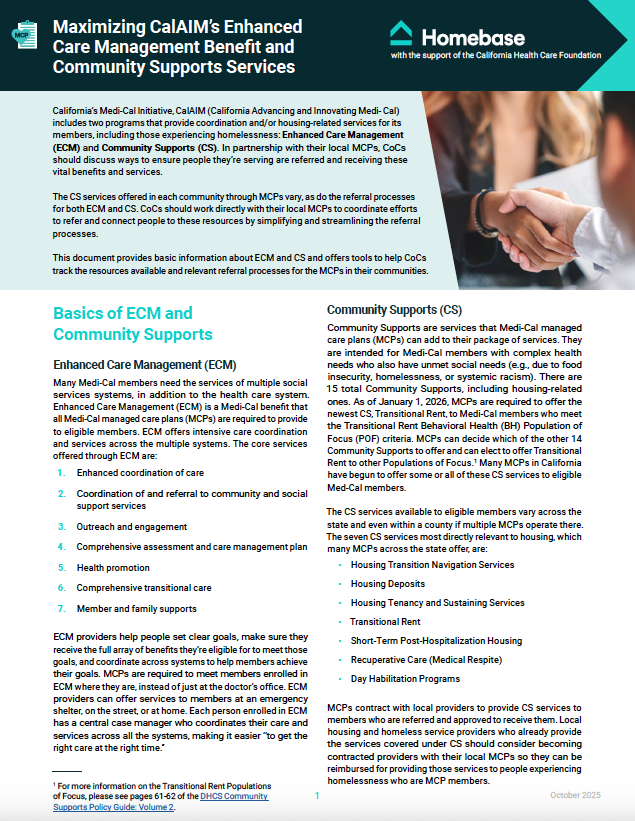
Maximizing CalAIM’s Enhanced Care Management (ECM) Benefit and Community Supports Services
This section of the CalAIM Toolkit for Continuums of Care (CoCs) and CoC Partners provides basic information about ECM and Community Supports and offers tools to help CoCs track the resources available and relevant referral processes for the MCPs in their communities.
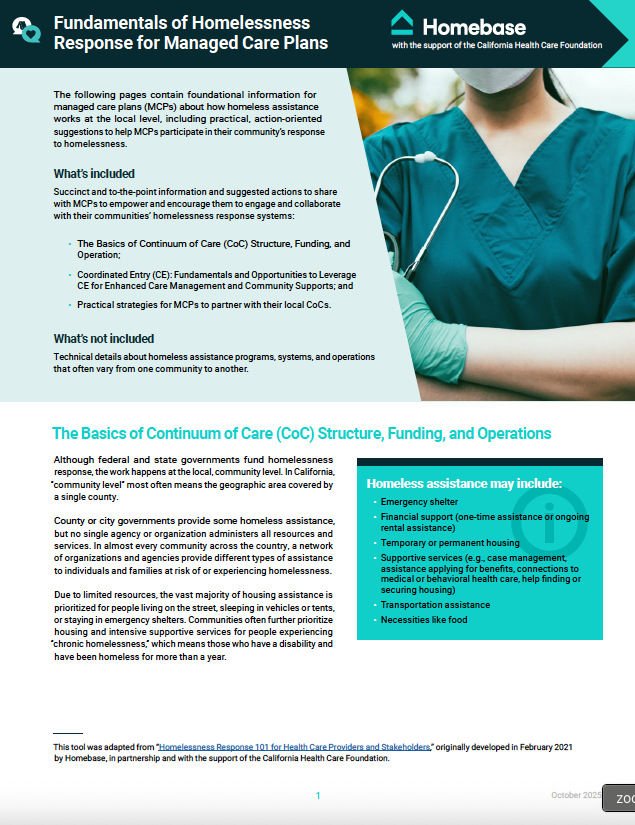
Fundamentals of Homelessness Response for Managed Care Plans
This section of the CalAIM Toolkit for Continuums of Care (CoCs) and CoC Partners contains foundational information for managed care plans (MCPs) about how homeless assistance works at the local level, including practical, action-oriented suggestions to help MCPs participate in their community’s response to homelessness.
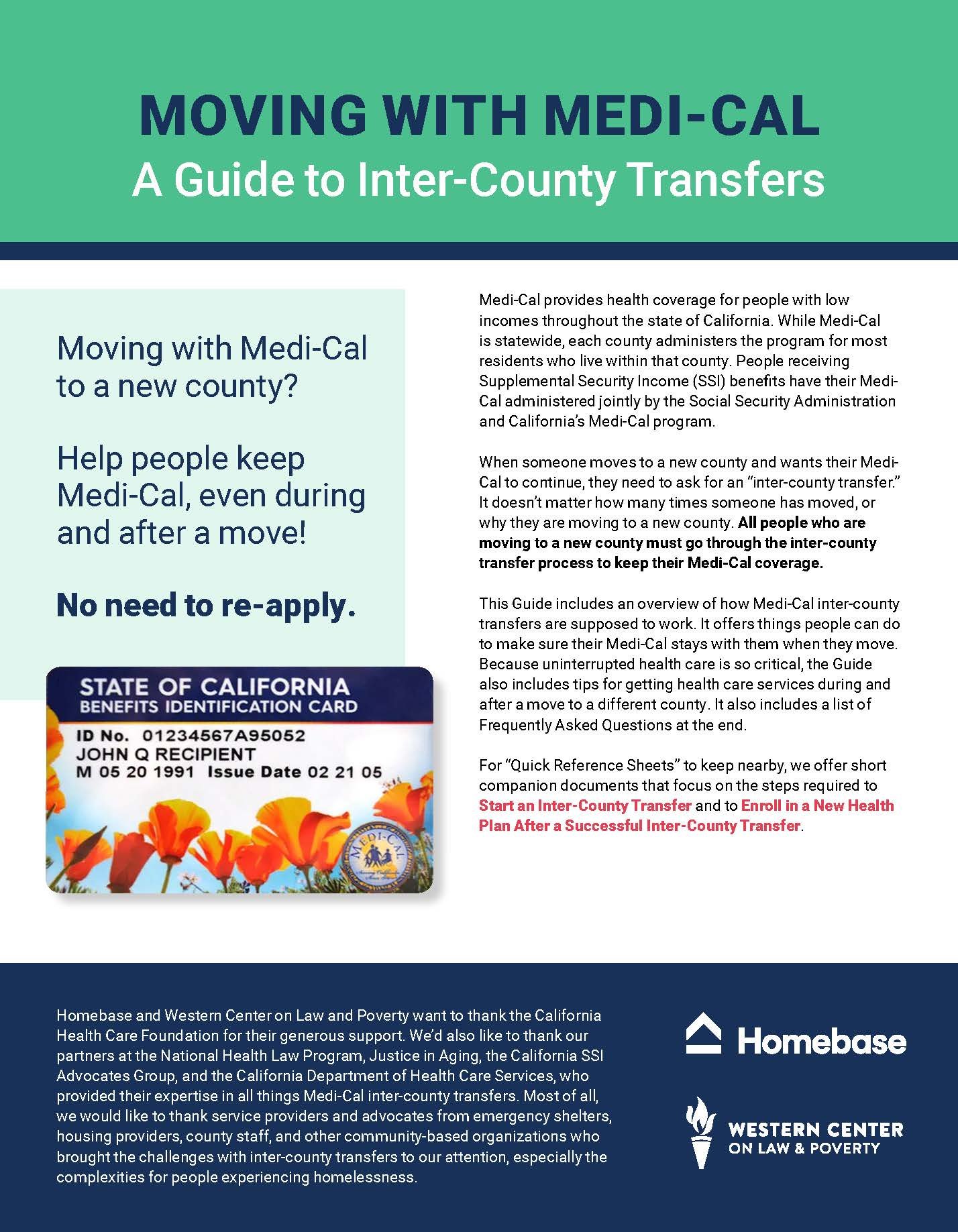
Moving with Medi-Cal
When someone enrolled in Medi-Cal moves to a new county within California and wants their Medi-Cal to continue, they need to ask for an “inter-county transfer.” The transfer process can be especially complicated for people experiencing homelessness. This guide has detailed information about Medi-Cal’s inter-county transfer process.

Toolkit for Street Medicine Programs: Collaborating with Homeless Response Continuums of Care (CoCs)
This Toolkit contains information for Street Medicine providers to better understand their local homeless response Continuums of Care and opportunities to collaborate for the benefit of patients experiencing homelessness.

Lessons Learned from CalAIM: Enacting California's New Housing-Related Services for People Experiencing Homelessness
This webinar provides an overview of key lessons learned from California’s CalAIM housing-related services - Enhanced Care Management and Community Supports - and the Housing and Homelessness Incentive Program. It includes a panel of four partners – from Alameda, Fresno/Madera, Los Angeles, and Santa Barbara counties – sharing their diverse perspectives on successes and challenges in implementing California’s housing-related Medicaid programs for people experiencing homelessness.

Medi-Cal Renewal Toolkit: Help the People You Serve Keep Their Medi-Cal
Updated in August 2025 to reflect the end of waivers put into place in 2023, this toolkit helps service providers, people who are unhoused, and health enrollment navigators keep Medi-Cal members covered.
H.R.1 Implications for People Experiencing Homelessness
This fact sheet provides an overview of the changes to Medicaid and SNAP and their expected impact on people experiencing homelessness, and opportunities for homeless systems of care and providers to mitigate those impacts.

CalAIM's Housing Related Services: Enhanced Care Management and Community Supports for Local Health Jurisdictions
This training provides an overview of CalAIM's housing-related supports so that public health departments can understand and leverage these new resources for the individuals they serve.

Serving People Experiencing Homelessness: Best Practices from Departments of Public Health
This webinar features local California public health departments that are addressing homelessness in their communities through new and innovative ways.
Serving People Experiencing Homelessness: Best Practices for Collaborating with Homeless Systems of Care
This training for local health jurisdictions and public health departments provides an overview of the foundations of the homeless system, so local public health departments can better understand and collaborate with the homeless system of care.
Introduction to Homelessness Response and Coordinated Entry
This training provides an overview of the foundations of the homeless system, so health care partners can better understand and collaborate with the homeless system of care.
Health Care Sector Participation in Coordinated Entry
This training shares opportunities for the health care sector to participate in Coordinated Entry.
Sharing Data Across Health and Homeless Systems of Care
This webinar provides an overview of the importance of data sharing between the health and homelessness sectors. It includes presentations from California communities driving innovations in cross-sector data sharing.
Hospital Discharge: Connecting Patients to Homeless Systems of Care
This training provides insight into opportunities to prevent hospital discharges into homelessness.