
Exploring the Intersection of Homelessness and the Criminal Legal System
This training for cross-sector partners provides an introduction to the homeless system of care and an overview of the practical and legal landscape of the intersection of homelessness and the criminal legal system.
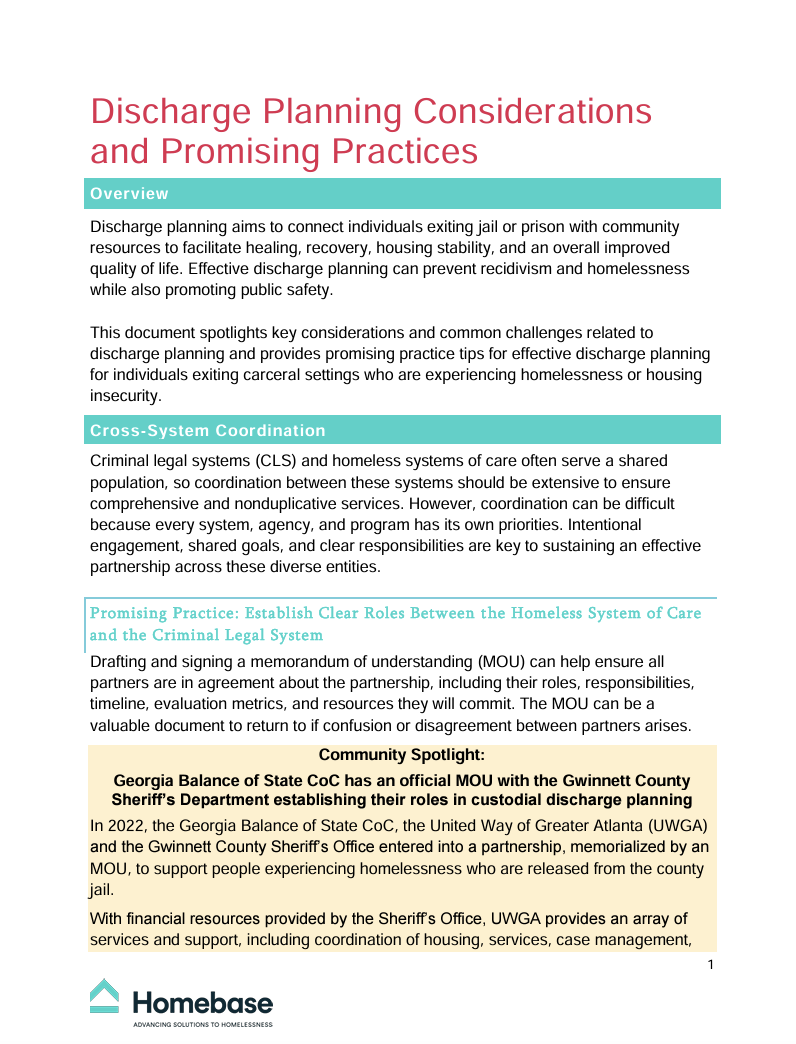
Discharge Planning Considerations and Promising Practices
Discharge planning aims to connect individuals exiting jail or prison with community resources to facilitate healing, recovery, housing stability, and an overall improved quality of life. Effective discharge planning can prevent recidivism and homelessness while also promoting public safety. This document spotlights key considerations and common challenges related to discharge planning and provides promising practice tips for effective discharge planning for individuals exiting carceral settings who are experiencing homelessness or housing insecurity.

Navigating Housing Choice Voucher (HCV) Program Applications for People with Criminal Records
This resource outlines where PHAs have discretion to provide HCVs to people with criminal records and how to prepare for the HCV application process.

The Fair Housing Act and Criminal Background Checks: What Housing Providers and Case Managers Need to Know
This guide provides an overview of what housing and service providers should know about the Fair Housing Act (FHA) and criminal background checks so that they can comply as housing providers and help ensure the rights of their clients are not violated when they seek housing.
Common Obstacles and Creative Approaches to Meeting the Housing Needs of People Who Have Been Incarcerated
This cross-sector training deck features panelists who draw from a variety of cross-system experiences to share insights and solutions to some of the common obstacles communities face when housing people who have been incarcerated.
Homekey Client Engagement Toolkit
This HCD Toolkit is intended to be a resource for providers of Homekey and other programs seeking deeper engagement with their clients. It includes practical fact sheets that providers can use to guide their client feedback processes.

ESG and Indirect Costs Training
An introductory training for Emergency Solutions Grant (ESG) providers on direct, indirect, and adminstrative costs.

Case Managers Roadmap for Housing and Criminal History Information (CHI)
This roadmap offers a high-level overview, key information, and important considerations for case managers as they work to support and collaborate with clients with criminal history information through the housing process.
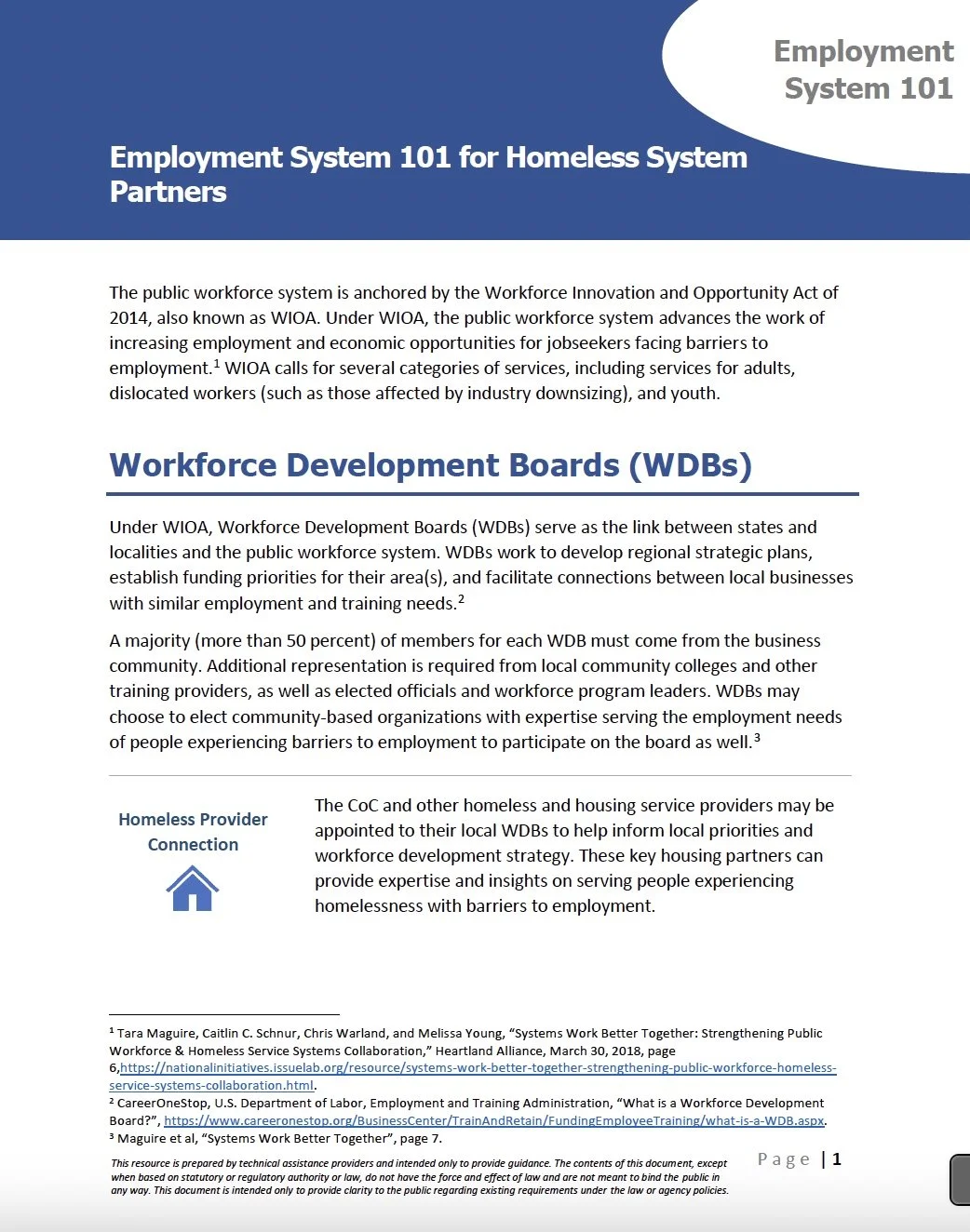
Employment System 101 for Homeless System Partners
The public workforce system is anchored by the Workforce Innovation and Opportunity Act of 2014, also known as WIOA. Under WIOA, the public workforce system advances the work of increasing employment and economic opportunities for jobseekers facing barriers to employment.
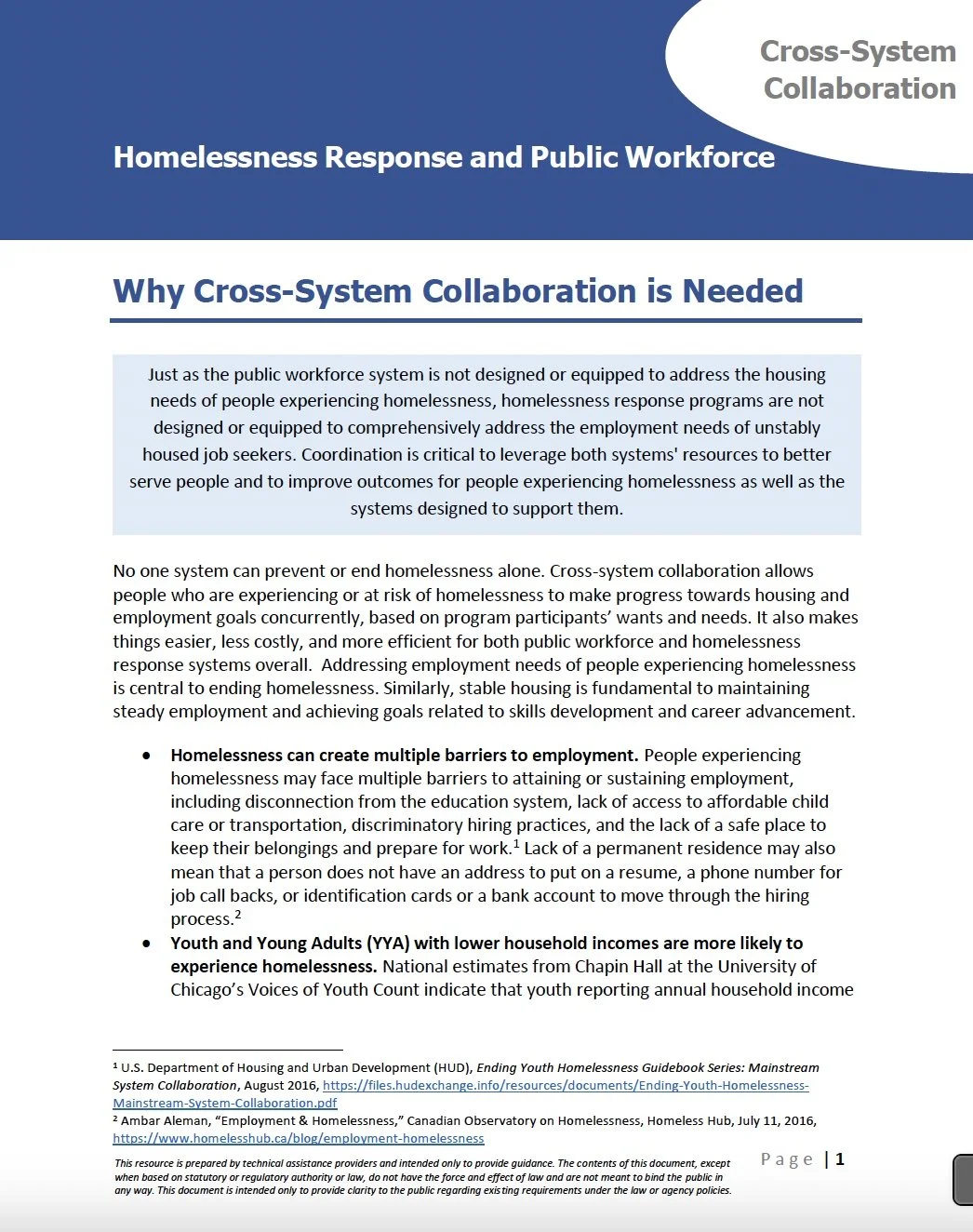
Cross-System Collaboration: Homelessness Response and Public Workforce
Just as the public workforce system is not designed or equipped to address the housing needs of people experiencing homelessness, homelessness response programs are not designed or equipped to comprehensively address the employment needs of unstably housed job seekers. Coordination is critical to leverage both systems' resources to better serve people and to improve outcomes for people experiencing homelessness as well as the systems designed to support them.

Addressing Homelessness in the San Francisco Bay Area: A Framework for Regional Data Sharing
This Framework articulates the value and importance of regional data sharing as a way to ensure that the nine Bay Area counties are collaborating effectively to address the systemic issues that face so many of our most vulnerable and disenfranchised residents. A regional approach to homelessness is visionary, practical, and essential to solving homelessness in the San Francisco Bay Area.

Engaging Landlords to Support Housing for People with Criminal Histories
This guide offers a series of proactive strategies to support cross-system practitioners in landlord engagement efforts to decrease barriers to housing for people impacted by the criminal legal system.

No Bars to Home: Meeting the Housing Needs of People Impacted by the Criminal Legal System
This report highlights essential elements and key takeaways of successful housing programs supporting people impacted by the criminal legal system, with a particular focus on people who were formerly incarcerated.
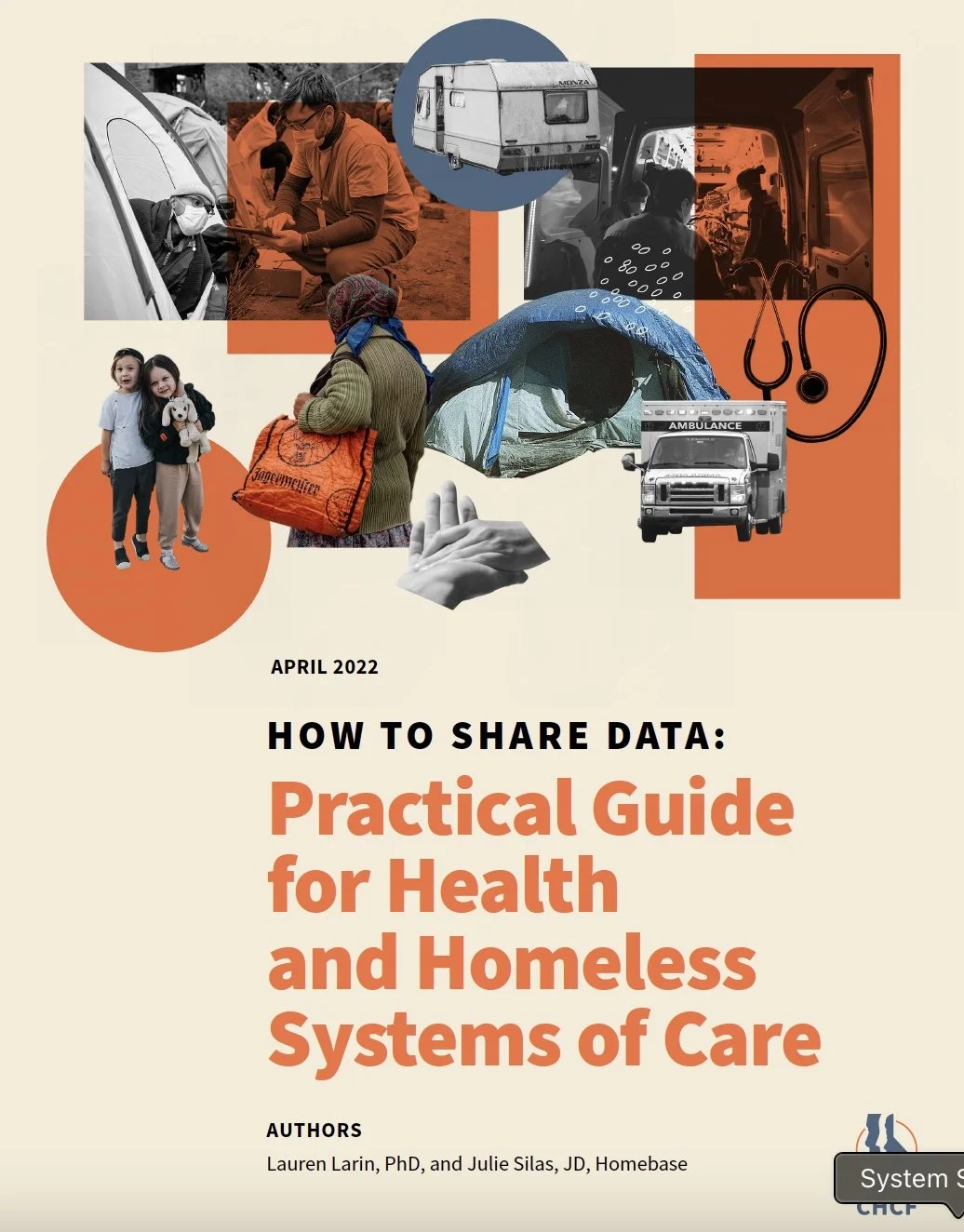
How to Share Data - Practical Guide for Health and Homelessness System of Care
This practical guide is intended to serve as a tool for communities at any stage of engagement in cross-sector data sharing between health and homeless systems of care. It is designed to help communities ready to start such efforts for the first time, as well as those that have room to grow their data sharing efforts.

Disaster Planning and Response- A Guide to Preparation for Homelessness Response Programs
This guide outlines questions that homelessness response programs should answer as they plan for and respond to natural disasters. The guide places a focus on the needs of people experiencing homelessness with serious mental illness (SMI), substance use disorder (SUD), or co-occurring disorders (CODs).
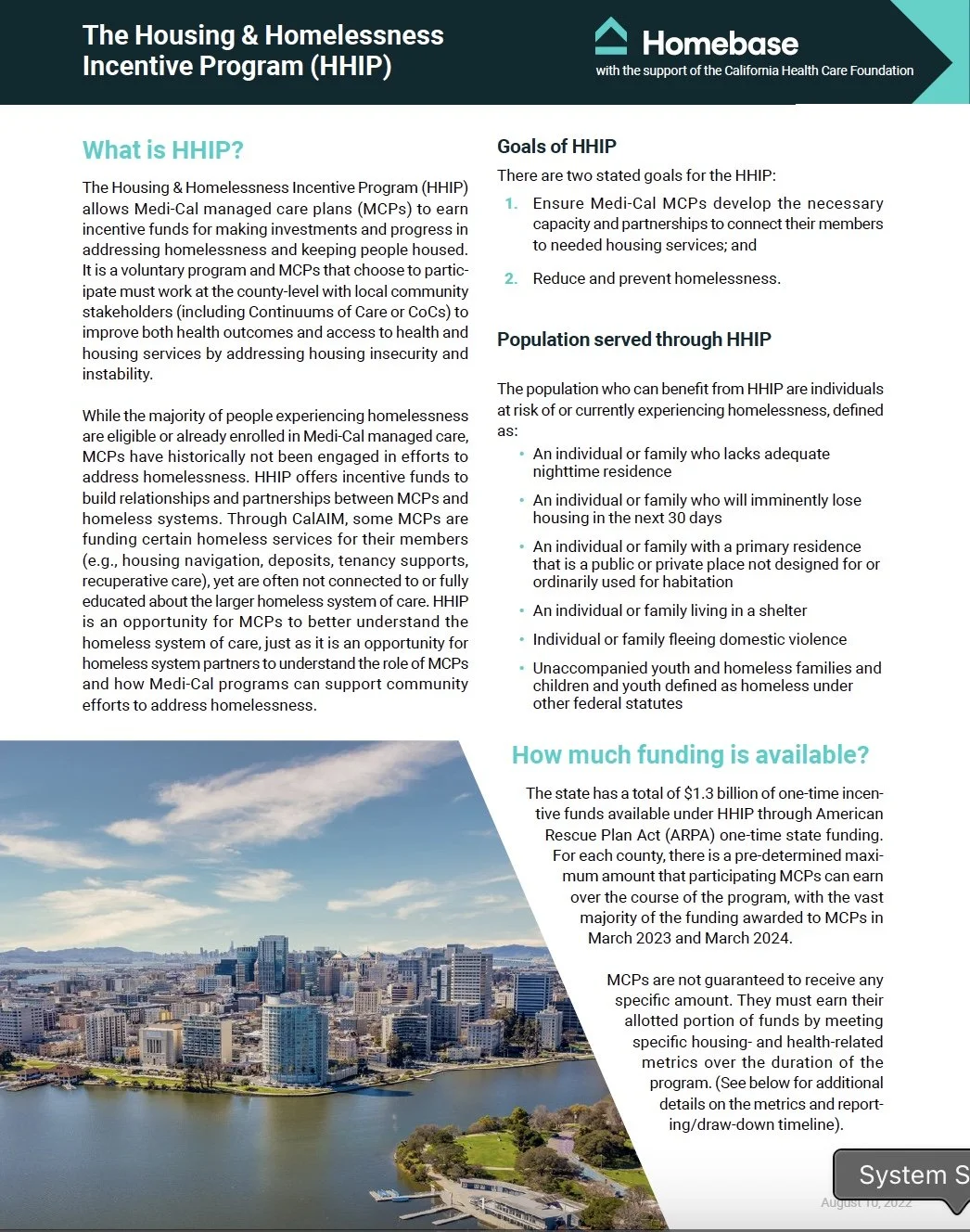
The Housing and Homelessness Incentive Program (HHIP)
The Housing & Homelessness Incentive Program (HHIP) allows Medi-Cal managed care plans (MCPs) to earn incentive funds for making investments and progress in addressing homelessness and keeping people housed. This resource explores the goals of HHIP and the process for how MCPs earn HHIP funds.

Fair Housing Protections for People with Serious Mental Illness, Substance Use Disorder, and Co-Occurring Disorders
People experiencing or at risk of homelessness with mental illness or substance use disorder (SUD) often have a difficult time obtaining housing and may face discrimination because of their conditions. There are federal laws that protect people from this type of discrimination and ensure equal access and opportunity to enjoy housing that suits their needs.

Breaking Down Silos: How to Share Data to Improve the Health of People Experiencing Homelessness
Purposeful collaborations between the health care and homeless systems of care address the important relationship between health care and housing. This report focuses on the various ways in which the two sectors in California are sharing data with each other to better coordinate and support mutual clients within their communities.
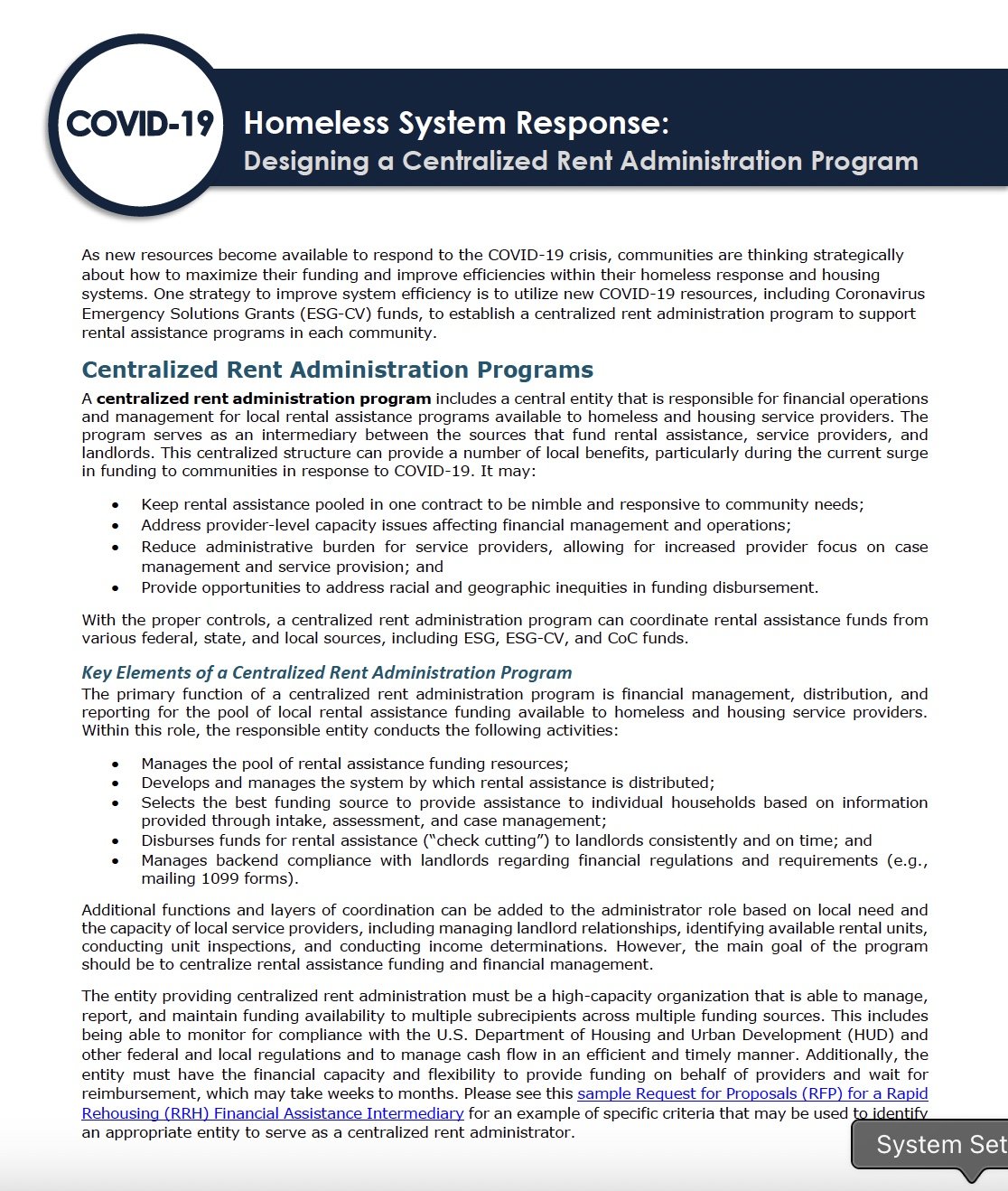
COVID 19 - Homeless System Reponse: Designing a Centralized Rent Administration Program
This brief provides information on centralized rent programs: key elements, models, and various case studies.
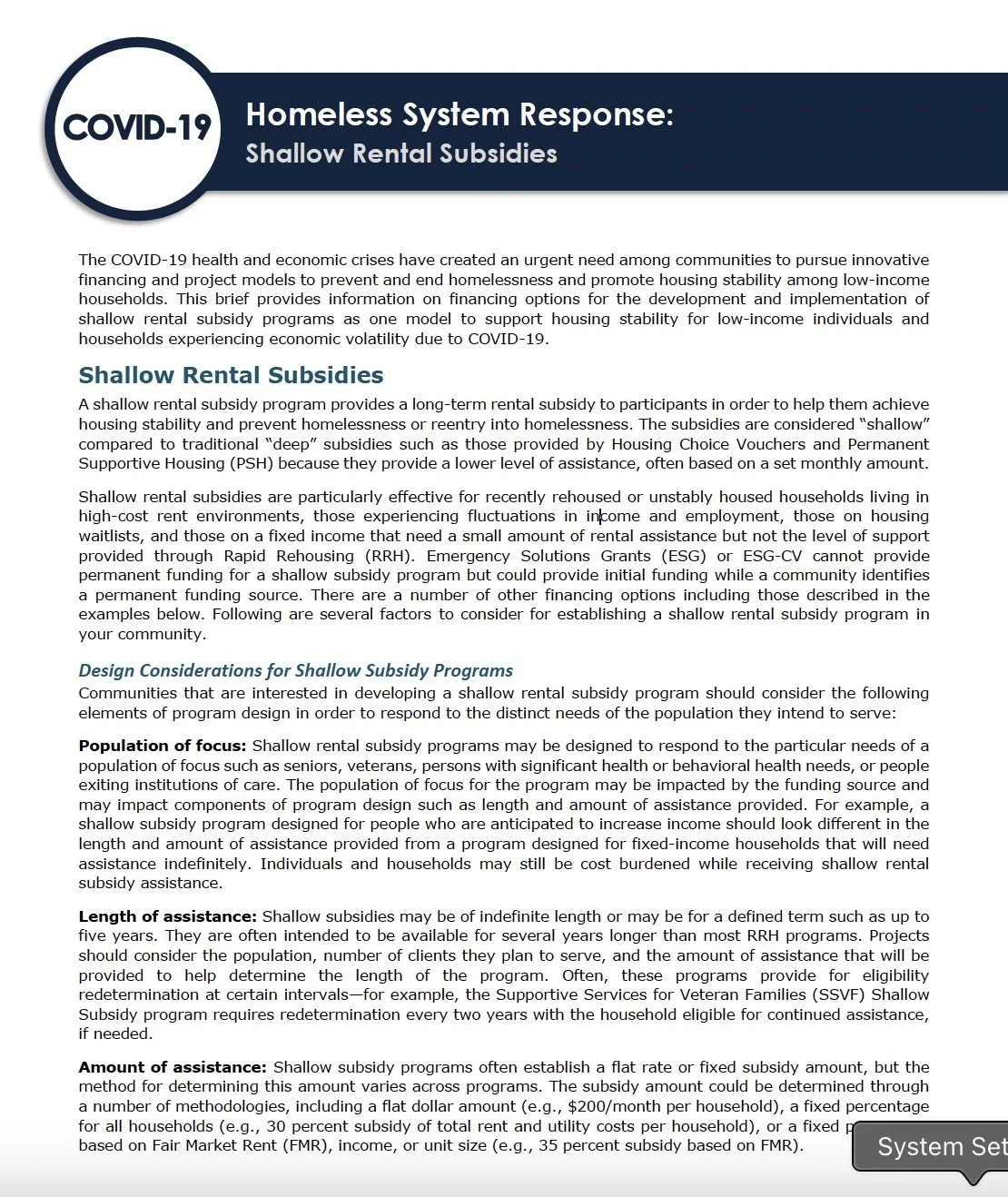
COVID 19 - Homeless System Reponse: Shallow Rental Subsidies
This brief provides information on financing options for the development and implementation of shallow rental subsidy programs as one model to support housing stability for low-income individuals and households experiencing economic volatility.