
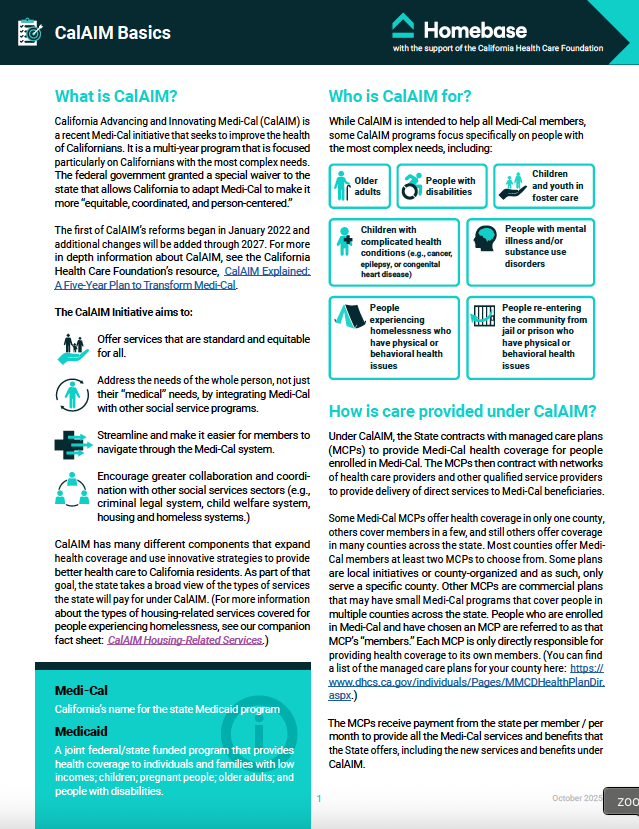
CalAIM Basics
This section of the CalAIM Toolkit for Continuums of Care (CoCs) and CoC Partners provides an overview of the California Advancing and Innovating Medi-Cal (CalAIM), a recent Medi-Cal initiative that seeks to improve the health of Californians.
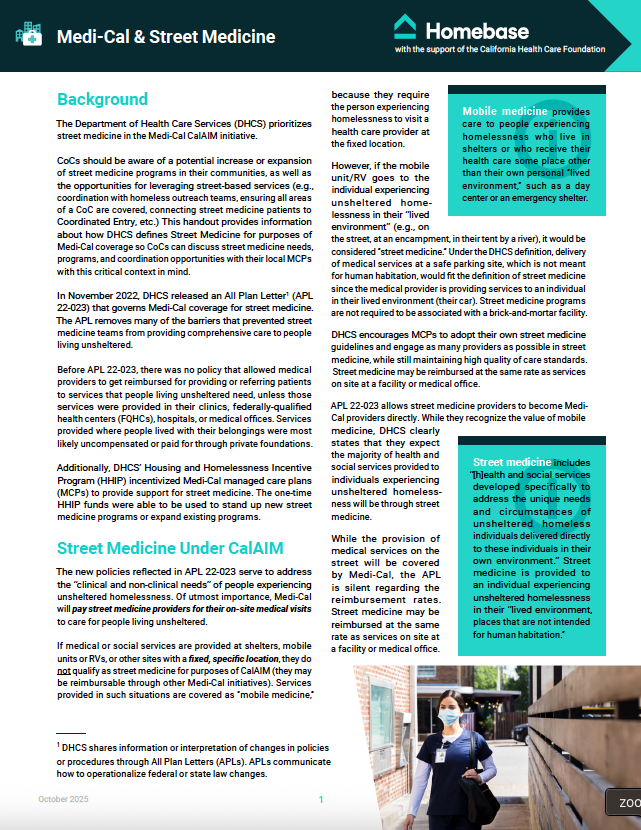
Medi-Cal and Street Medicine
This section of the CalAIM Toolkit for Continuums of Care (CoCs) and CoC Partners provides information about how DHCS defines Street Medicine for purposes of Medi-Cal coverage so CoCs can discuss street medicine needs, programs, and coordination opportunities with their local MCPs with this critical context in mind.
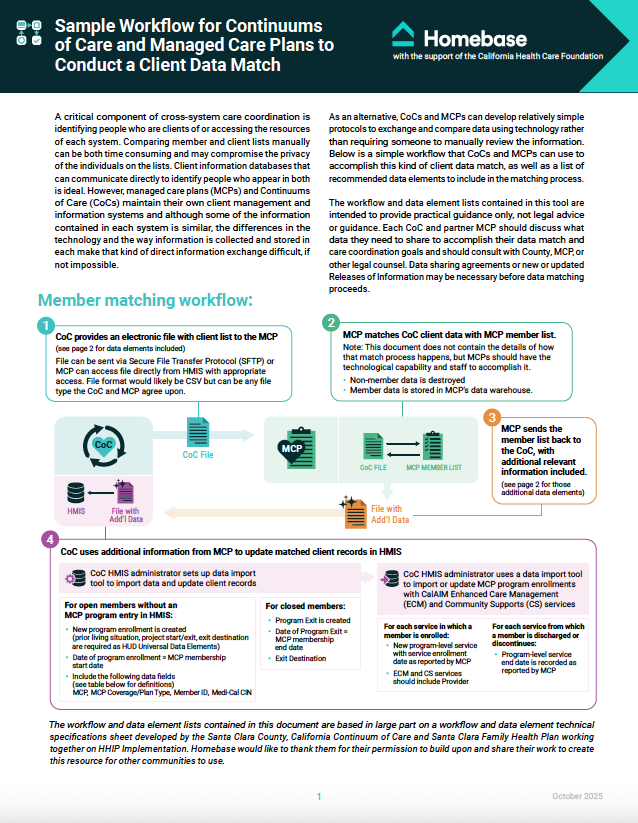
Sample Workflow for Continuums of Care and Managed Care Plans to Conduct a Client Data Match
This section of the CalAIM Toolkit for Continuums of Care (CoCs) and CoC Partners presents a simple workflow that CoCs and MCPs can use to accomplish this kind of client data match, as well as a list of recommended data elements to include in the matching process.
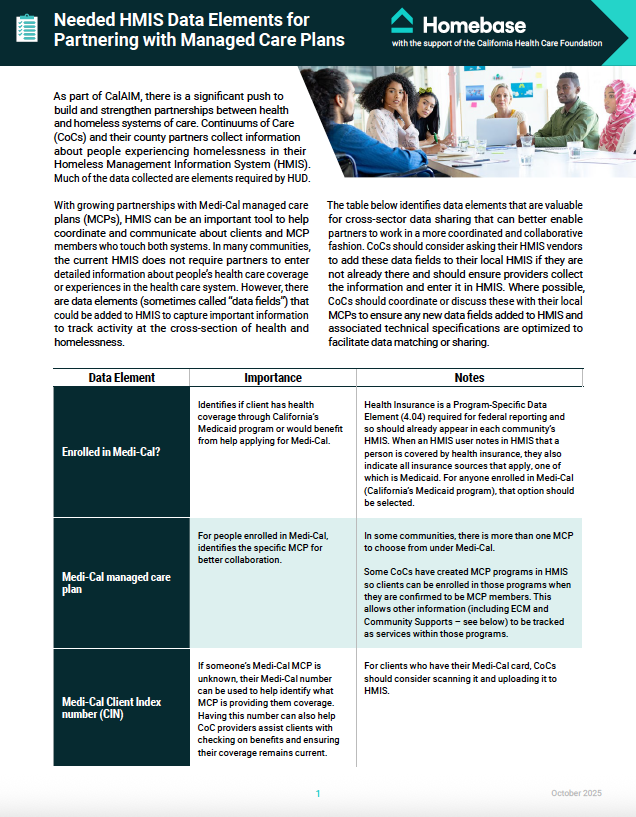
Needed HMIS Data Elements for Partnering with Managed Care Plans
This section of the CalAIM Toolkit for Continuums of Care (CoCs) and CoC Partners identifies data elements that are valuable for cross-sector data sharing that can better enable partners to work in a more coordinated and collaborative fashion.
Bi-lateral Data Sharing Agreement Between a Continuum of Care and Managed Care Plan
This section of the CalAIM Toolkit for Continuums of Care (CoCs) and CoC Partners is a sample bi-lateral data sharing agreement (DSA) that is meant to help cross-sector partners identify the common components of a DSA between Continuum of Care (CoC) agencies responsible for HMIS data and Medi-Cal managed care plans (MCPs).
CalAIM’s Community Supports: Housing Related Services
This section of the CalAIM Toolkit for Continuums of Care (CoCs) and CoC Partners provides an overview of CalAIM’s Community Supports housing related services.
Maximizing CalAIM’s Enhanced Care Management (ECM) Benefit and Community Supports Services
This section of the CalAIM Toolkit for Continuums of Care (CoCs) and CoC Partners provides basic information about ECM and Community Supports and offers tools to help CoCs track the resources available and relevant referral processes for the MCPs in their communities.
Fundamentals of Homelessness Response for Managed Care Plans
This section of the CalAIM Toolkit for Continuums of Care (CoCs) and CoC Partners contains foundational information for managed care plans (MCPs) about how homeless assistance works at the local level, including practical, action-oriented suggestions to help MCPs participate in their community’s response to homelessness.
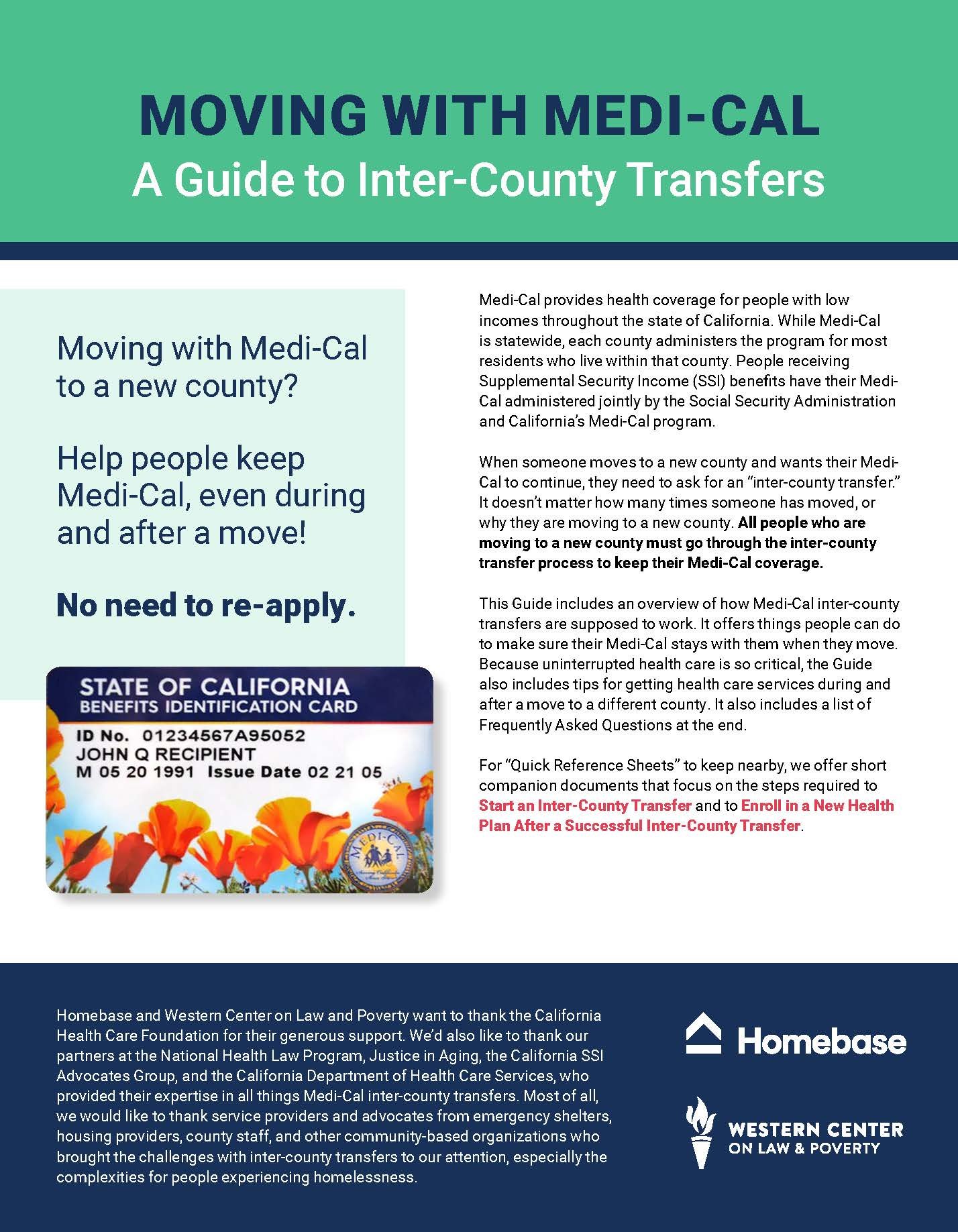
Moving with Medi-Cal
When someone enrolled in Medi-Cal moves to a new county within California and wants their Medi-Cal to continue, they need to ask for an “inter-county transfer.” The transfer process can be especially complicated for people experiencing homelessness. This guide has detailed information about Medi-Cal’s inter-county transfer process.
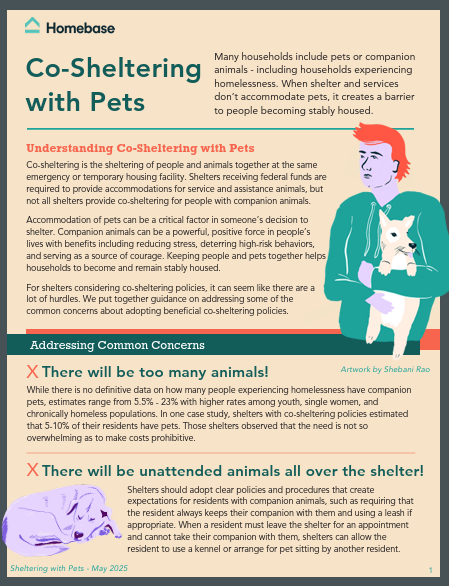
Co-Sheltering with Pets
This material provides guidance on addressing some of the common concerns about adopting beneficial co-sheltering policies for people with companion animals who live in emergency or temporary housing facilities.

Creative Strategies to Enhance Your Budget Webinar
On May 8, 2025, Homebase invited a group of panelist experts from nonprofit and philanthropic sectors to share practical insights, case studies, and resourceful approaches to financial sustainability. The discussion provided tips on how to adopt innovative strategies for organizations to maximize budgets and sustain missions.
Responsible Financial Management Webinar
On February 5, 2025, Homebase delivered a webinar designed for CoC-funded organizations on best practices for financial management. This session provided key strategies to navigate fiscal challenges, ensure compliance with funding requirements, and maintain financial stability while addressing urgent community needs.

Housing CA Conference Presentation: The First Step is to Understand
Homebase was honored to facilitate a panel of experts from different areas of California who have experienced homelessness and are catalyzing solutions and change in their communities, the State and nationwide at the 2025 Housing California conference. The panel shared their experiences, expertise and lead discussion about implementing solutions to homelessness through collective action and shifting power structures while highlighting data and humanizing the issue of homelessness.
Performance Metrics and Results Based Accountability
This presentation provides an overview of state and federal expectations for program outcomes and monitoring, and introduces the Results-Oriented Management and Accountability (ROMA) framework as a tool for performance management and continuous improvement.
Housing First Training for CoC Providers
This provider training introduces the core principles of Housing First, emphasizing low-barrier, client-centered approaches to housing, while exploring practical strategies for implementation across programs.
NHSDC Conference Presentation - Serving High Acuity Participants in RRH
This conference presentation explored how communities can effectively serve high-acuity households through Rapid Rehousing, covering system-level strategies, program design considerations, data-informed practices, and lessons learned from providers implementing these approaches.
CoC Compliance Intake Documentation and Client File Management Training
This training helps CoC staff strengthen intake and file management practices by exploring common documentation errors, practicing how to identify and correct them, and sharing strategies to prevent issues before they occur.
Managing Uncertainty for CoCs and Homeless Services Providers Toolkit
This report outlines strategies for CoCs and homeless response providers to manage uncertainty, including processing new information, communicating with clients using trauma-informed principles, and adapting grants and budgets.
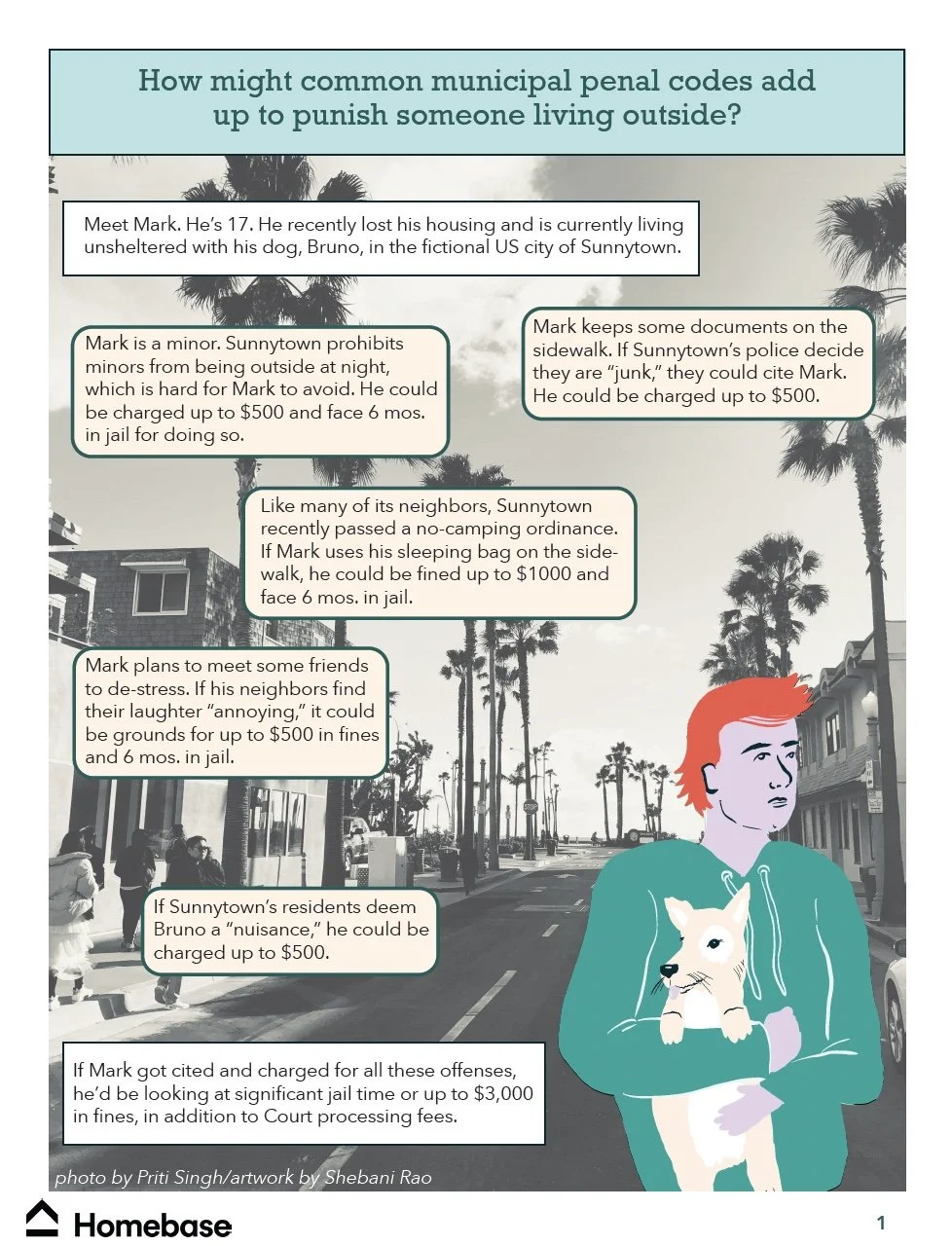
Impacts of Criminalizing Homelessness
These fact sheets show the impact of local laws that criminalize people living outside.
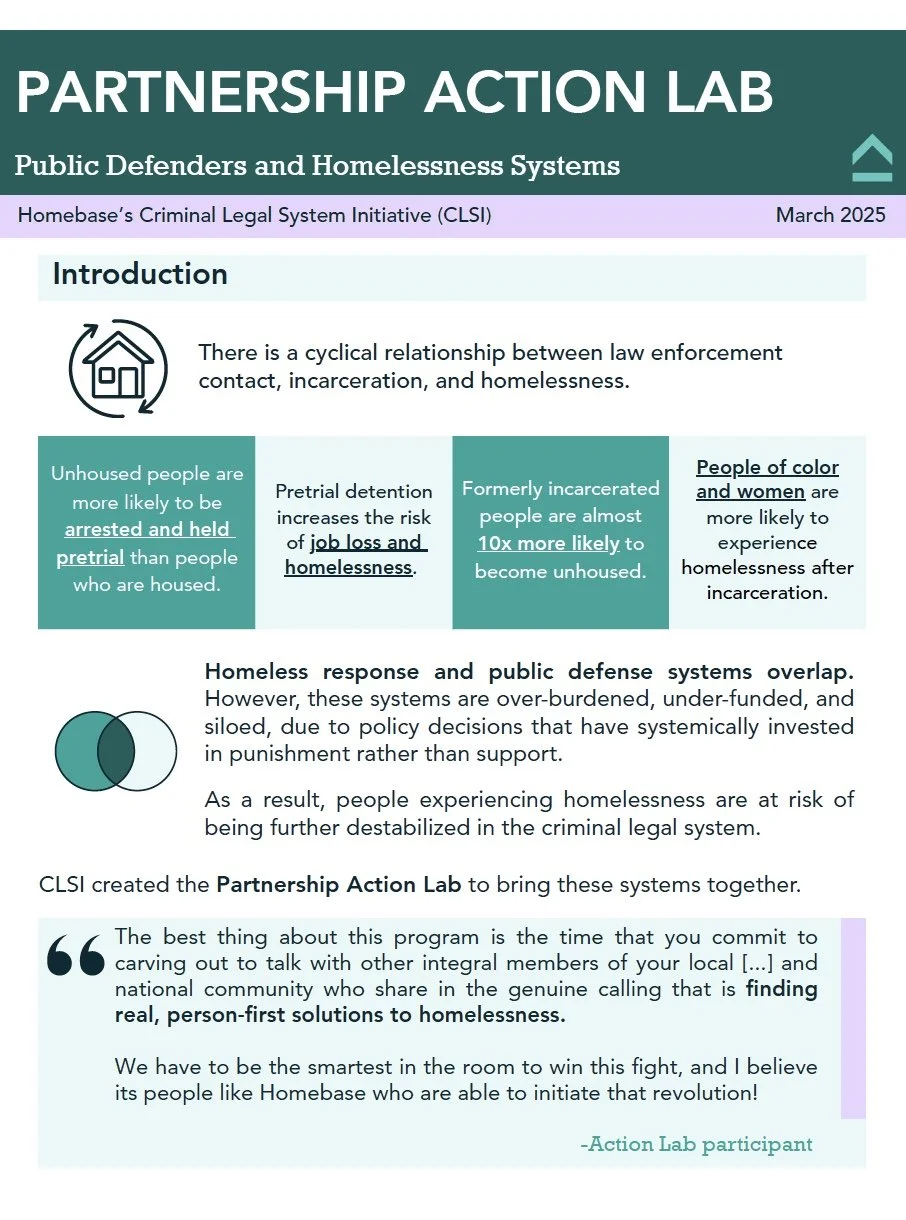
Partnership Action Lab
The Partnership Action Lab brought together homelessness systems and public defenders to improve outcomes for people who are experiencing housing instability and charged with and/or convicted of misdemeanors.