
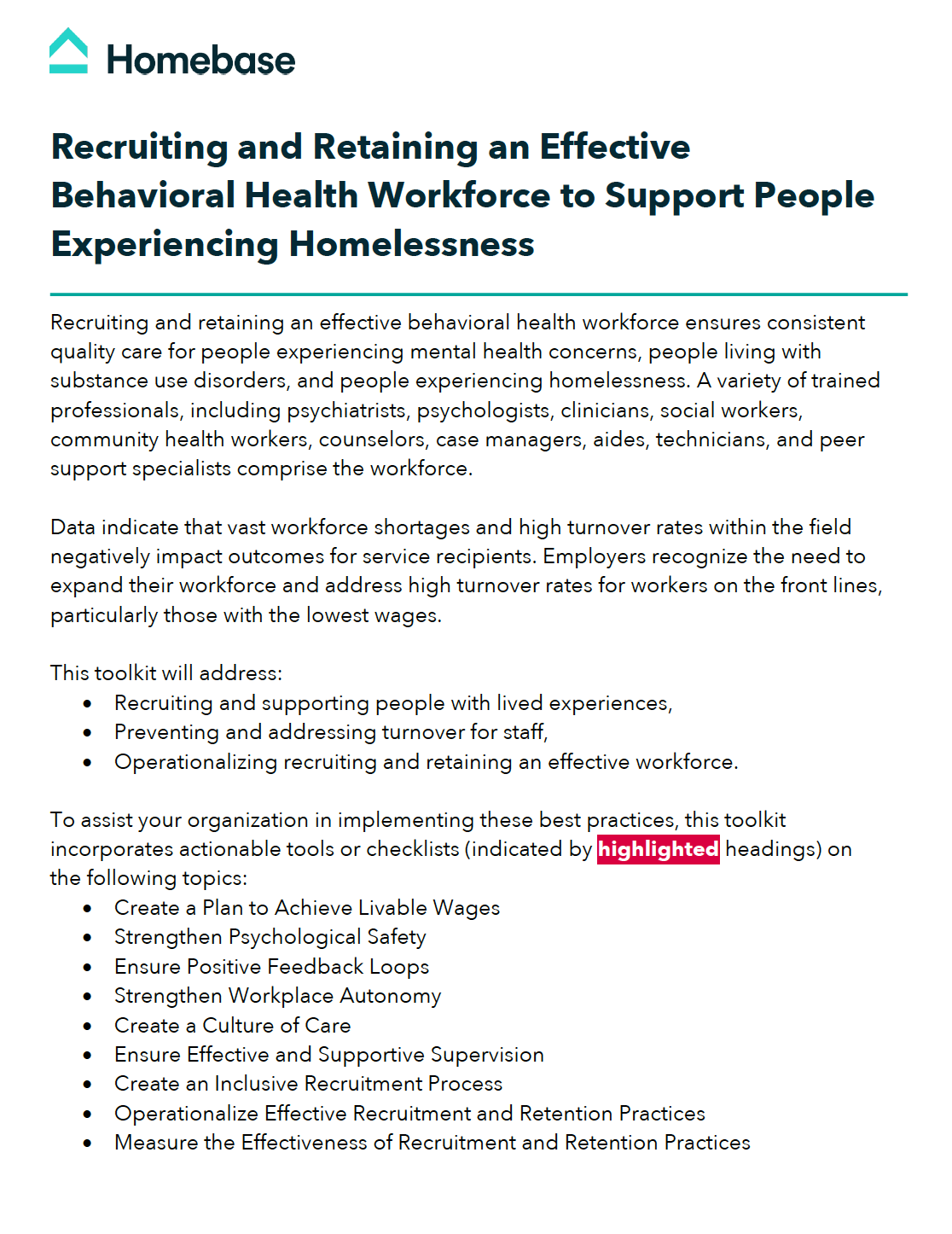
Recruiting and Retaining an Effective Behavioral Health Workforce to Support People Experiencing Homelessness
Recruiting and retaining an effective behavioral health workforce ensures consistent quality care for people experiencing mental health concerns, people living with substance use disorders, and people experiencing homelessness. This toolkit addresses recruitment and support for people with lived experiences, preventing and addressing staff turnover, and operationalizing recruitment and retention of an effective workforce.
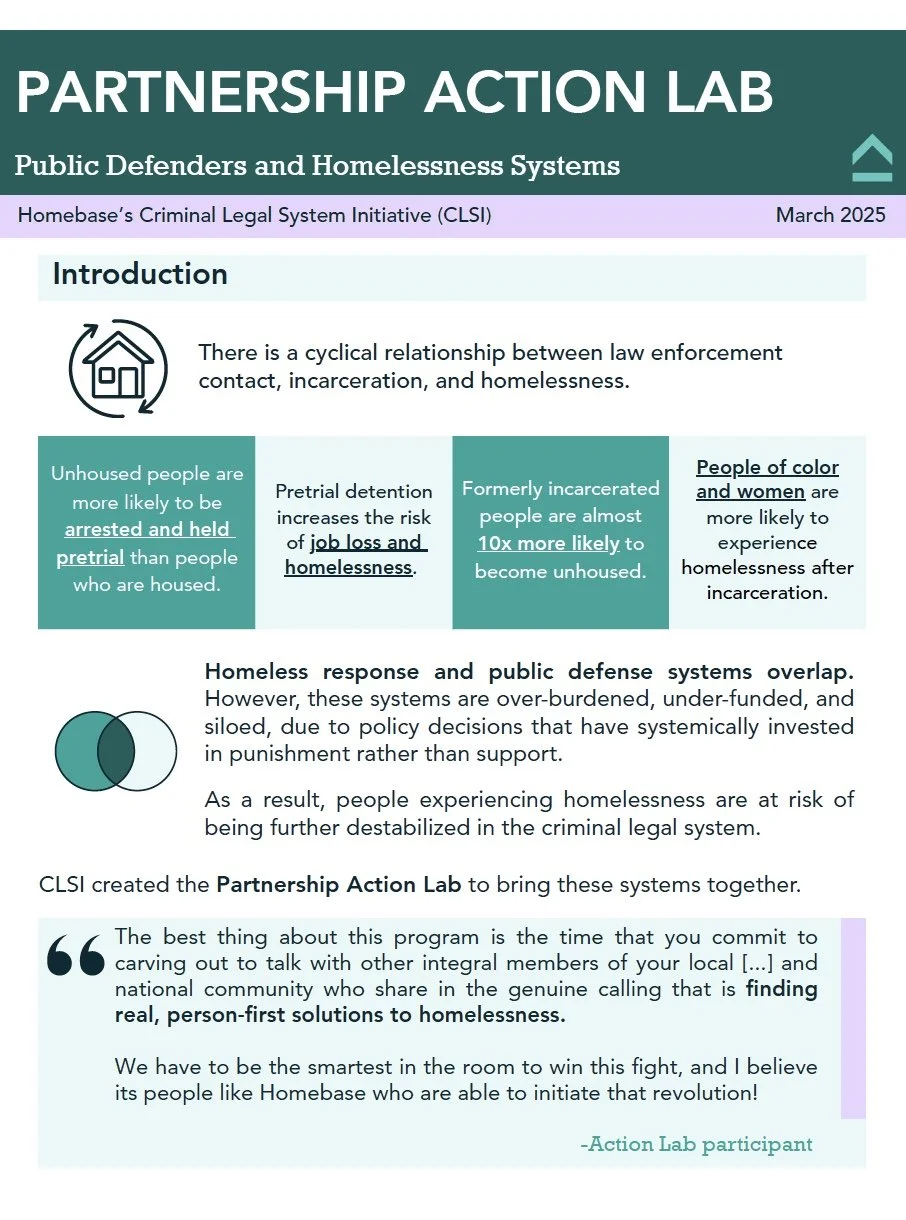
Partnership Action Lab
The Partnership Action Lab brought together homelessness systems and public defenders to improve outcomes for people who are experiencing housing instability and charged with and/or convicted of misdemeanors.
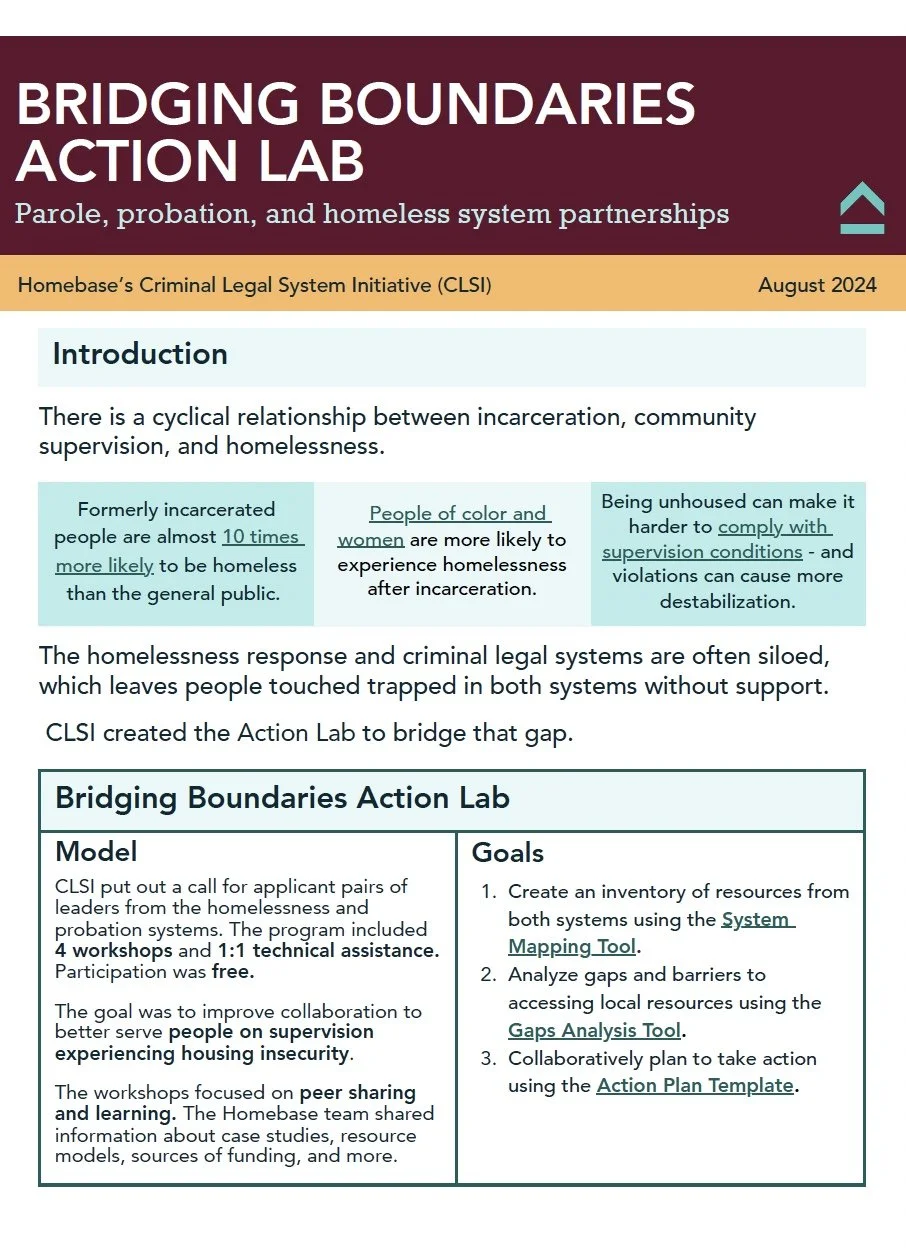
Bridging Boundaries Action Lab
The Bridging Boundaries Action Lab brought together parole, probation, and homelessness systems to reduce barriers to housing for people involved with the criminal legal system.

Disrupting the Cycle: Public Housing Authorities Advancing Justice Through Housing
This session at the NAHRO National Conference explored the role PHAs can play in breaking the homelessness-criminal legal system cycle by implementing trauma-informed, low-barrier policies.
PHAs and the Criminalization of Homelessness
This session at the Northern California Nevada National Association of Housing and Redevelopment Officials (NAHRO) conference focused on the Grants Pass decision, why it matters for Public Housing Authorities and other housing providers, and what providers can do to help protect their clients while responding to an ever-changing legal landscape.
Disrupting the Homelessness-Criminal Legal System Cycle through Strategic Partnerships
This session at the NAEH conference was led by homelessness system leaders with experience with building partnerships focused on high impact intervention points – pre-sentencing (public defenders) and post-release (probation).

Getting Creative with Funding: Leveraging criminal legal system funds for housing and supportive services
This conference session at Housing California focused on strategies for how CoCs can work with criminal legal system partners to leverage AB 109 funds for housing dedicated to people with criminal records.

Overcoming Barriers to a Thriving Homeless System Workforce
Homebase presented on workforce development at the national Housing First Partners Conference in April 2024. This presentation covers retention, burnout and well-being, and living wages.
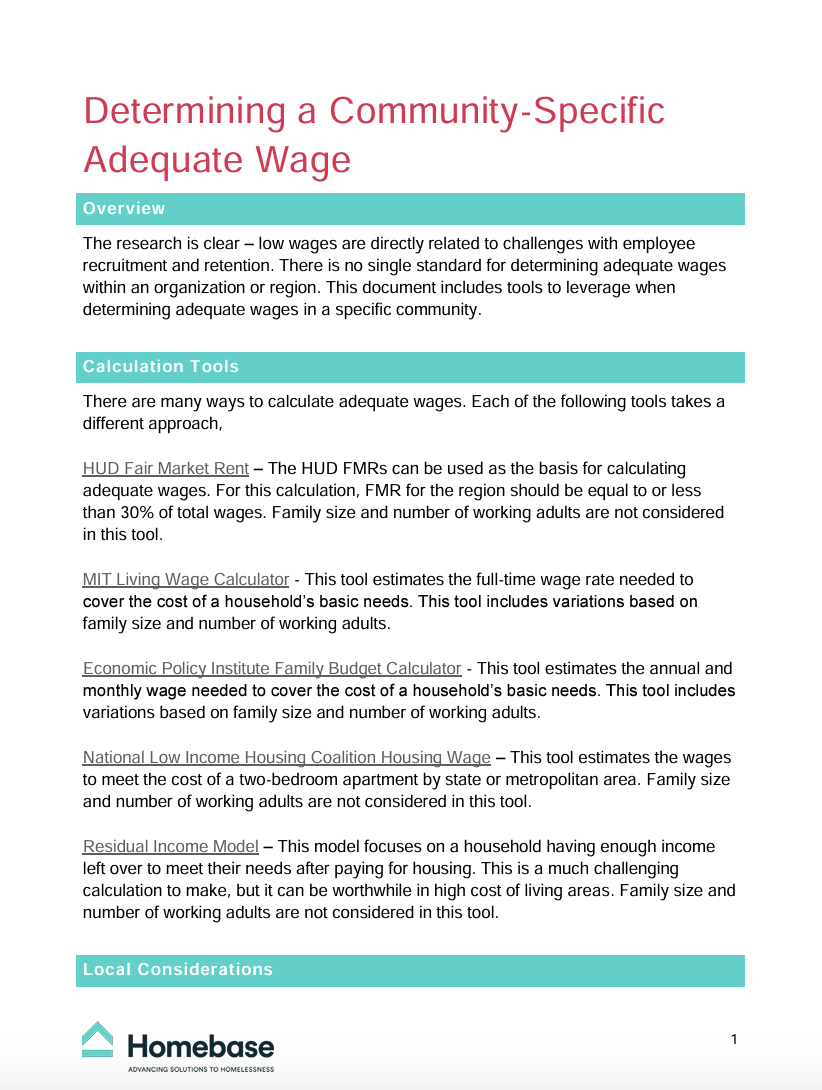
Determining a Community-Specific Adequate Wage
The research is clear – low wages are directly related to challenges with employee recruitment and retention. There is no single standard for determining adequate wages within an organization or region, but this document includes tools to help determine what an adequate wage may look like in your community.
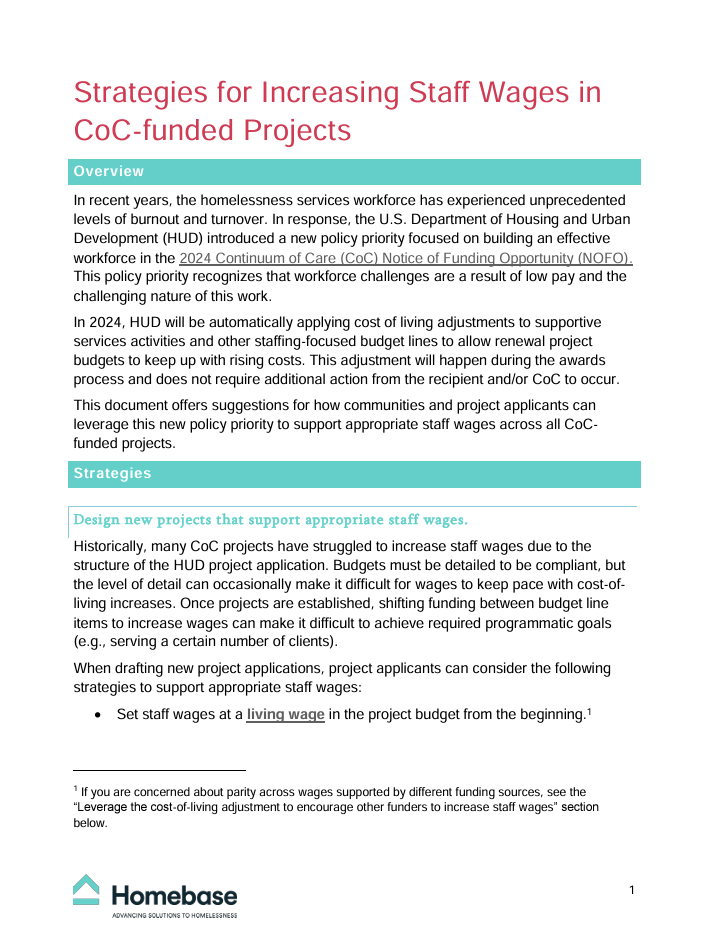
Strategies for Increasing Staff Wages in CoC-funded Projects
In 2024, the U.S. Department of Housing and Urban Development (HUD) introduced a new policy priority focused on building an effective workforce in the Continuum of Care (CoC) Notice of Funding Opportunity (NOFO). During the awards process, HUD will automatically apply cost of living adjustments to supportive services activities and other staffing-focused budget lines to allow renewal project budgets to keep up with rising costs. This document offers suggestions for how communities and project applicants can leverage this new policy priority to support appropriate staff wages across all CoC-funded projects.
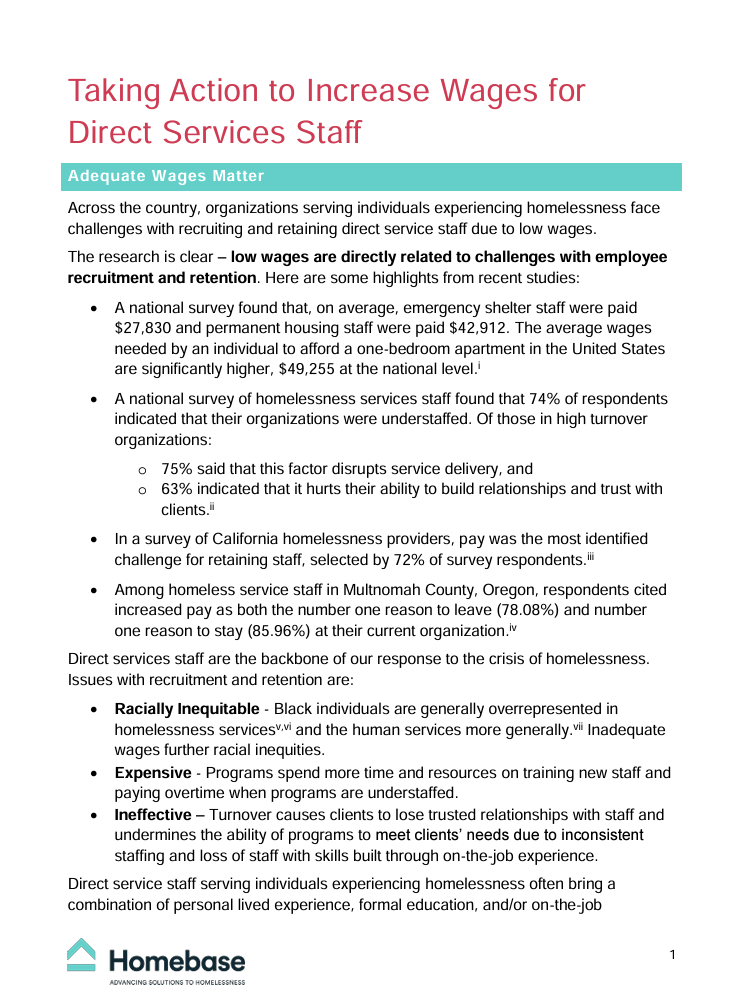
Taking Action to Increase Wages for Direct Services Staff
Across the country, organizations serving individuals experiencing homelessness face challenges with recruiting and retaining direct service staff due to low wages. The research is clear – low wages are directly related to challenges with employee recruitment and retention. This resource offers steps organizations and funders can take to improve wages and support front-line workers.
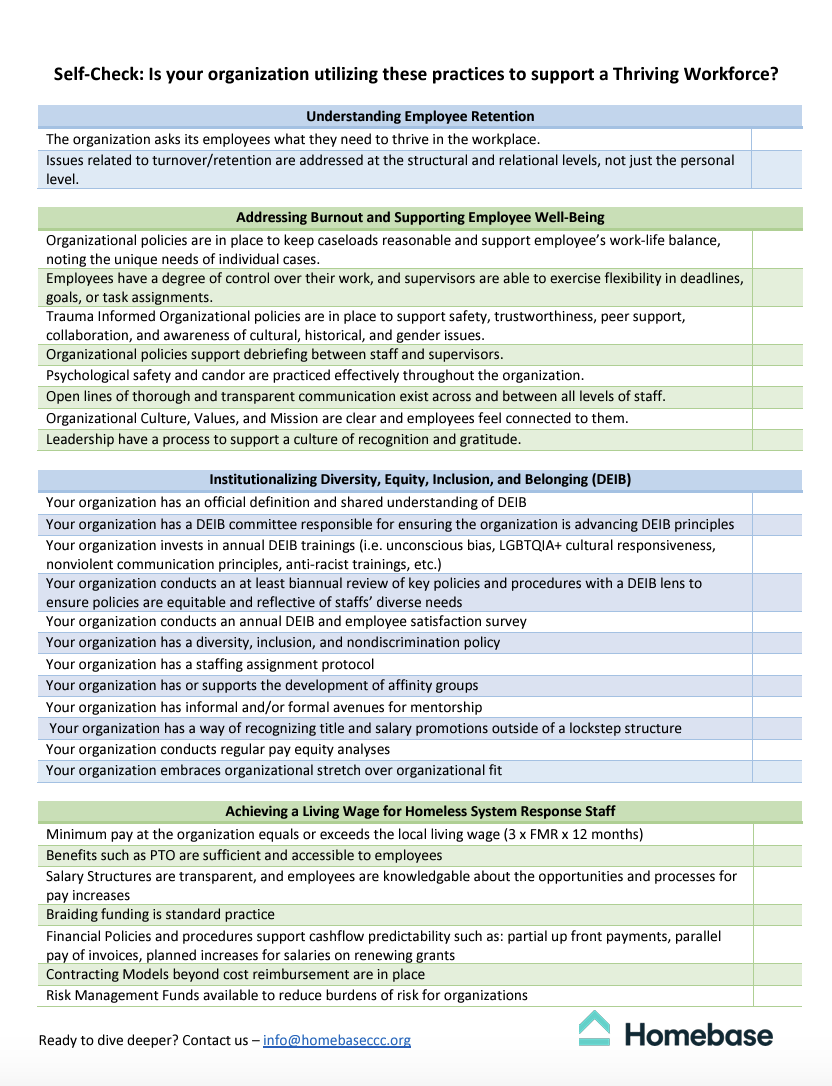
Thriving Homelessness Response Workforce Checklists
Homelessness service providers often experience high rates of staff turnover, burnout, and low wages. These resources, shared at the 2024 Housing First Partners Conference, support development of a thriving homelessness systems workforce.