
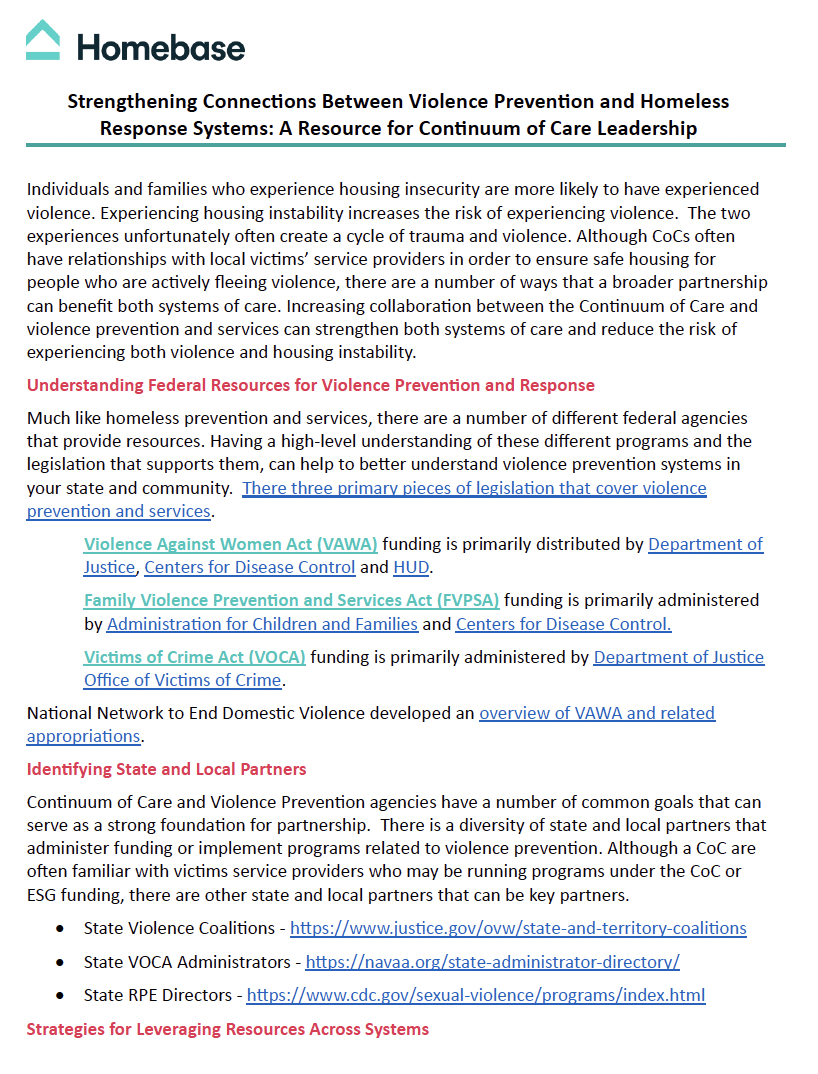
Strengthening Connections Between Violence Prevention and Homeless Response Systems: A Resource for Continuum of Care Leaders
Individuals and families who experience housing insecurity are more likely to have experienced violence, and experiencing housing instability increases the risk of experiencing violence. The two experiences can create a cycle of trauma and violence. Although CoCs often have relationships with local victims’ service providers to ensure safe housing for people who are actively fleeing violence, there are a number of ways that a broader partnership can benefit both systems of care. This resource pulls together guidance and tips for strengthening those partnerships.
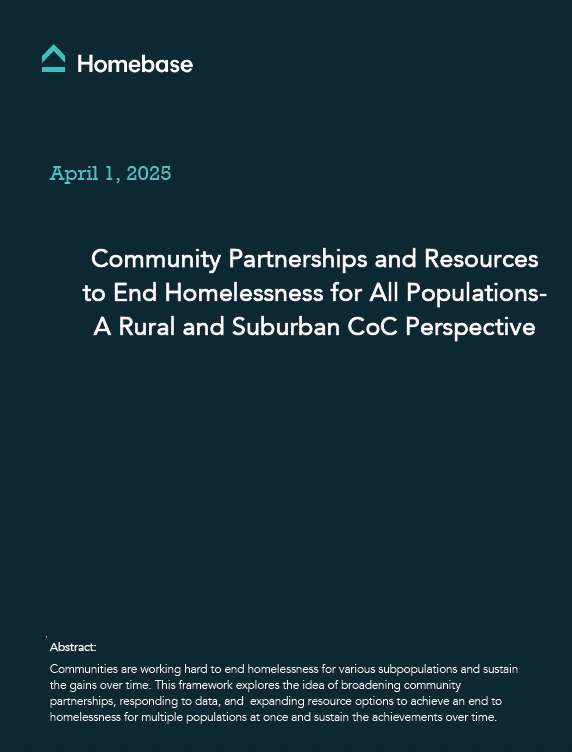
Community Partnerships and Resources to End Homelessness for all Populations - a Rural and Suburban CoC Perspective
With a focus on rural and suburban Continuums of Care (CoCs), this framework explores the idea of broadening community partnerships, responding to data, and expanding resource options to achieve an end to homelessness for multiple populations at once and sustain the achievements over time.
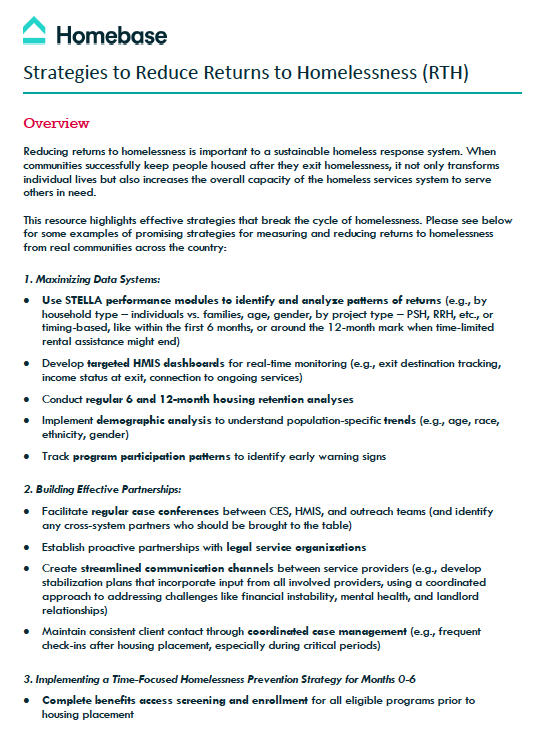
System Performance Measure Improvement Toolkit
These guides are designed to help communities, Continuums of Care (CoCs), and homeless service providers address and improve key aspects of the homelessness system of care. They provide evidence-based, practical approaches for increasing employment income, securing permanent housing, preventing first-time homelessness, reducing time spent homeless, and preventing returns to homelessness.
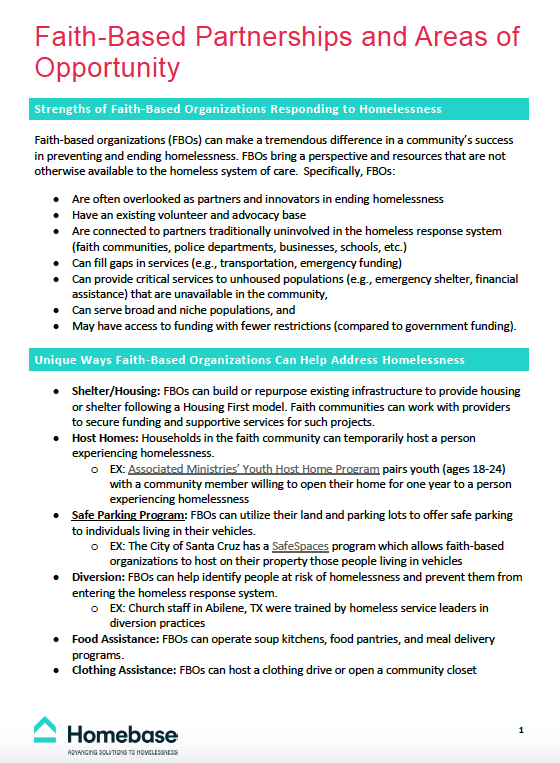
Faith-Based Community Partnerships and Areas of Opportunity
Faith-based organizations (FBOs) can make a tremendous difference in a community’s success in preventing and ending homelessness. FBOs bring a perspective and resources that are not otherwise available to the homeless system of care. This guide offers potential strengths of FBO partnerships, along with opportunities for FBOs to support homelessness response and strategies homeless systems can employ to support these partnerships.
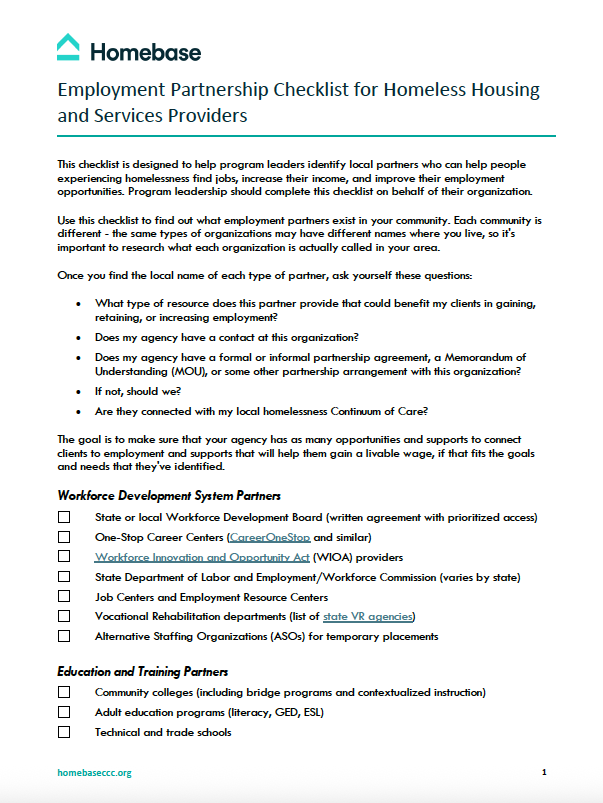
Employment Partnership Checklist for Homeless Housing and Services Providers
This checklist, to be completed by program leadership, is designed to help program leaders identify local partners who can help people experiencing homelessness find jobs, increase their income, and improve their employment opportunities.
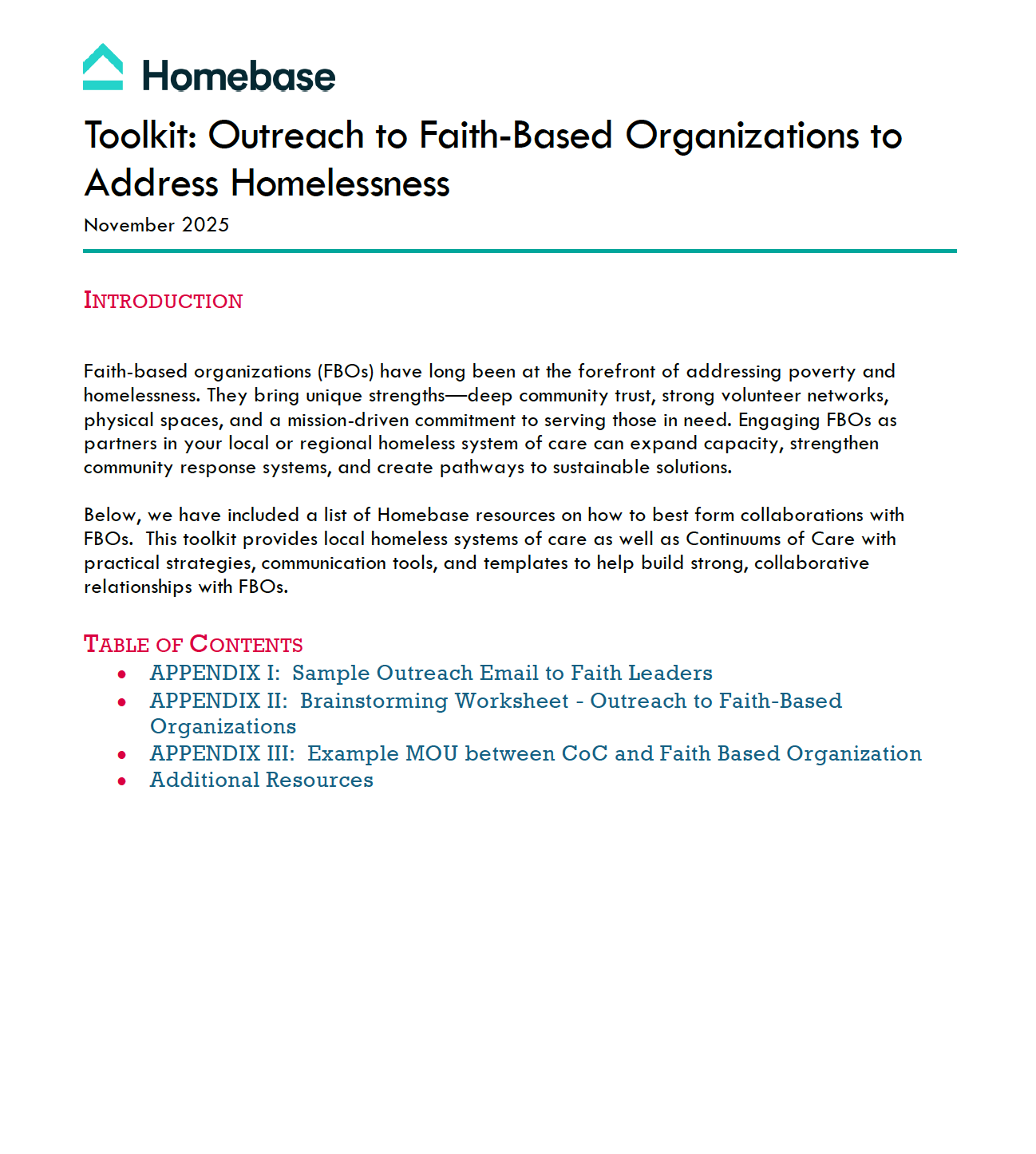
Outreach to Faith-Based Organizations to Address Homelessness
This toolkit supports leaders of homeless systems of care to connect with representatives of faith-based organizations through new and expanded partnerships.
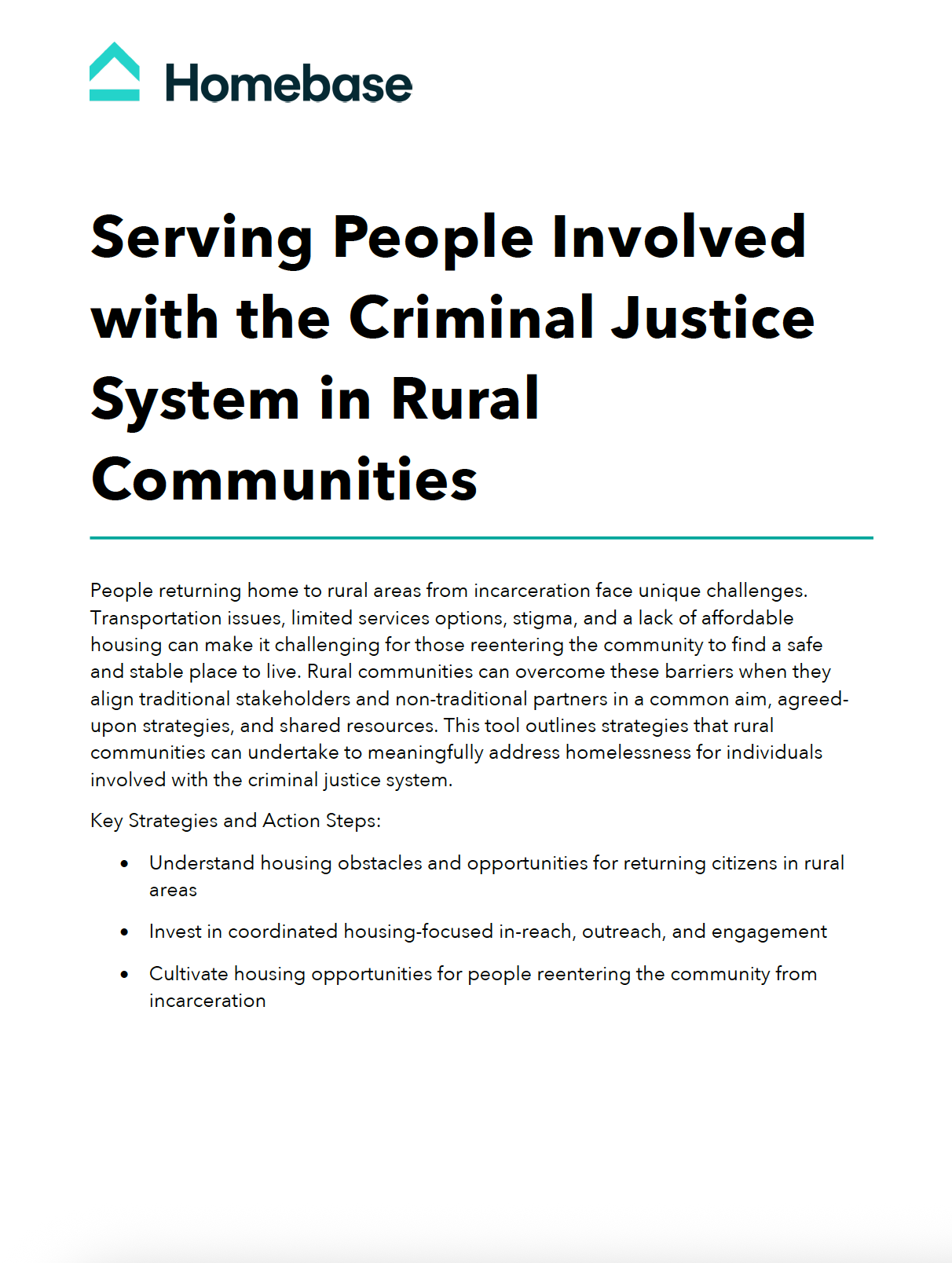
Serving People Involved with the Criminal Justice System in Rural Communities
People returning home to rural areas from incarceration face unique challenges. Transportation issues, limited services options, stigma, and a lack of affordable housing can make it challenging for those reentering the community to find a safe and stable place to live. This tool outlines strategies that rural communities can undertake to meaningfully address homelessness for individuals involved with the criminal justice system.
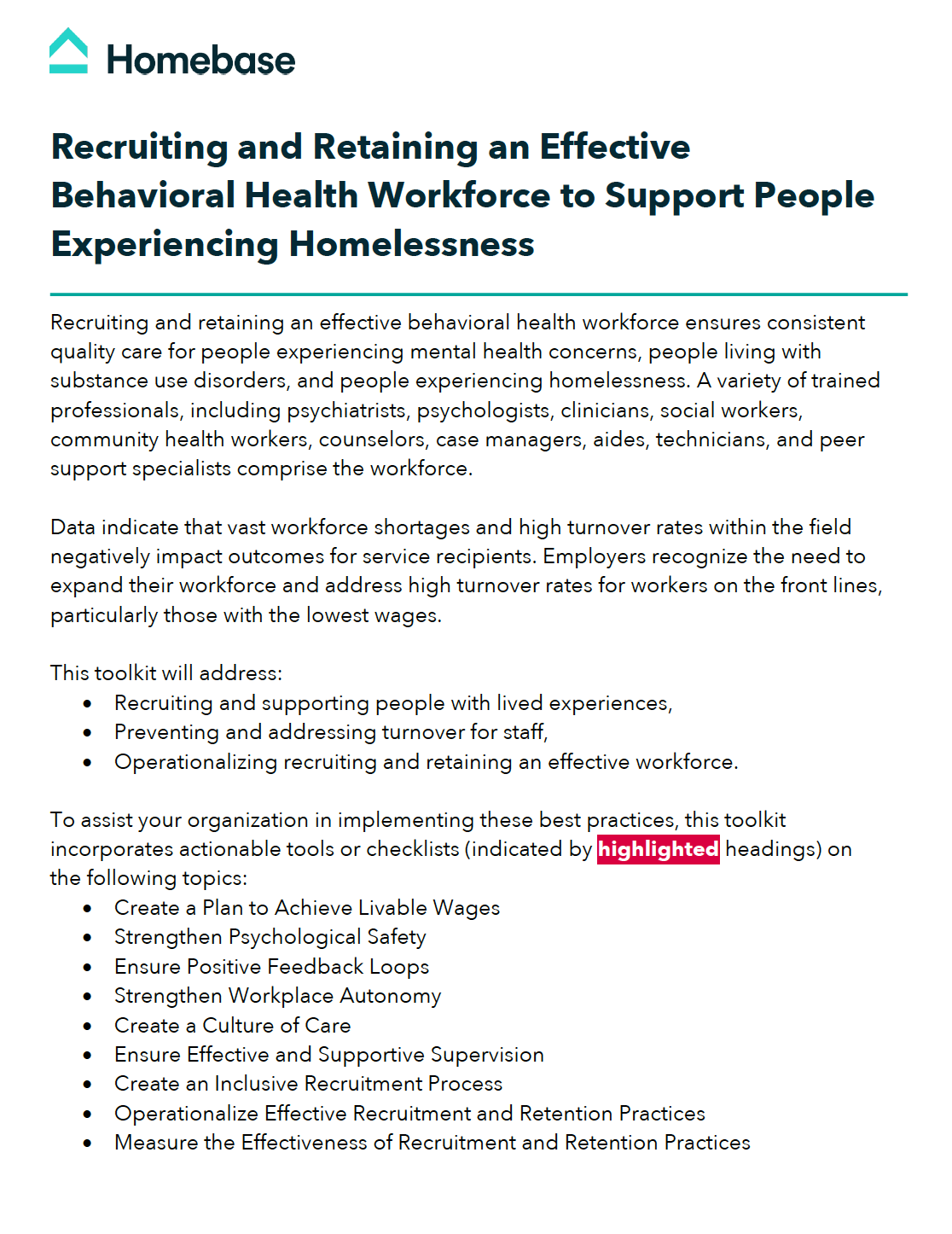
Recruiting and Retaining an Effective Behavioral Health Workforce to Support People Experiencing Homelessness
Recruiting and retaining an effective behavioral health workforce ensures consistent quality care for people experiencing mental health concerns, people living with substance use disorders, and people experiencing homelessness. This toolkit addresses recruitment and support for people with lived experiences, preventing and addressing staff turnover, and operationalizing recruitment and retention of an effective workforce.