
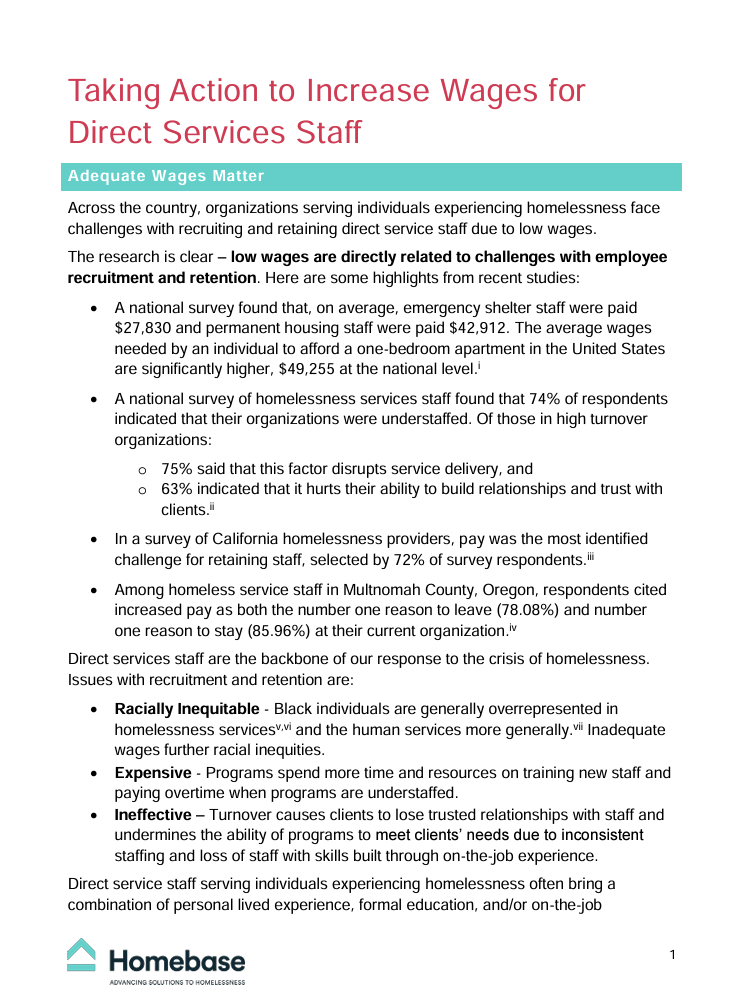
Taking Action to Increase Wages for Direct Services Staff
Across the country, organizations serving individuals experiencing homelessness face challenges with recruiting and retaining direct service staff due to low wages. The research is clear – low wages are directly related to challenges with employee recruitment and retention. This resource offers steps organizations and funders can take to improve wages and support front-line workers.

Worksheet to Support Updating Coordinated Entry Prioritization Scheme and Assessment
This worksheet presents a list of adverse outcomes resulting from continued homelessness and links them to the characteristics that increase vulnerability to each outcome. It follows with a set of steps that communities can take to update their prioritization factors and schemes.
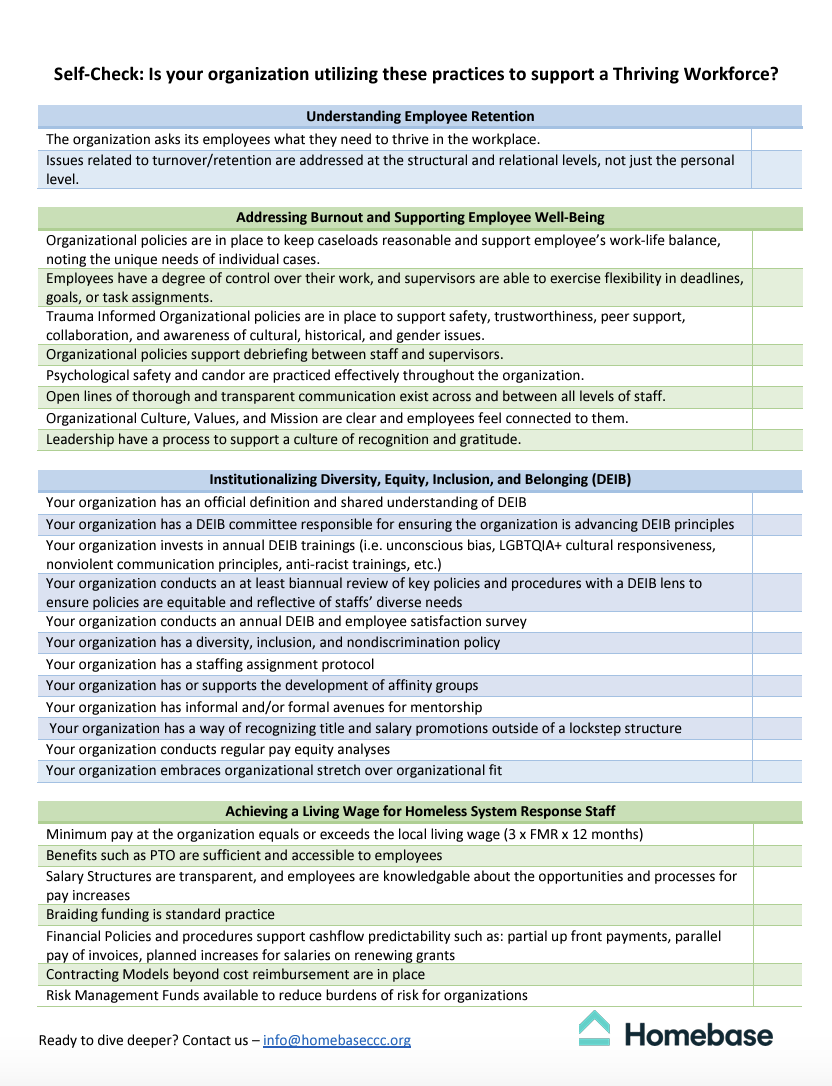
Thriving Homelessness Response Workforce Checklists
Homelessness service providers often experience high rates of staff turnover, burnout, and low wages. These resources, shared at the 2024 Housing First Partners Conference, support development of a thriving homelessness systems workforce.
Strategies for Increasing Client Engagement and Reducing No Shows
This slidedeck presents strategies for increasing client engagement and reducing no shows.
Participatory Continuous Quality Improvement Process Overview
This slidedeck presents the basics on quality improvement as well as a 6-month action plan template.
System Performance Measures Training
This slideck presents an explanation of HUD's System Performance Measures (SPMs) including the kinds of data that impact the SPMs.
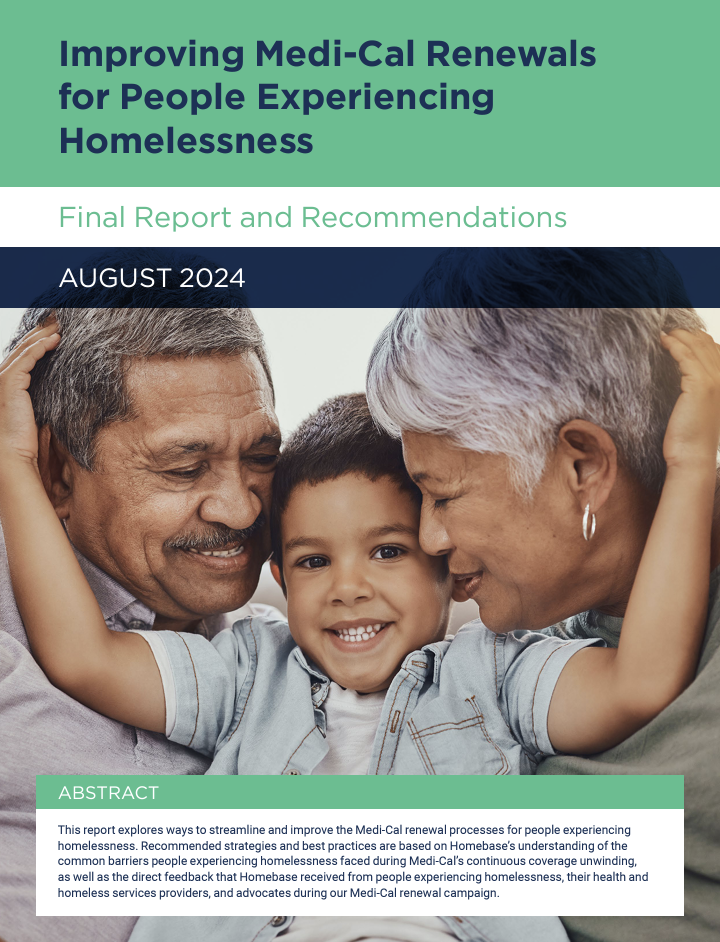
Improving Medi-Cal Renewals for People Experiencing Homelessness
This report explores ways to streamline and improve the Medi-Cal renewal processes for people experiencing homelessness, with recommended strategies and best practices based on Homebase’s understanding of the common barriers people experiencing homelessness faced during Medi-Cal’s continuous coverage unwinding, as well as the direct feedback that Homebase received from people experiencing homelessness, their health and homeless services providers, and advocates during our Medi-Cal renewal campaign.
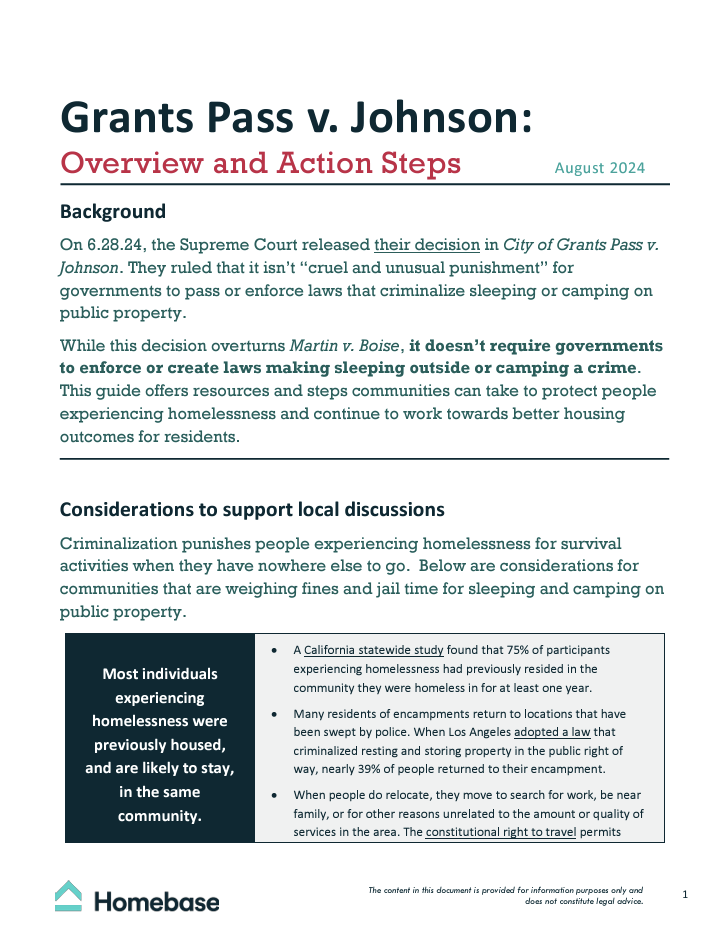
Grants Pass v. Johnson: Overview and Action Steps
On 6.28.24, the Supreme Court released their decision in City of Grants Pass v. Johnson. They ruled that it isn’t “cruel and unusual punishment” for governments to pass or enforce laws that criminalize sleeping or camping on public property. While this decision overturns Martin v. Boise, it doesn’t require governments to enforce or create laws making sleeping outside or camping a crime. This guide offers resources and steps communities can take to protect people experiencing homelessness and continue to work towards better housing outcomes for residents.
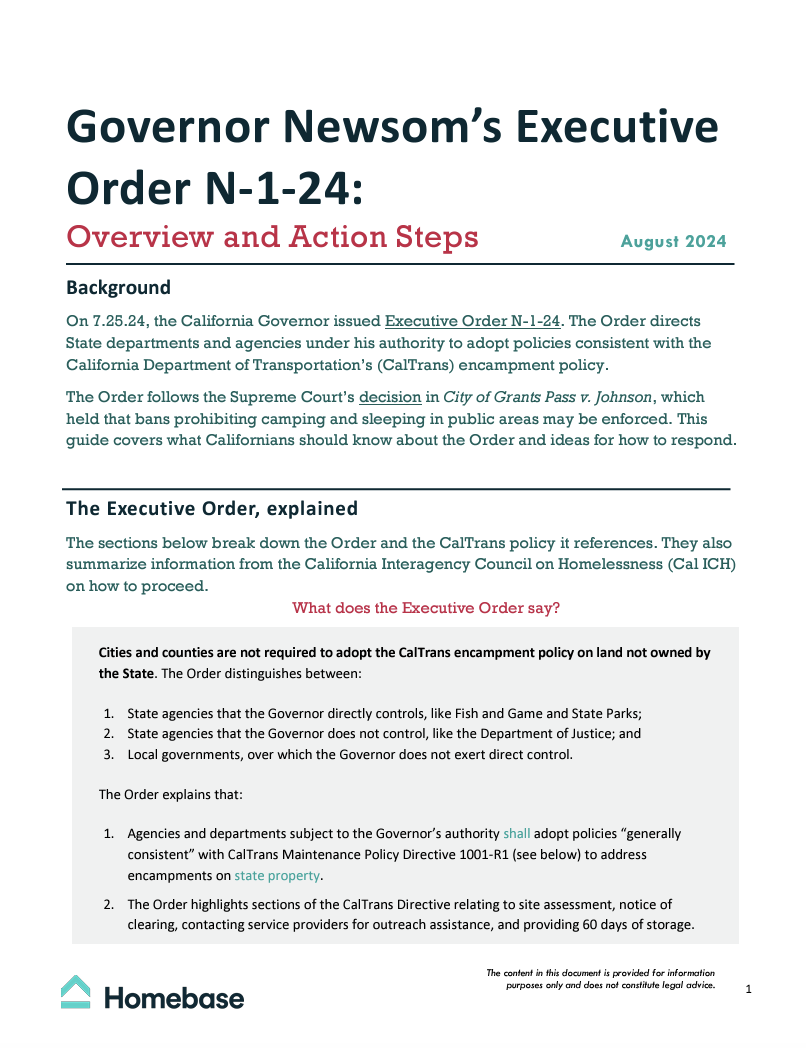
Governor Newsom's Executive Order N-1-24: Overview and Action Steps
On 7.25.24, the California Governor issued Executive Order N-1-24. The Order directs State departments and agencies under his authority to adopt policies consistent with the California Department of Transportation’s (CalTrans) encampment policy. The Order follows the Supreme Court’s decision in City of Grants Pass v. Johnson, which held that bans prohibiting camping and sleeping in public areas may be enforced. This guide covers what Californians should know about the Order and ideas for how to respond.
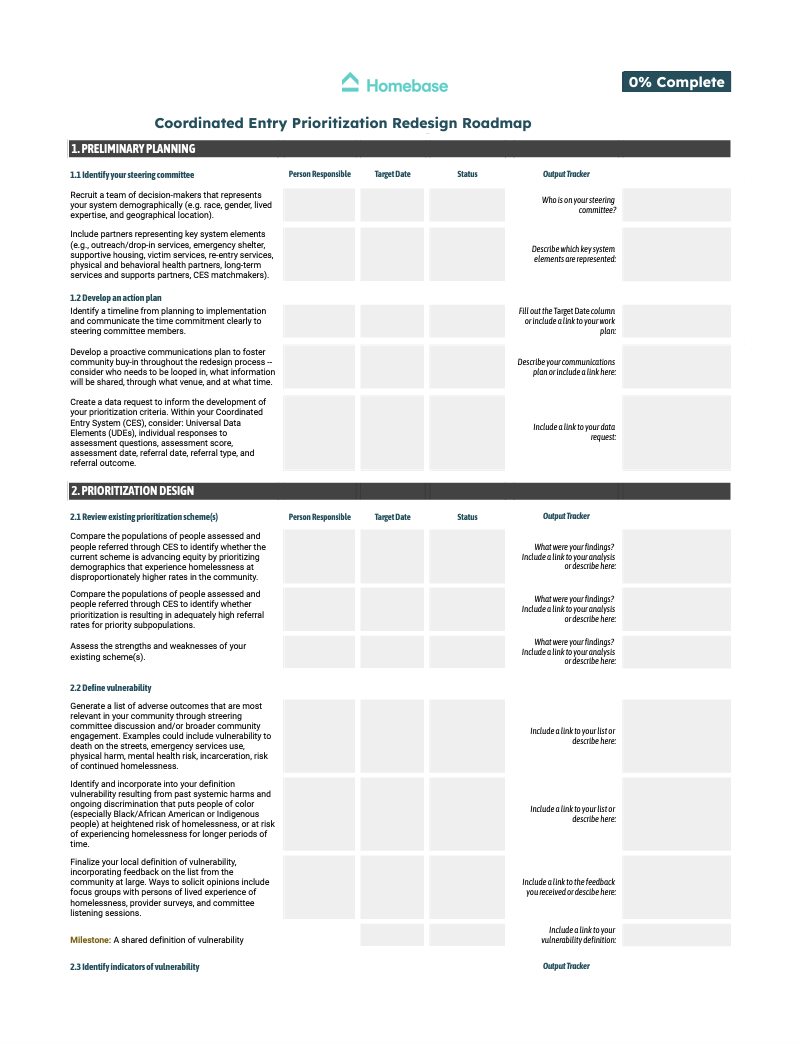
Coordinated Entry Prioritization Redesign Roadmap
This tool covers a set of 5 process steps universally observed in communities working to update their prioritization process: planning, prioritization design, assessment drafting, implementation, and continuous quality improvement.
Basics of Coordinated Entry
This training is an introductory overview of Coordinated Entry - what it is, how it works, requirements set by HUD, and considerations for successful Coordinated Entry systems.
Potential Impact of Stipends on Recipients’ Public Benefits and Taxes in California
Stipends are a recognition of the uniquely valuable insights that people with lived expertise bring to work to respond to and solve homelessness. However, receiving a stipend can have implications for taxes and benefits. This toolkit offers guidance on what to consider when distributing or receiving stipends.

Advancing Health Equity: Peer Health Ambassadors for People Experiencing Homelessness
Peer Health Ambassador Programs have been developed to improve health education and connections for people experiencing homelessness by hiring, training, and mentoring health ambassadors who have lived expertise and experiences of homelessness. This toolkit is designed to help new and expanded Peer Health Ambassador Programs design, develop, and implement their programs in ways that are effective, equitable, and specific to the needs of people experiencing homelessness in the community. This toolkit provides foundational information, best practice guidance, and sample resources that can support local design and implementation.
Professional Development Toolkit for People with Lived Expertise
Designed specifically for people with lived experience, this toolkit offers insights on how you can use your lived experience as a marketable skill. The toolkit provides resources for personal and professional development - tapping into your skills, growing your career, and setting yourself up for success.

Financial Management for CoC and ESG Recipients (Mississippi Statewide Training)
This training provides guidance on financial management for CoC and ESG recipients, with a focus on timekeeping and match requirements.
HOME-ARP Eligible Activities
This crosswalk compares key requirements of the HOME-ARP Tenant-Based Rental Assistance (TBRA) activity with Continuum of Care Program (CoC) Rapid Rehousing projects (RRH).
Medi-Cal Renewals: Ensuring People Experiencing Homelessness Retain Coverage
After a three-year pause due to COVID-19, the Medi-Cal renewal process restarted in California as of June 2023. This training highlights the risk of losing coverage during this process, especially for people who are unhoused. This training provides an introduction to Homebase's Medi-Cal Renwal Toolkit, which provides 11 tools for homelessness providers, people experiencing homelessness, and Health Enrollment Navigators to help people maintain their coverage.
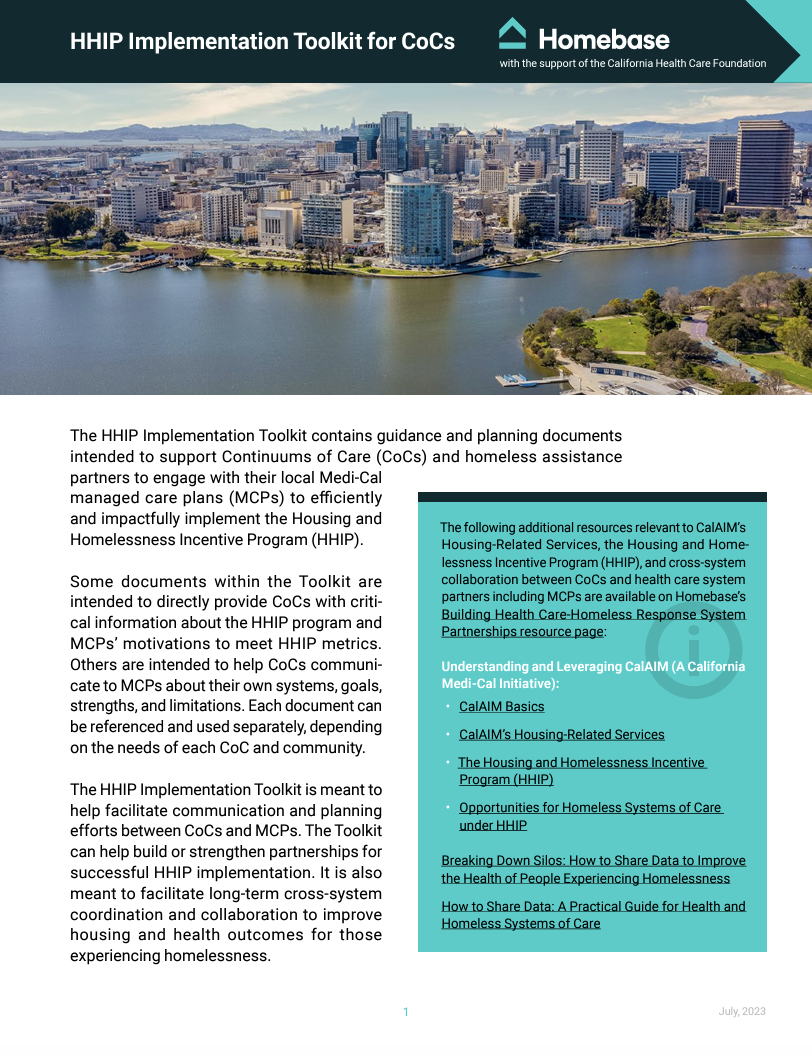
CalAIM Toolkit for Continuums of Care (CoCs) and CoC Partners
The CalAIM Toolkit for Continuums of Care (CoCs) and CoC partners contains guidance and planning documents intended to support effective cross-system collaboration between homeless response system partners and local Medi-Cal managed care plans (MCPs) through the California Advancing and Innovating Medi-Cal (CalAIM) initiative.

Pre-Conviction Housing Preservation
This training is designed to help cross-sector partners gain a basic understanding of relevant housing resources and challenges. It provides an overview of the homelessness response system and covers topics to improve coordination and collaboration across systems. Gain a basic understanding of relevant housing resources and challenges, learn when and how to leverage your clients’ housing status as a form of mitigation, Identify questions to ask your clients that will elicit the information you need, and learn about collaboration opportunities to better defend your clients.
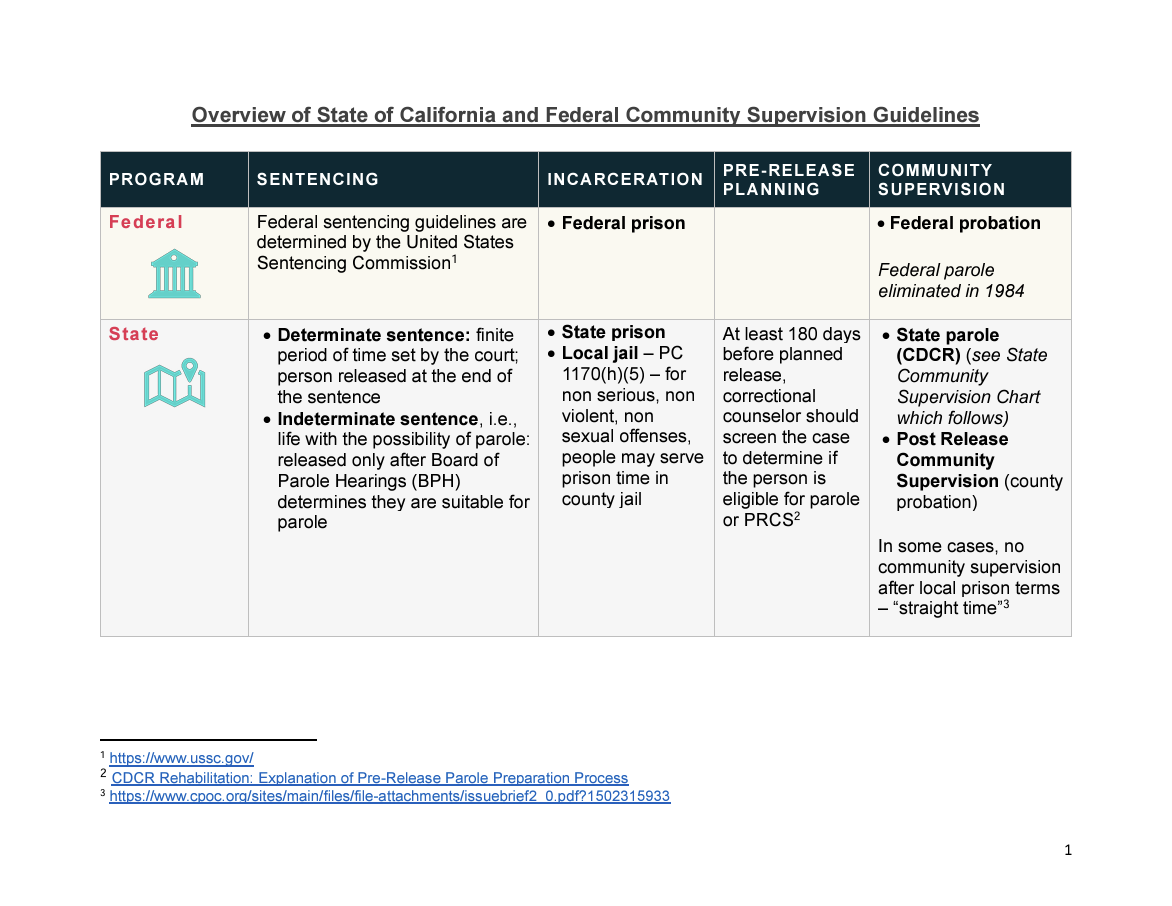
Overview of State of California and Federal Community Supervision Guidelines
This resource provides an overview of State of California and Federal Community Supervision Guidelines.