
Basics of Coordinated Entry
This training is an introductory overview of Coordinated Entry - what it is, how it works, requirements set by HUD, and considerations for successful Coordinated Entry systems.

Stipend and Benefit Toolkit
Stipends are a recognition of the uniquely valuable insights that people with lived expertise bring to work to respond to and solve homelessness. However, receiving a stipend can have implications for taxes and benefits. This toolkit offers guidance on what to consider when distributing or receiving stipends.

Advancing Health Equity: Peer Health Ambassadors for People Experiencing Homelessness
Peer Health Ambassador Programs have been developed to improve health education and connections for people experiencing homelessness by hiring, training, and mentoring health ambassadors who have lived expertise and experiences of homelessness. This toolkit is designed to help new and expanded Peer Health Ambassador Programs design, develop, and implement their programs in ways that are effective, equitable, and specific to the needs of people experiencing homelessness in the community. This toolkit provides foundational information, best practice guidance, and sample resources that can support local design and implementation.
Professional Development Toolkit for People with Lived Expertise
Designed specifically for people with lived experience, this toolkit offers insights on how you can use your lived experience as a marketable skill. The toolkit provides resources for personal and professional development - tapping into your skills, growing your career, and setting yourself up for success.

Financial Management for CoC and ESG Recipients (Mississippi Statewide Training)
This training provides guidance on financial management for CoC and ESG recipients, with a focus on timekeeping and match requirements.
HOME-ARP Eligible Activities
This crosswalk compares key requirements of the HOME-ARP Tenant-Based Rental Assistance (TBRA) activity with Continuum of Care Program (CoC) Rapid Rehousing projects (RRH).
Medi-Cal Renewals: Ensuring People Experiencing Homelessness Retain Coverage
After a three-year pause due to COVID-19, the Medi-Cal renewal process restarted in California as of June 2023. This training highlights the risk of losing coverage during this process, especially for people who are unhoused. This training provides an introduction to Homebase's Medi-Cal Renwal Toolkit, which provides 11 tools for homelessness providers, people experiencing homelessness, and Health Enrollment Navigators to help people maintain their coverage.
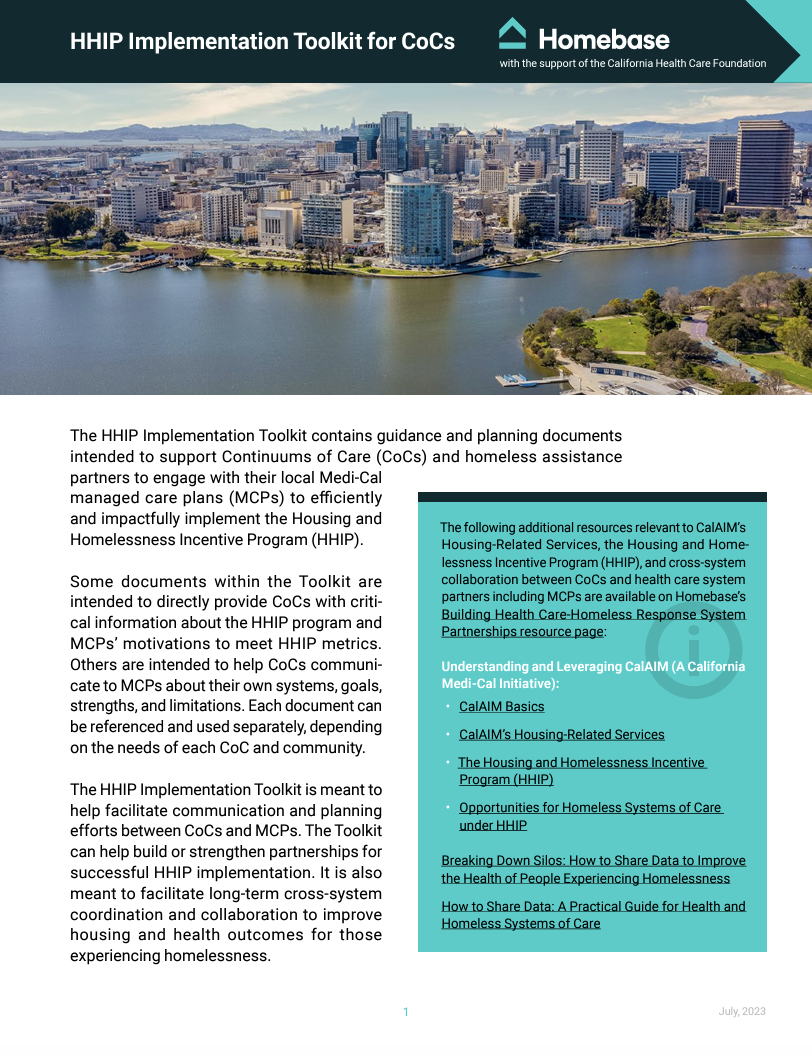
CalAIM Toolkit for Continuums of Care (CoCs) and CoC Partners
The CalAIM Toolkit for Continuums of Care (CoCs) and CoC partners contains guidance and planning documents intended to support effective cross-system collaboration between homeless response system partners and local Medi-Cal managed care plans (MCPs) through the California Advancing and Innovating Medi-Cal (CalAIM) initiative.

Pre-Conviction Housing Preservation
This training is designed to help cross-sector partners gain a basic understanding of relevant housing resources and challenges. It provides an overview of the homelessness response system and covers topics to improve coordination and collaboration across systems. Gain a basic understanding of relevant housing resources and challenges, learn when and how to leverage your clients’ housing status as a form of mitigation, Identify questions to ask your clients that will elicit the information you need, and learn about collaboration opportunities to better defend your clients.
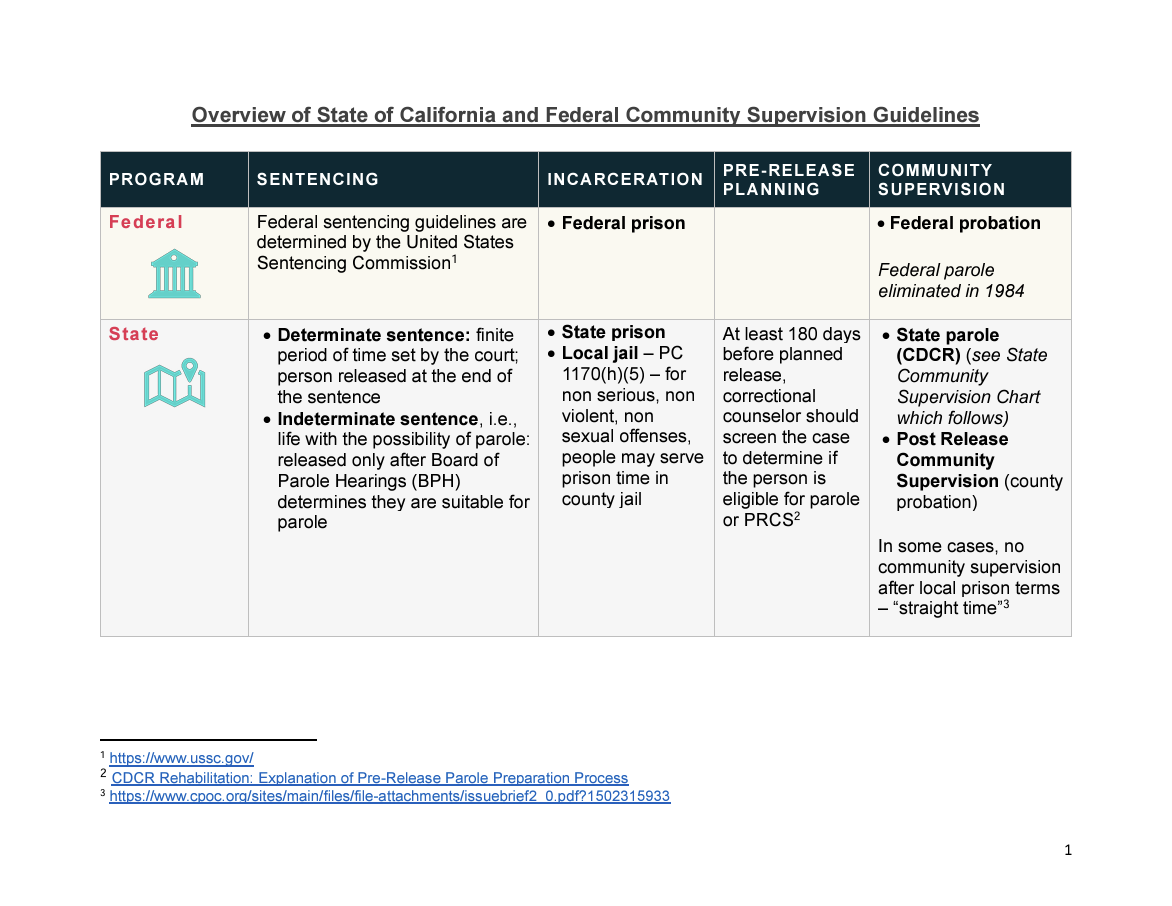
Overview of State of California and Federal Community Supervision Guidelines
This resource provides an overview of State of California and Federal Community Supervision Guidelines.
Exploring the Intersection of Homelessness and the Criminal Legal System
This training for cross-sector partners provides an introduction to the homeless system of care and an overview of the practical and legal landscape of the intersection of homelessness and the criminal legal system.
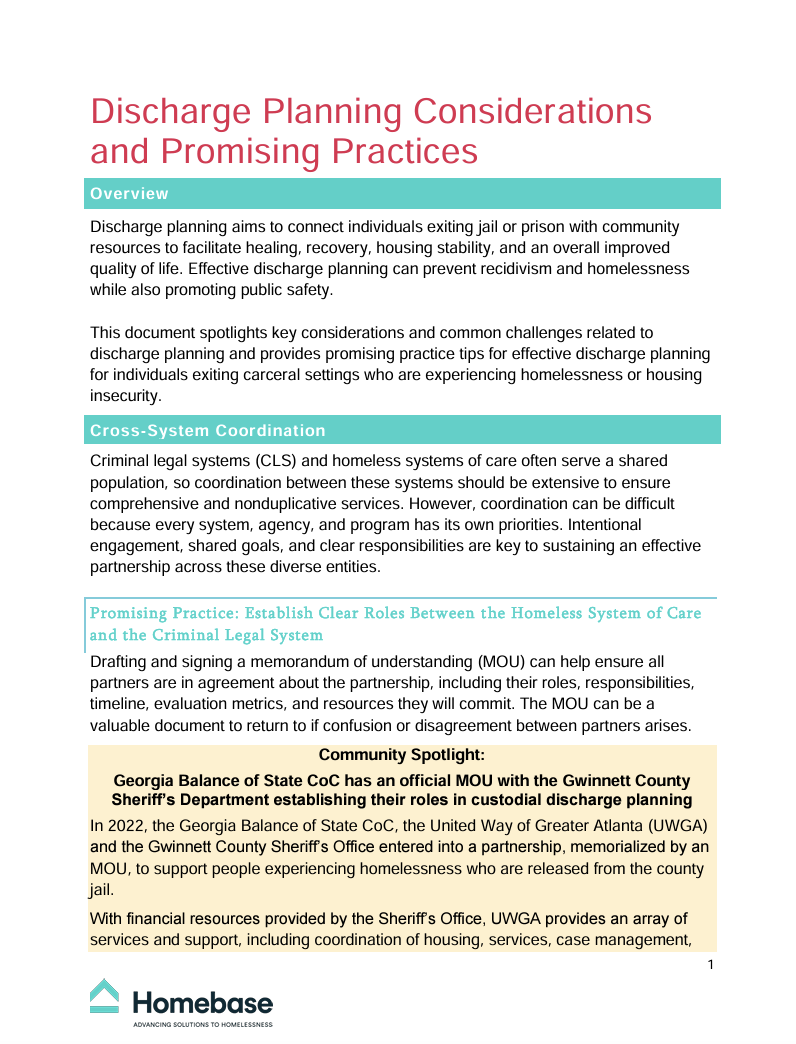
Discharge Planning Considerations and Promising Practices
Discharge planning aims to connect individuals exiting jail or prison with community resources to facilitate healing, recovery, housing stability, and an overall improved quality of life. Effective discharge planning can prevent recidivism and homelessness while also promoting public safety. This document spotlights key considerations and common challenges related to discharge planning and provides promising practice tips for effective discharge planning for individuals exiting carceral settings who are experiencing homelessness or housing insecurity.

Navigating Housing Choice Voucher (HCV) Program Applications for People with Criminal Records
This resource outlines where PHAs have discretion to provide HCVs to people with criminal records and how to prepare for the HCV application process.

The Fair Housing Act and Criminal Background Checks: What Housing Providers and Case Managers Need to Know
This guide provides an overview of what housing and service providers should know about the Fair Housing Act (FHA) and criminal background checks so that they can comply as housing providers and help ensure the rights of their clients are not violated when they seek housing.
Common Obstacles and Creative Approaches to Meeting the Housing Needs of People Who Have Been Incarcerated
This cross-sector training deck features panelists who draw from a variety of cross-system experiences to share insights and solutions to some of the common obstacles communities face when housing people who have been incarcerated.
Homekey Client Engagement Toolkit
This HCD Toolkit is intended to be a resource for providers of Homekey and other programs seeking deeper engagement with their clients. It includes practical fact sheets that providers can use to guide their client feedback processes.

ESG and Indirect Costs Training
An introductory training for Emergency Solutions Grant (ESG) providers on direct, indirect, and adminstrative costs.

Case Managers Roadmap for Housing and Criminal History Information (CHI)
This roadmap offers a high-level overview, key information, and important considerations for case managers as they work to support and collaborate with clients with criminal history information through the housing process.
Employment System 101 for Homeless System Partners
The public workforce system is anchored by the Workforce Innovation and Opportunity Act of 2014, also known as WIOA. Under WIOA, the public workforce system advances the work of increasing employment and economic opportunities for jobseekers facing barriers to employment.
Cross-System Collaboration: Homelessness Response and Public Workforce
Just as the public workforce system is not designed or equipped to address the housing needs of people experiencing homelessness, homelessness response programs are not designed or equipped to comprehensively address the employment needs of unstably housed job seekers. Coordination is critical to leverage both systems' resources to better serve people and to improve outcomes for people experiencing homelessness as well as the systems designed to support them.