
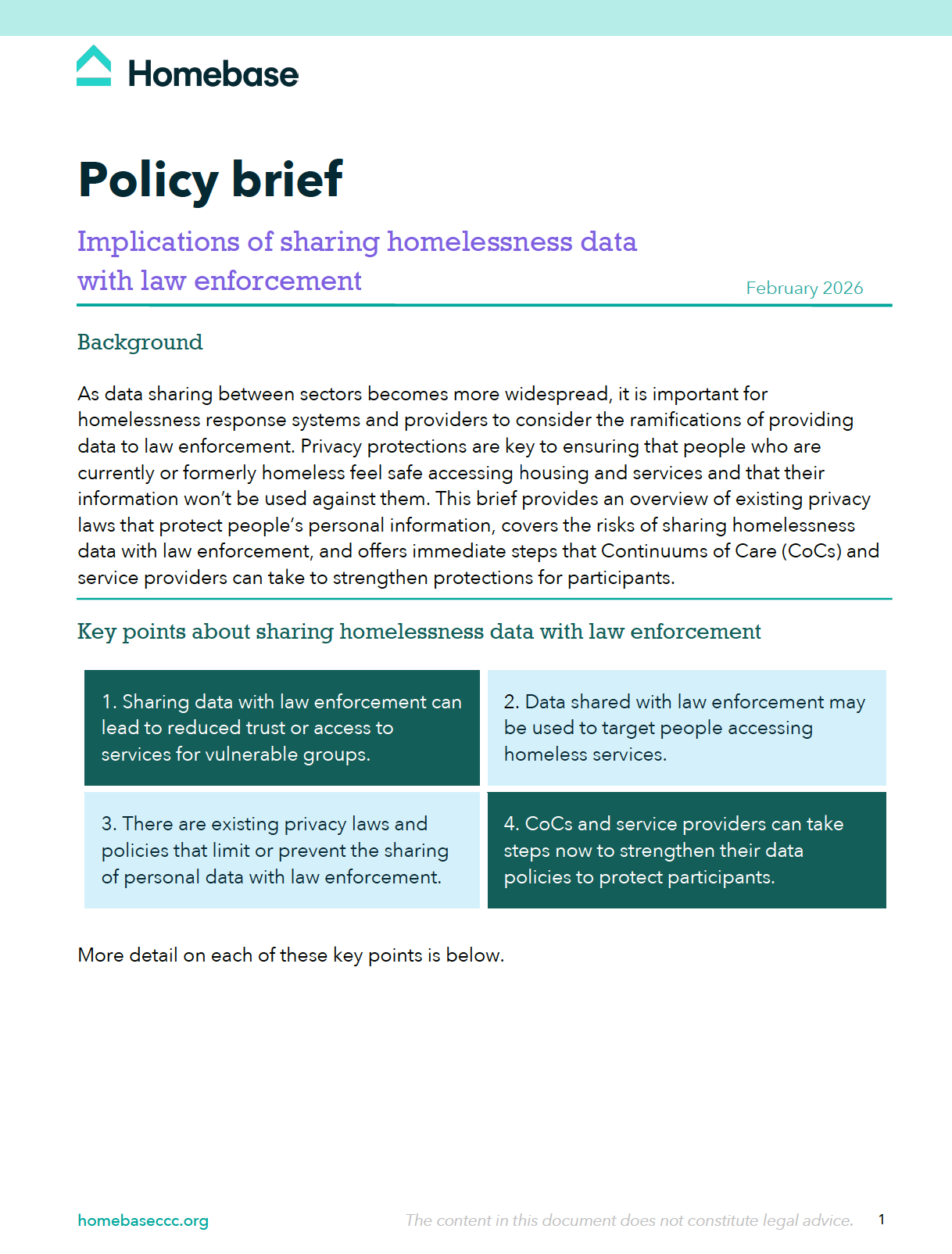
Implications of sharing homelessness data with law enforcement
As data sharing between sectors becomes more widespread, it is important for homelessness response systems and providers to consider the ramifications of providing data to law enforcement. This brief provides an overview of existing privacy laws that protect people’s personal information, covers the risks of sharing homelessness data with law enforcement, and offers immediate steps that Continuums of Care (CoCs) and service providers can take to strengthen protections for participants.
Understanding the harms caused by the criminalization of homelessness
Communities across the country are resisting the criminalization of homelessness. Evidence shows that criminalization is costly and counterproductive. This memo provides some background and steps communities can take to avoid these harmful policies.
Understanding the impact of involuntary civil commitment of people experiencing homelessness
This brief provides an overview of the history of civil commitments and the risks that they pose and offers immediate steps to advocate for individualized and voluntary care for individuals experiencing severe mental illness.
Serving People Involved with the Criminal Justice System in Rural Communities
People returning home to rural areas from incarceration face unique challenges. Transportation issues, limited services options, stigma, and a lack of affordable housing can make it challenging for those reentering the community to find a safe and stable place to live. This tool outlines strategies that rural communities can undertake to meaningfully address homelessness for individuals involved with the criminal justice system.

How a Community Advisory Board Secured Millions for Housing
An interview with Nicole Green, Forensic Social Worker, Office of the Public Defender, and Chair of the Contra Costa Community Advisory Board (CAB).
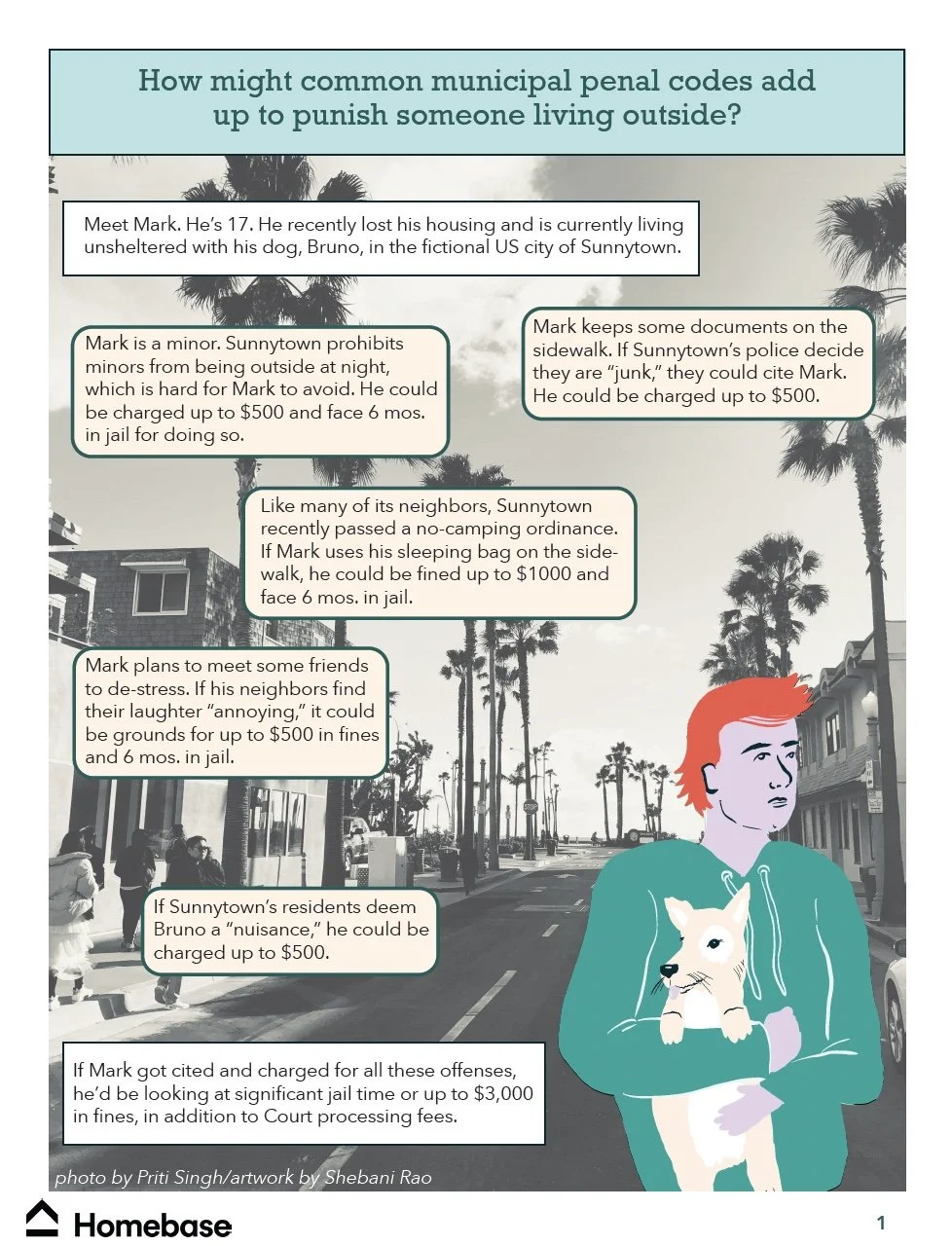
Impacts of Criminalizing Homelessness
These fact sheets show the impact of local laws that criminalize people living outside.
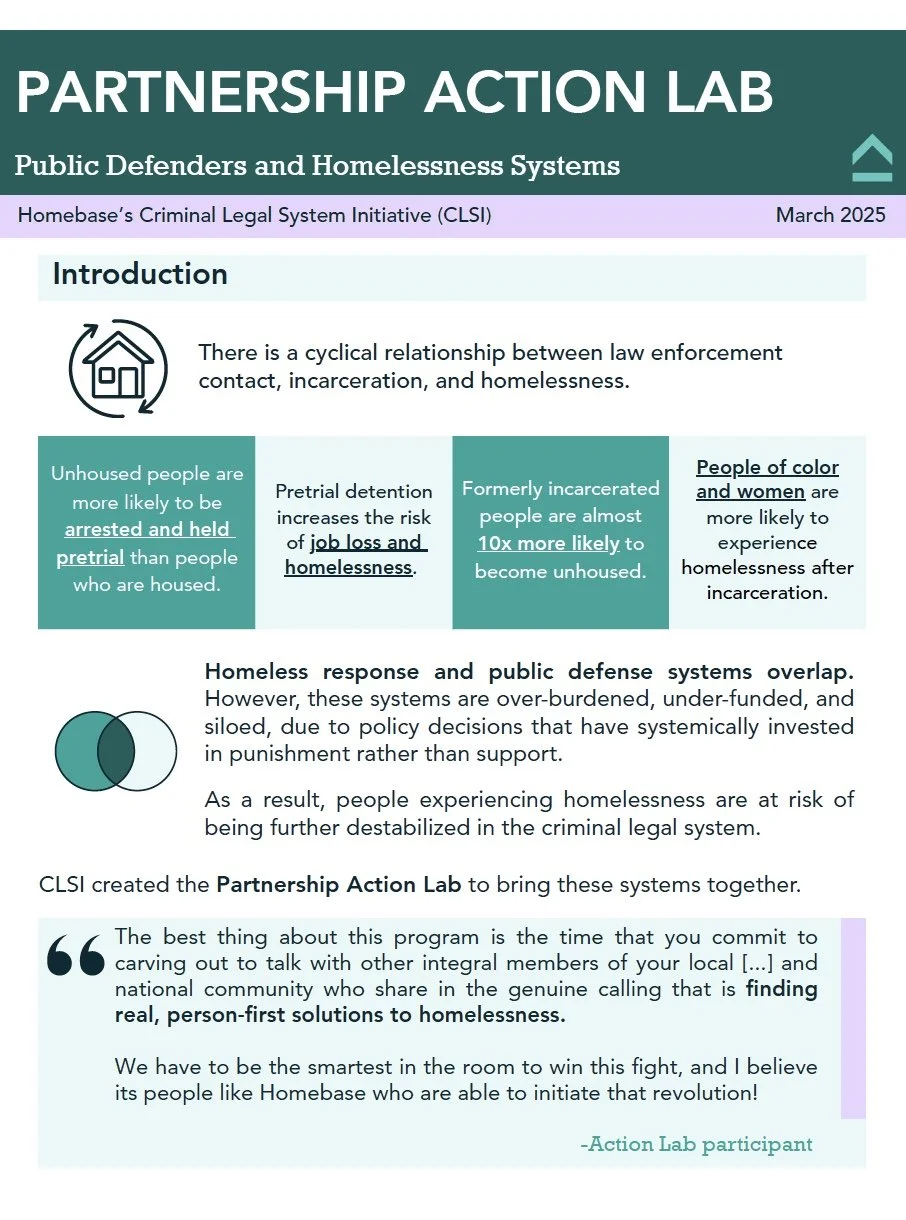
Partnership Action Lab
The Partnership Action Lab brought together homelessness systems and public defenders to improve outcomes for people who are experiencing housing instability and charged with and/or convicted of misdemeanors.
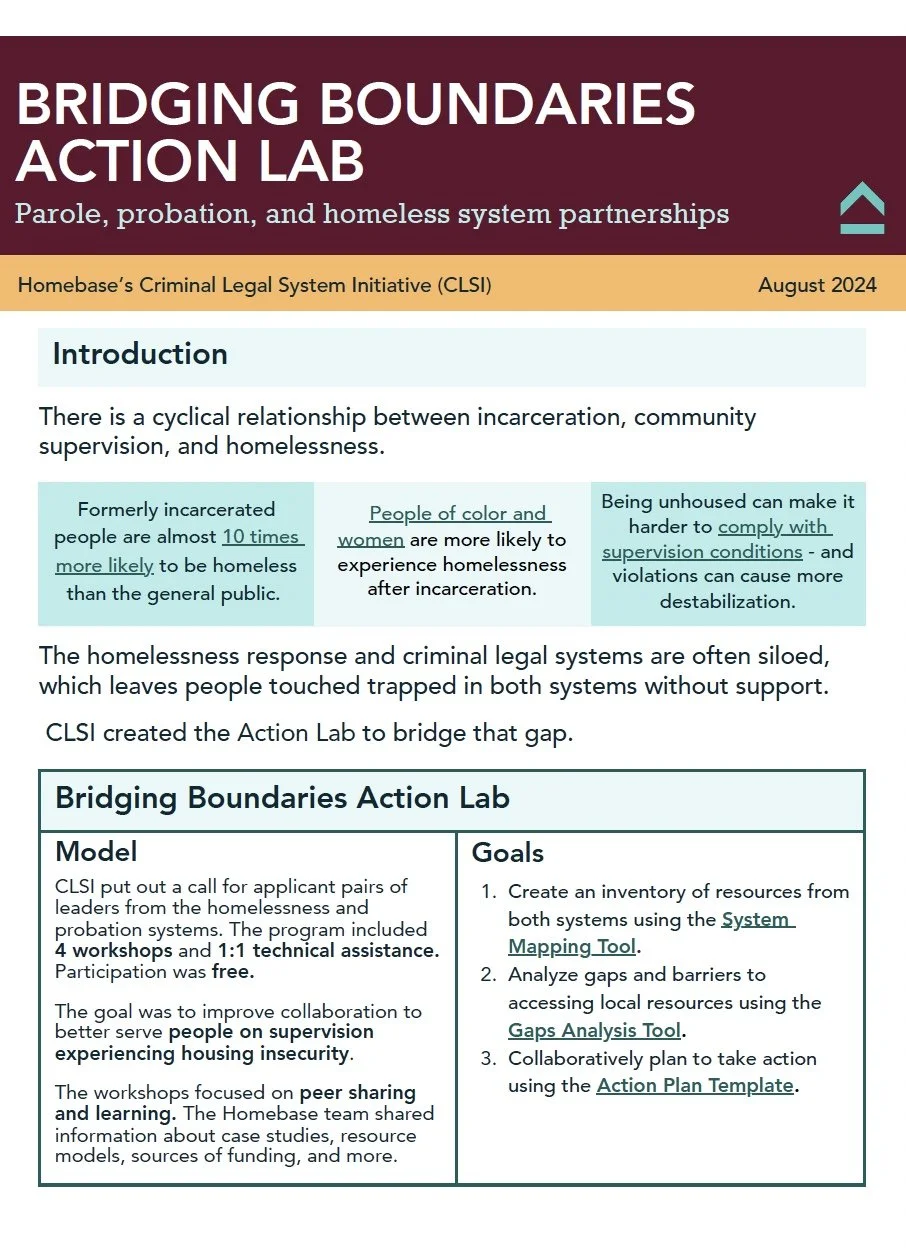
Bridging Boundaries Action Lab
The Bridging Boundaries Action Lab brought together parole, probation, and homelessness systems to reduce barriers to housing for people involved with the criminal legal system.

Advancing Anti-Criminalization Efforts: Protecting the rights of people experiencing homelessness
This webinar co-hosted by Homebase and Destination: Home was designed to empower and educate Santa Clara County service providers, advocates, and community members about the legal rights of people experiencing homelessness, especially those affected by encampment sweeps and vehicle tows. The training also included information about reasonable accommodation requests for individuals with disabilities experiencing homelessness.

Disrupting the Cycle: Public Housing Authorities Advancing Justice Through Housing
This session at the NAHRO National Conference explored the role PHAs can play in breaking the homelessness-criminal legal system cycle by implementing trauma-informed, low-barrier policies.
PHAs and the Criminalization of Homelessness
This session at the Northern California Nevada National Association of Housing and Redevelopment Officials (NAHRO) conference focused on the Grants Pass decision, why it matters for Public Housing Authorities and other housing providers, and what providers can do to help protect their clients while responding to an ever-changing legal landscape.
Disrupting the Homelessness-Criminal Legal System Cycle through Strategic Partnerships
This session at the NAEH conference was led by homelessness system leaders with experience with building partnerships focused on high impact intervention points – pre-sentencing (public defenders) and post-release (probation).
Shifting the Narrative: A data-driven, person-centered approach to combating the criminalization of homelessness
This workshop at the National Human Services Data Consortium outlined how to leverage lived experience expertise to assess gaps in legal services and inform the creation of legal clinics for people experiencing homelessness.

Getting Creative with Funding: Leveraging criminal legal system funds for housing and supportive services
This conference session at Housing California focused on strategies for how CoCs can work with criminal legal system partners to leverage AB 109 funds for housing dedicated to people with criminal records.
Where are they supposed to sleep? Leveraging Critical Public Defender Data in Non-Carceral Homeless Responses
This session at the Equal Justice Conference focused on how to facilitate partnerships between public defenders and the Continuum of Care to leverage resources, prevent collateral consequences, and mitigate criminal legal outcomes.
The Fair Housing Act and CA Fair Employment and Housing Act
A training on federal and California state fair housing protections.

Using Criminal Records for Effective Case Management
A training on record clearance and advocating for clients with criminal records.
Expungement and Clearing Criminal Records
A training on criminalization ordinances and the role of clearing criminal records to expand housing access.
Meeting the Housing Needs of People with Criminal Records
A training focused on understanding and reducing housing barriers for people with criminal records.
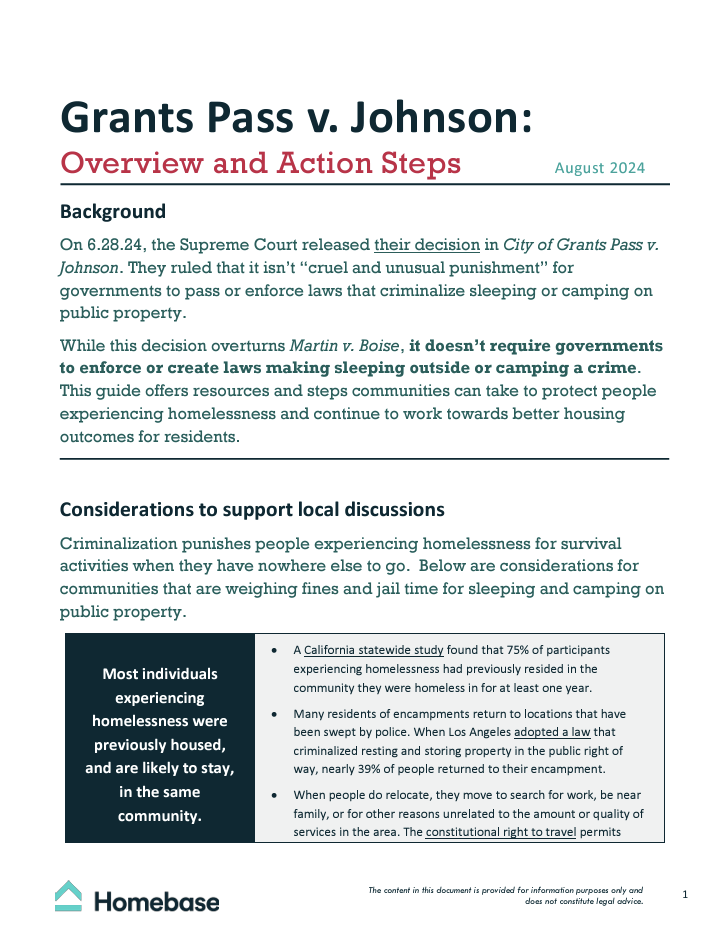
Grants Pass v. Johnson: Overview and Action Steps
On 6.28.24, the Supreme Court released their decision in City of Grants Pass v. Johnson. They ruled that it isn’t “cruel and unusual punishment” for governments to pass or enforce laws that criminalize sleeping or camping on public property. While this decision overturns Martin v. Boise, it doesn’t require governments to enforce or create laws making sleeping outside or camping a crime. This guide offers resources and steps communities can take to protect people experiencing homelessness and continue to work towards better housing outcomes for residents.