
Overview of CalAIM & HHIP for CoCs
This webinar provides an overview of CalAIM and HHIP for CA's Continuums of Care (CoCs) and ways to leverage the funding streams and partnerships to strengthen health and housing outcomes.
Collaborating with Health System Partners: Why, Who, and How?
This training provides an overview of the health system and benefits of cross-sector collaboration, to support efforts to engage health care partners in homeless response efforts.
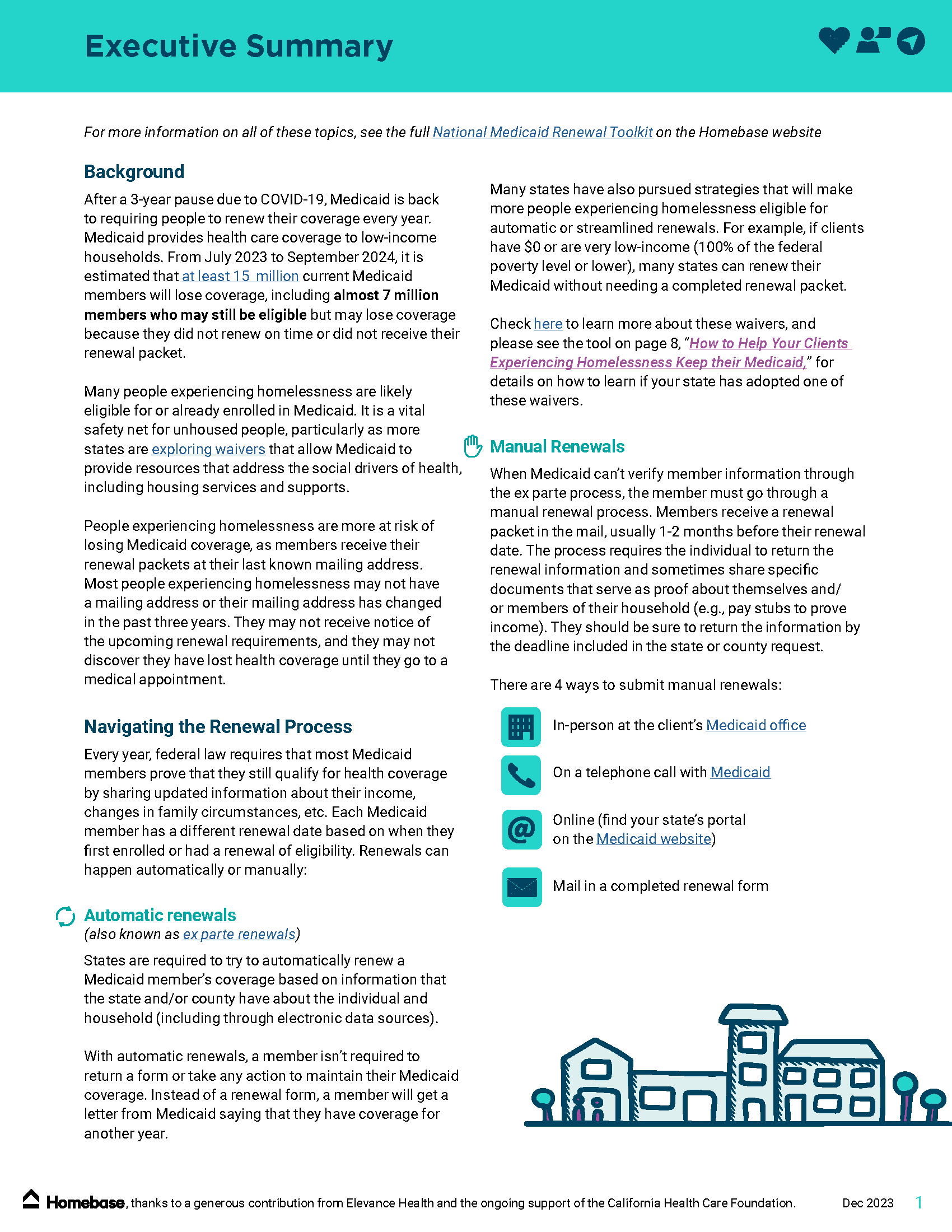
National Medicaid Renewal Toolkits
Check out our different National Medicaid Renewal Toolkits to learn how to help people experiencing homelessness renew their Medicaid.

Homelessness Response System 101 for Health Care Providers and Stakeholders
The report contains foundational information for health care providers about how homeless assistance works at the local level, with a focus on Continuums of Care (CoCs) and Coordinated Entry (CE). The report includes practical, action-oriented suggestions on how to participate in a local community's homelessness response.
California Statewide Initiatives to Address Complex Needs of People Experiencing Homelessness
This suite of reports offers a deep dive into the impact, challenges, and opportunities made possible by two critical and complementary state initiatives aimed at improving health and housing outcomes of Californians experiencing homelessness: CalAIM’s housing-related services – Enhanced Care Management (ECM) and Community Supports (collectively referred to in these materials as ECM/CS) –and the Housing and Homelessness Incentive Program (HHIP).
Reflections on 10 Years of Health Care and Housing Integrations
This blog shares Senior Directing Attorney Gillian Morshedi's reflections on the integration of housing and health, and how the field has progressed over the past decade.

Transferring Knowledge: Improving Medicaid Access for People Experiencing Homelessness
When we set out to help homeless service providers navigate Medi-Cal renewals, we didn’t expect to uncover another systemic challenge faced by people experiencing homelessness: keeping Medi-Cal when moving across county lines. In this blog post, Policy Analyst, Riley Meve, and Senior Directing Attorney, Julie Silas, share how community conversations led to new collaborations and resources.

Overcoming Barriers to a Thriving Homeless System Workforce
Homebase presented on workforce development at the national Housing First Partners Conference in April 2024. This presentation covers retention, burnout and well-being, and living wages.
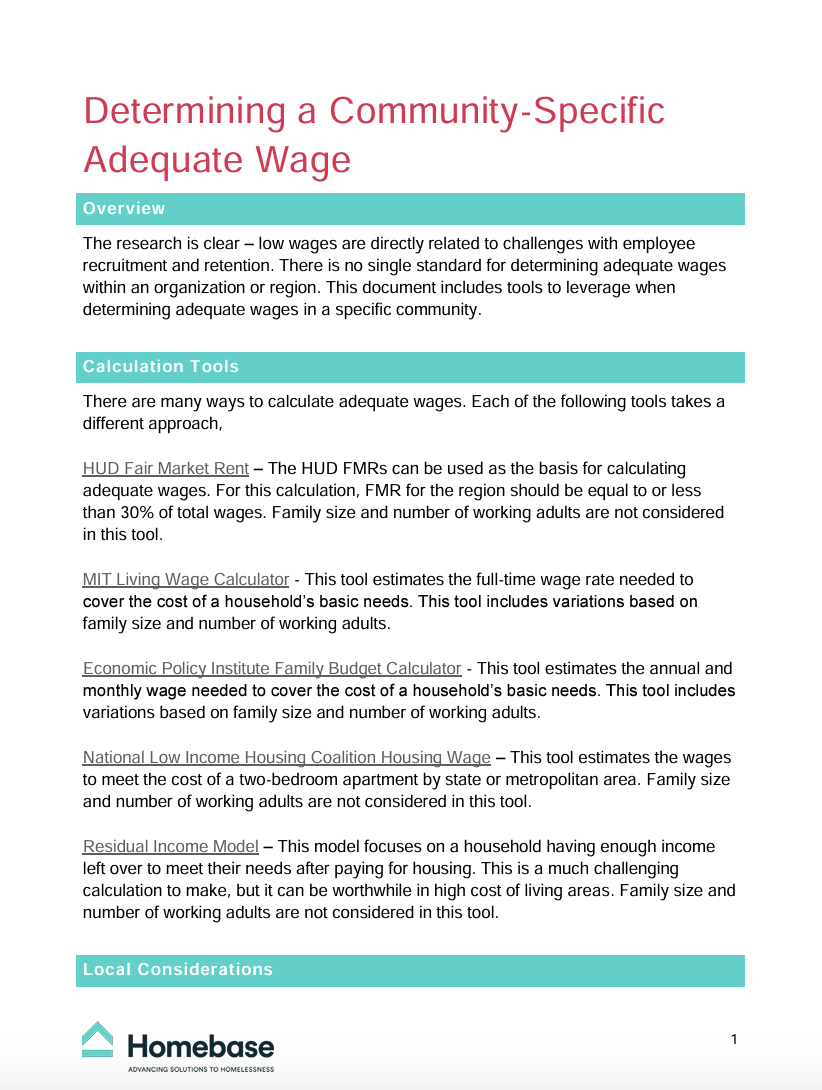
Determining a Community-Specific Adequate Wage
The research is clear – low wages are directly related to challenges with employee recruitment and retention. There is no single standard for determining adequate wages within an organization or region, but this document includes tools to help determine what an adequate wage may look like in your community.
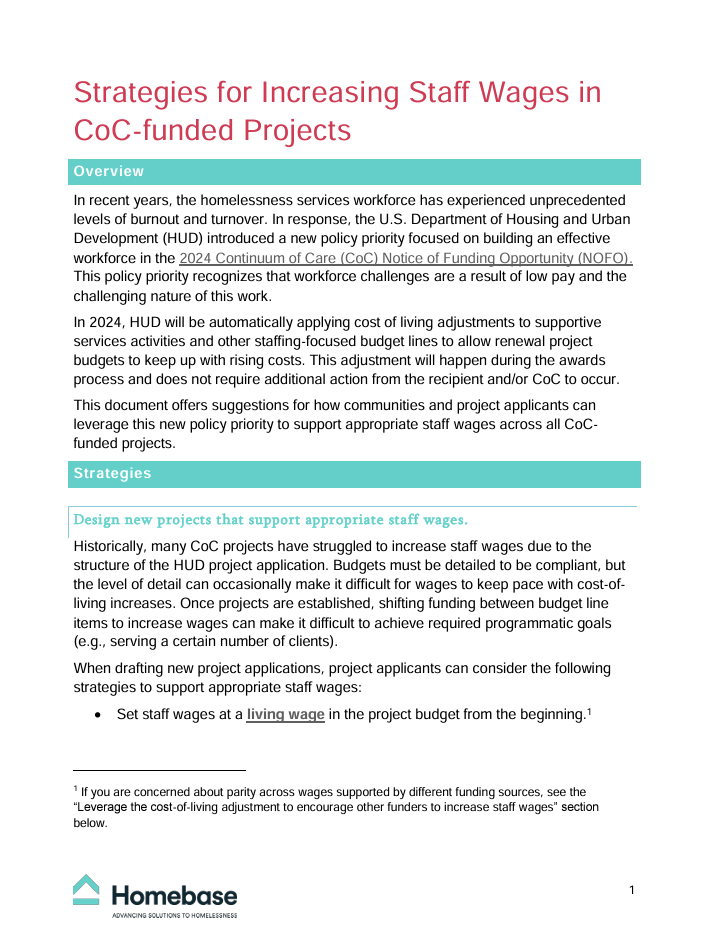
Strategies for Increasing Staff Wages in CoC-funded Projects
In 2024, the U.S. Department of Housing and Urban Development (HUD) introduced a new policy priority focused on building an effective workforce in the Continuum of Care (CoC) Notice of Funding Opportunity (NOFO). During the awards process, HUD will automatically apply cost of living adjustments to supportive services activities and other staffing-focused budget lines to allow renewal project budgets to keep up with rising costs. This document offers suggestions for how communities and project applicants can leverage this new policy priority to support appropriate staff wages across all CoC-funded projects.
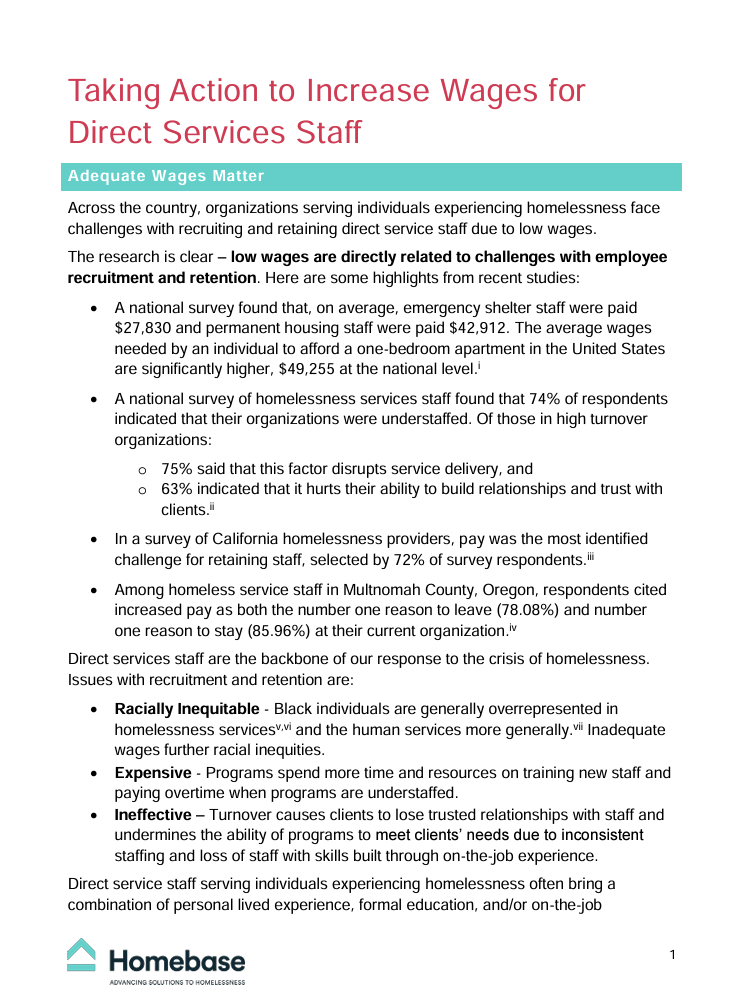
Taking Action to Increase Wages for Direct Services Staff
Across the country, organizations serving individuals experiencing homelessness face challenges with recruiting and retaining direct service staff due to low wages. The research is clear – low wages are directly related to challenges with employee recruitment and retention. This resource offers steps organizations and funders can take to improve wages and support front-line workers.

Worksheet to Support Updating Coordinated Entry Prioritization Scheme and Assessment
This worksheet presents a list of adverse outcomes resulting from continued homelessness and links them to the characteristics that increase vulnerability to each outcome. It follows with a set of steps that communities can take to update their prioritization factors and schemes.
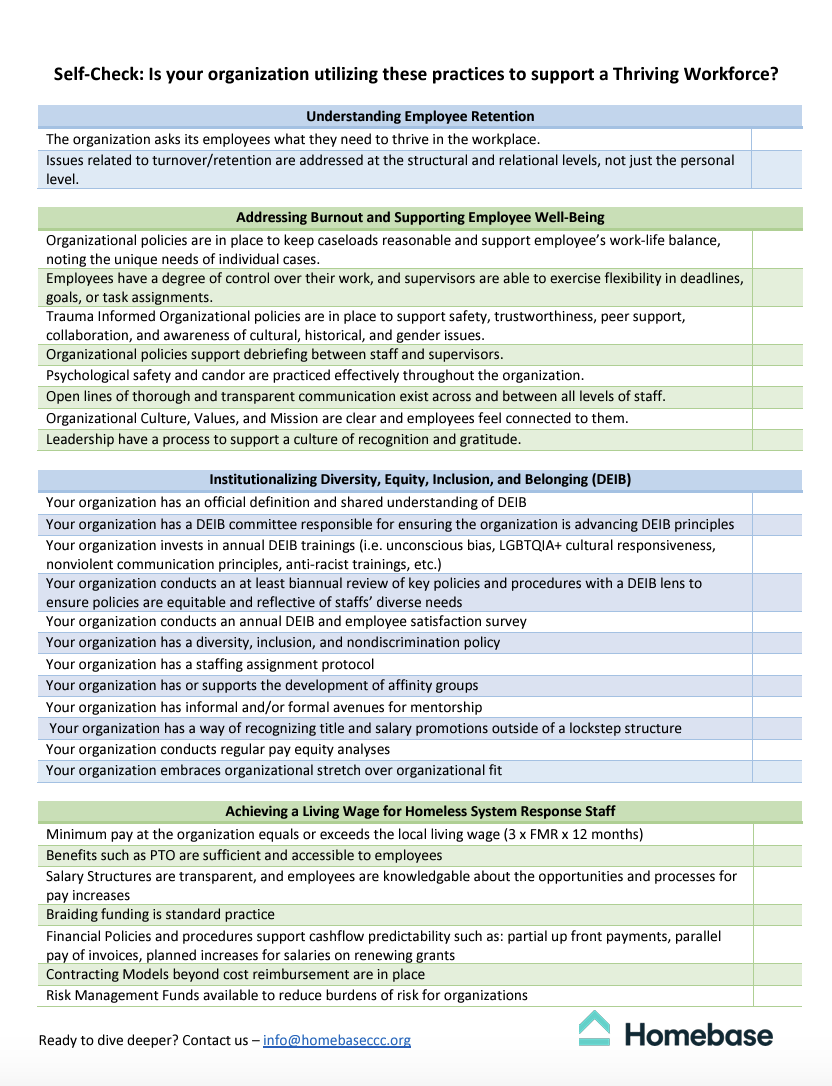
Thriving Homelessness Response Workforce Checklists
Homelessness service providers often experience high rates of staff turnover, burnout, and low wages. These resources, shared at the 2024 Housing First Partners Conference, support development of a thriving homelessness systems workforce.
Strategies for Increasing Client Engagement and Reducing No Shows
This slidedeck presents strategies for increasing client engagement and reducing no shows.

Participatory Continuous Quality Improvement Process Overview
This slidedeck presents the basics on quality improvement as well as a 6-month action plan template.

System Performance Measures Training
This slideck presents an explanation of HUD's System Performance Measures (SPMs) including the kinds of data that impact the SPMs.
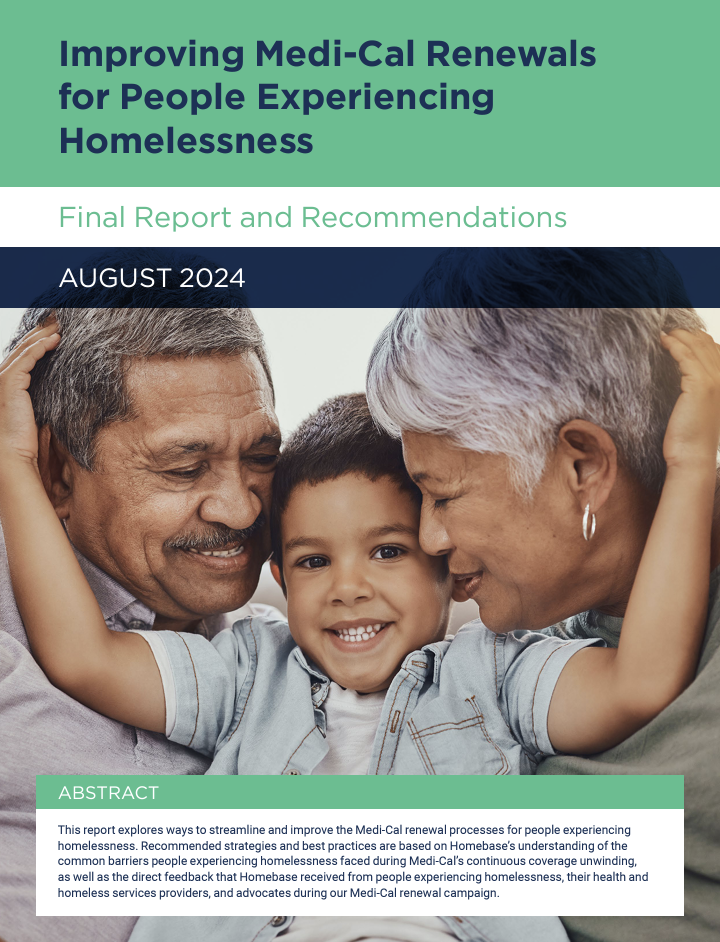
Improving Medi-Cal Renewals for People Experiencing Homelessness
This report explores ways to streamline and improve the Medi-Cal renewal processes for people experiencing homelessness, with recommended strategies and best practices based on Homebase’s understanding of the common barriers people experiencing homelessness faced during Medi-Cal’s continuous coverage unwinding, as well as the direct feedback that Homebase received from people experiencing homelessness, their health and homeless services providers, and advocates during our Medi-Cal renewal campaign.
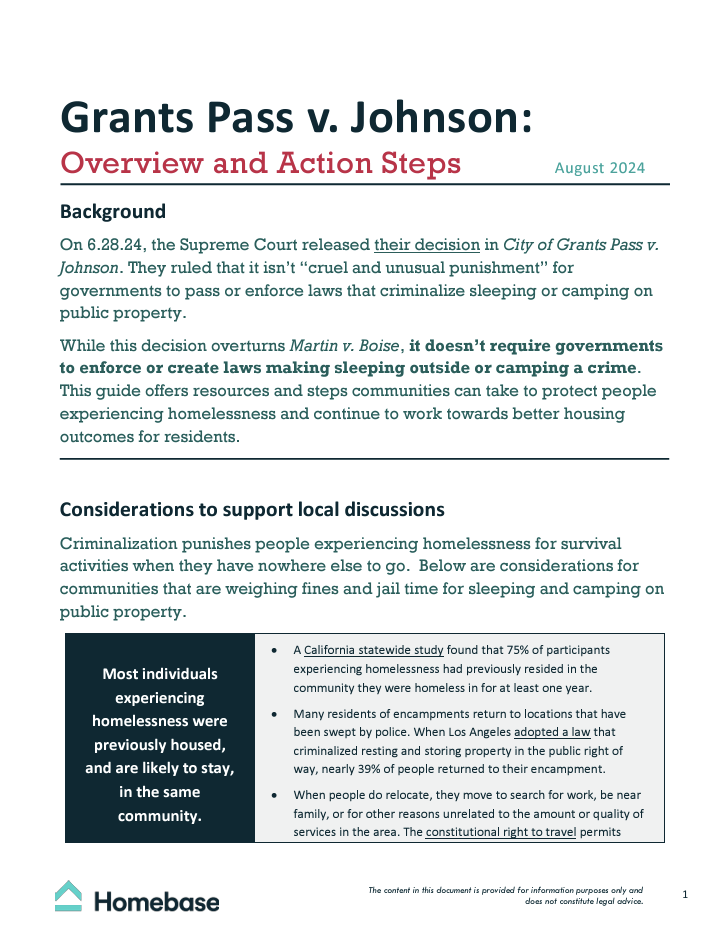
Grants Pass v. Johnson: Overview and Action Steps
On 6.28.24, the Supreme Court released their decision in City of Grants Pass v. Johnson. They ruled that it isn’t “cruel and unusual punishment” for governments to pass or enforce laws that criminalize sleeping or camping on public property. While this decision overturns Martin v. Boise, it doesn’t require governments to enforce or create laws making sleeping outside or camping a crime. This guide offers resources and steps communities can take to protect people experiencing homelessness and continue to work towards better housing outcomes for residents.
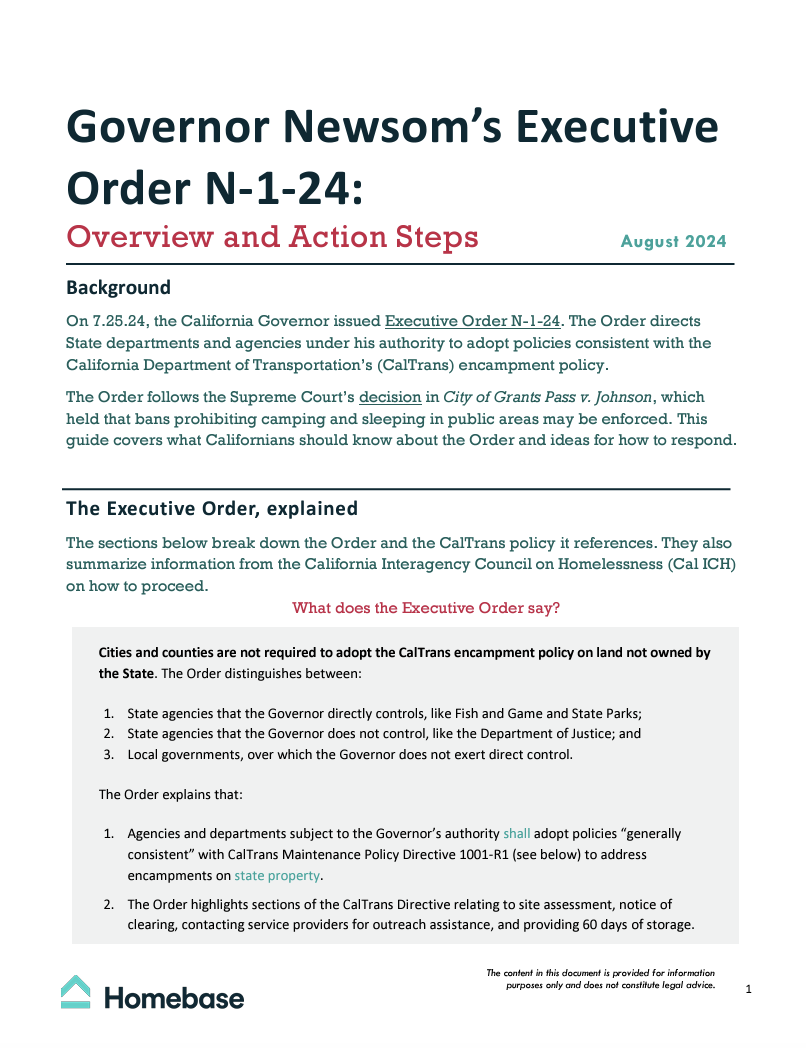
Governor Newsom's Executive Order N-1-24: Overview and Action Steps
On 7.25.24, the California Governor issued Executive Order N-1-24. The Order directs State departments and agencies under his authority to adopt policies consistent with the California Department of Transportation’s (CalTrans) encampment policy. The Order follows the Supreme Court’s decision in City of Grants Pass v. Johnson, which held that bans prohibiting camping and sleeping in public areas may be enforced. This guide covers what Californians should know about the Order and ideas for how to respond.
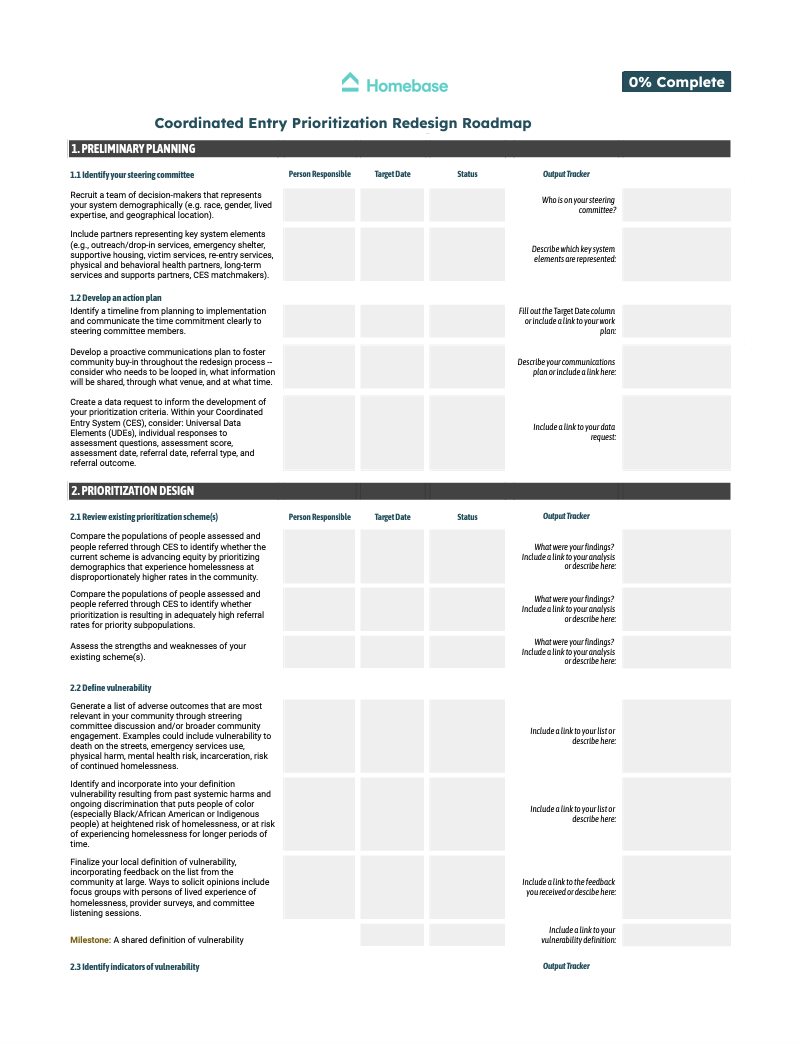
Coordinated Entry Prioritization Redesign Roadmap
This tool covers a set of 5 process steps universally observed in communities working to update their prioritization process: planning, prioritization design, assessment drafting, implementation, and continuous quality improvement.